On my travels

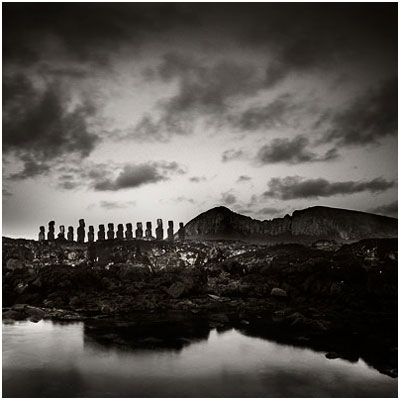
Today I'm heading off for about a month. During the coming time away I will be heading off to Easter Island, Patagonia and Bolivia. It looks all set to be an interesting month ahead for me doing some personal photography on Easter Island, and then running photographic safaris in Patagonia and the Bolivian Altiplano.

It's been a while since I was back in Torres del Paine national park in Chile. It is without doubt one of my favourite places on Earth. I've been busy packing for the trip for about a week now - I always seem to forget something, so in a vain attempt to not leave home without something important, I start to pile up a small mountain of equipment to take on the trip.

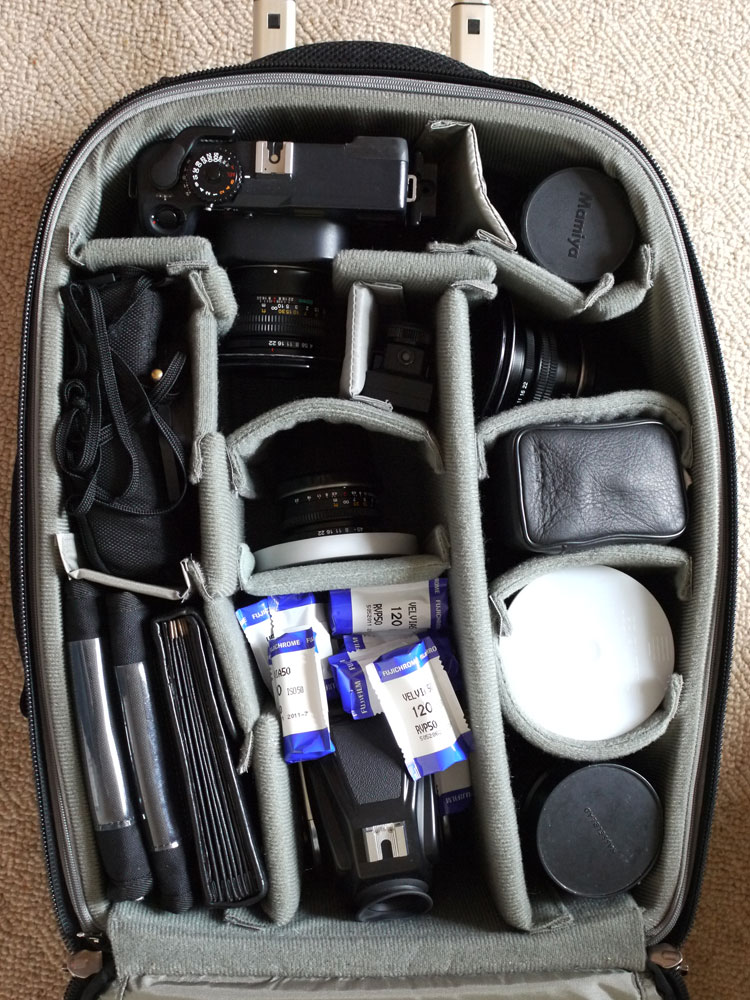
I've got two camera bags to take with me. I love the ThinkTank Airport International and Take-Off bags - you can see the content of my bag here:

I've got my Mamiya 7II plus three lenses, and a Hasselblad kit too in this bag, along with all the Lee filters and light meter that I use. This bag is purely used to get me through the airport-circus and around most of the heavy traveling I'll be doing.

Once on location, I prefer to go out shooting with a smaller bag and one outfit only - doing this makes me more focussed on working on the landscape and less on thinking of which system to use. I use a small shoulder bag for the outfit I use on location, because quite frankly - I detest backpacks - if I can get away without  using them - I will. Backpacks mean I have to stop, take the bag off my back and lay it on the ground. I prefer a bag that I can access things from the top without everything spilling out everywhere and a smaller bag means I take less, and if I take less, I'm more mobile, and less burdened down by the weight and choice of what to use once I've found my spot.

I'll try to post some things on the blog over the coming month, but I'm not so sure I'll be able to do that, as we will be in remote regions with little or no communication.

Iceland book update

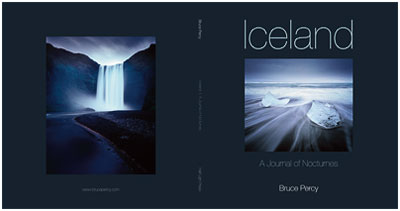
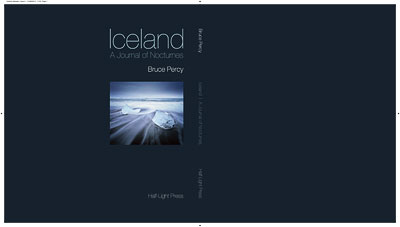
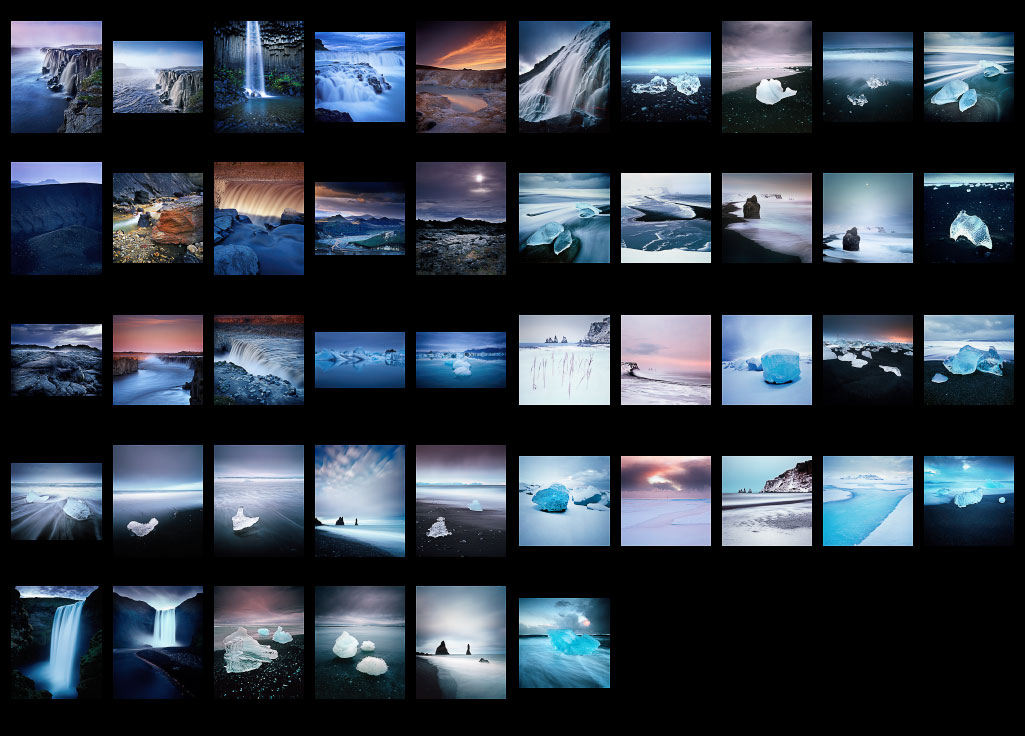
I've just created a dedicated Facebook page for my forthcoming book 'Iceland - A journal of Nocturnes'. You can view it here and there is more information on the intro by Ragnar Axelsson as well as the image selection in the book. Last week, the art work for my Iceland book was finalised.

There's been a bit of adjustment to the entire content from its inception which has been fascinating for me to observe. Any creative project seems to take on a life of its own and this book has taken shape in a way I wasn't expecting. What was going to be a simple monograph has turned into a journey through Iceland's landscape - as my friend Mike Green (who has helped review the content) says - it's like a photographic day, taken over several years.

Now that the art work and content of the book is now complete, I should feel as though the book is finished, but I know from experience that nothing is ever finished. The book is a stepping stone of sorts - maybe a document of my experiences to date venturing around the Icelandic landscape.... let me explain.

When working on new images, I don't often see that they will become part of something later on. I could easily have assumed that once I'd been to Iceland, there was little point in returning again. But I have done, on four occasions and created new work on most of those trips. Each time I've returned, I feel I've learned a little bit more about the Icelandic landscape, and also myself as a photographer. I also discover that my previous images of Iceland seem to take on a new meaning for me. It's like I'm able to look at them a little differently, all because I've had a new experience. The newer work seems to affect my impressions of what I think of my older work.

Everything is fluid and always in a state of 'transition'.

It is only as time passes, that we can review what we've done and see parallels, or themes that cross several bodies of work. As much as I feel that my Iceland book is simply a document of my experiences to date, I know that it has come together over almost a decade. By looking back I can see there was a clear path that led from my first Icelandic outing to where I am now. I wish it was so clear to see the path ahead.... and wonder what the final book will be the catalyst for?

I'm extremely excited about this as I hadn't envisioned creating a first book, let alone a second book. Things just seem to take their own course, and when you figure out how to do something first time round, it's much easier the second time.

I'll be announcing a release date, and also a very strictly limited edition of the book that will come with three prints (to make up a beautiful triptych) in a few months from now. The edition will be limited to 45 copies only and the prints will not be available as single prints with other editions of the book, so stay tuned to my monthly newsletter for the first word on this.

I should also mention that there is also going to be a book-launch & print exhibition to coincide with the release of book. More to follow on the dates and venue (in Edinburgh) for this soon.

Photographs not taken

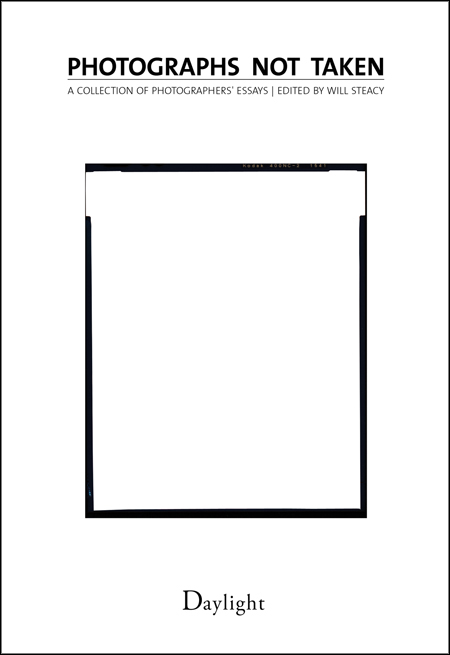
A degree of restraint is what's required, I feel. This week I bought a copy of Will Steacy's 'Photographs not taken', which promises to be an interesting account of images that photographers chose not to take.

Like music where the space between the notes is just as important as the notes, the space between taking images is just as important as the making of an image.

With so much image proliferation happening right now, I have a wonder if what we're doing is polluting our visual existence with too much sensory overload?

I know for myself, I need space between shooting because in the quiet moments, when images aren't being created, I can reflect, consider and simply enjoy what is around me - I have to live in the moment just as much as I may feel I wish to document it.

An image should exist because it has a reason. In the film Amadeus, the King says to Motzart that he didn't care for his opera because 'it has too many notes', while Motzart responds with 'but I used as many notes as it required'. Our own work should be similar - we should create what we need to create to tell our story, and no more. Having a sense of restraint is a quality rather than a hinderance to our own development as photographers, so long as we're in control of it and can moderate it.

But I often wonder if what I'm doing is going down a path of less creativity. As beginners, we tend to photograph everything, and anything. As our craft develops, we start to become more aware of what we're doing, and inevitably more selective. We focus more on certain things and discard others. I feel that sometimes I restrict myself too much; I have built up a lot of experience of what I feel does not work, so I don't shoot it - which in itself is limiting as I may find new opportunities if I did.

As time goes by, I become more and more restrictive - the number of images is reduced down and down, while I seek something that is really worth telling.

But as much as this is a process of pushing myself forward, aiming to create more finely-tuned, stylistic work, I'm not entirely sure of where it's heading. Maybe all that will happen is that I will create less and less, until ultimately, I create nothing at all?

I degree of balance is required.

We need to monitor ourselves and our behaviour, know when we are simply shooting too much garbage - and it is garbage, because it's produced with less consideration and less thought behind it (and we know it too - don't we?), and know when we are not shooting enough because we're putting up barriers that stop us from being creative at all.

I think Will Steacy's book is about this, but much more too. I think it's really an interesting view on what made photographers - and she interviews plenty - decide not to shoot something. It isn't always down to 'because I didn't like it'. There are more reasons to this I'm sure.

But I think for me, it's a chance to reflect on my own motivations and to question why I choose not to make images.

I'll let you know what I think of Will Steacy's book once I'm finished with it, but if you'd like to buy a copy, it's pretty inexpensive at just £11.25 from Beyond Words

Between Maple and Chesnut

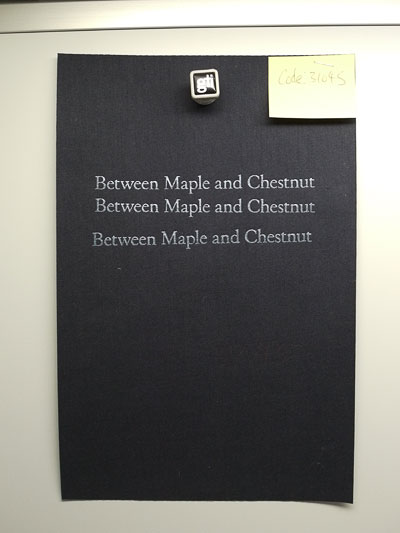
Today I received some foil-stamping samples for the 2nd book. Again, I feel that things are progressing, and one 'idea' is slowing morphing into something more 'real'. Whether it's making images, and having visualisations of what it is you want to create, or whether it's visualising the choice of wall paper for your home, we all have to dream in order to see where it is we're going.

But with anything you're working on, you have to keep on the ball about the entire process. Creating a book is a long, long process and there has been so many emails between Darren - who's creating the press ready file, and myself. And the printer hasn't been involved so much as yet, but I've maybe emailed them so much now, I'm losing track!

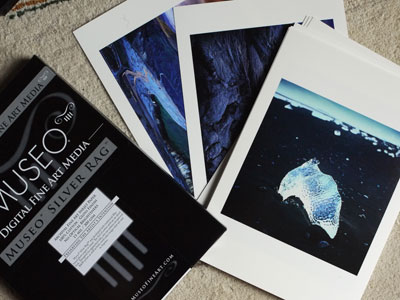
But today I posted off sample Inkjet prints for each of the images in the book to the printer. Darren had advised this for the first book - his reasoning being that although everyone may be colour managed, you really need to send of hard copy prints - it's the only real way to make sure the printer sees what you're seeing.

Anyway, I'll be heading off to South America in a week or so's time. Plenty of time to get lost doing photos, conducting photo safaris, and meeting Easter Island statues. But little time for work on the book. So I'm hoping to have everything wrapped up on the book front next week.

Spirit of Eden

"before you can play two notes, learn how to play one note"

"and don't play one note unless you've got a reason to play it"

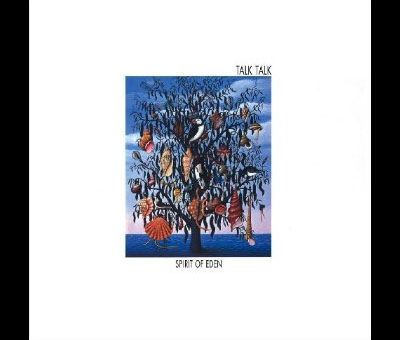
Talk Talk's Spirit of Eden

Regular readers of this very blog will know by now, that I'm very much into music in a big way. You will also know by now, that I believe there is a very tight relationship between music and photography.

Some people are able to conjure up mental images whilst listening to music. Others simply 'feel' a mood when listening to music, and that is certainly how I feel when I make images with my camera. I 'feel' things when I compose and when I'm working in my digital dark-room too. It's of no surprise that in the musical world, musicians use words like 'dark' and 'bright' to describe the 'texture' or timbre of a sound, or the mood of a piece of music. The same happens when people look at images, they seem to conjure up moods and feelings that are often stirred when listening to music.

Certainly for me, I find that some of my favourite music seems to accompany me whilst I'm out on location making images. My own music collection seems to act as a canvas for my own image making process.

I discovered tonight that one of my all time favourite albums has been re-issued. It's a difficult album for some to listen to, but it was so different at the time of its release. No one saw that it would inspire and be used as a template by prominent bands like Radiohead (for one example) in the coming years. Talk Talk's Spirit of Eden has a lot to offer the listener who's prepared to engage and work at growing into this 'sound canvas'. I even think the art-work is an inspired accompaniment to the music contained within the sleeve.

So for those of you who already own this, you may be interested to know that it's been released as a 180g vinyl release with a special 96khz DVD rom of the entire album (mmmm.... mine has already been ordered). But has also been re-issued on CD too and apparently it's the clearest remaster to date.

This album has given me so much inspiration over the years. So much so that I can't overstate it. It has shown me that you should stay true to your own direction and even if popular culture is going one way, it's ok to swim against the tide. There was nothing 1988 about this album upon its release. It was brave. It made its own statement and it was confident to be what it was, to not follow current trends. I think that alone, was a message that was powerfully demonstrated for me.

I hope you have albums like that in your collection. One's that illustrate individuality, and one's that can, perhaps, help guide you along in your own creative development.

Return to Portraiture

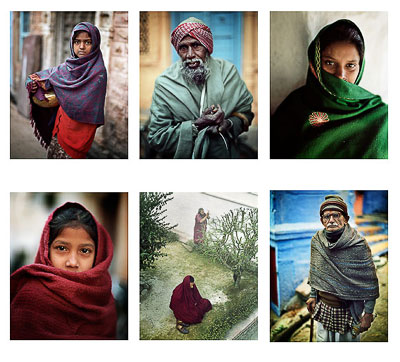
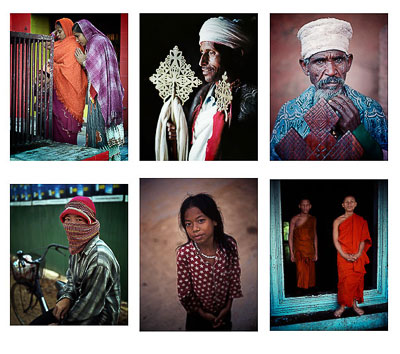
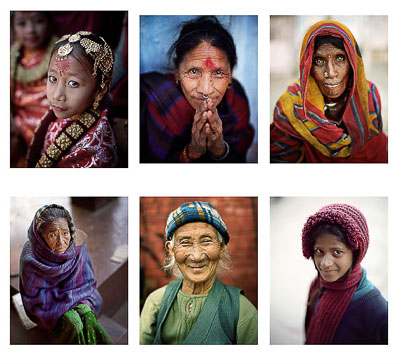
I've been thinking for a while, that I've not had any chance these past few years to make any portraits. It was startling for me to read reviews of my book, where the reviewer was surprised to see the inclusion of portraits as well as landscapes because they viewed me as a landscape photographer. This in itself was very interesting to me, because it allowed me to get a glimpse of how others perceive me and what I do.

I always thought I was a travel photographer, because it entails all the destinations that I've been to, all the landscapes that I've shot whilst there, and also, all the people I've encountered and photographed too.

For me, there is little difference between portraiture and landscapes. They both have personalities and they both need to be engaged in,  a dialogue of sorts - the interaction between yourself and your subject.

They are also subjects of beauty, and I see many compositional attributes that are appropriate in landscapes, present in portraiture too: I'm often seeking pleasing tones, compatible colours and 'a moment'. With landscapes, we have to watch for elements changing in the landscape and make images when we see detail changing or becoming visible. With portraits, I have to watch my subjects as they dance between different expressions of the face, their body movement, their change in pose.

And they're both very exciting to shoot. Landscapes because you're dealing with the unpredictable elements of a landscapes soul. Portraits are exciting because of the unpredictable elements of a persons spirit.

I deliberately interchanged the words 'soul' and 'spirit' between landscapes and people, because in a sense, they are the same thing when we choose to make images of them with a camera.

I also get a lot of inspiration from making images of people. It's all too easy to become single-minded in your approach to photogaphy. We should often seek out new things that interest us, as often, they are a guiding post to where we should go, to who we are seeking to grow into as a creative person (I hate using the word artist, yet, in truth, that is exactly what we are).

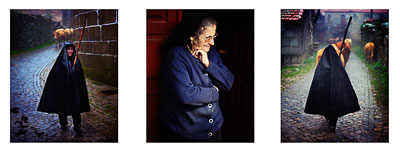
So in order for me to 'feed my soul', I'm heading off to Portugal in November to catch up with some friends in Oporto. We're heading back into the highlands, and I'm hoping that it will be a week of making images of the locals there. My first and only visit was in 2007:

There is a story to tell in the little villages of northern Portugal. I felt I touched upon something in these images at the time, but I've never been back to explore it. I think that's part of the job or 'journey' of a creative person. To know when something has been left unfinished, to know where there is potential to grow, and to take action and put some new work into being.

I'm now hatching plans for further trips to make portraiture. I'm not exactly sure where just yet, but what I do know, is that I've been neglecting my portraiture leanings for some time, and that as a creative person, my inner 'artist' needs to be fed.

The life of a photographer

For a bit of fun, I thought I'd post this icongraphic today, which I found in a nice article on www.ispwp.com.

I think this is fairly accurate for wedding photographers, and not too dissimilar from what I do. I remember a wedding photographer friend of mine holding a talk at a local photographic club. In the talk, she asked 'what do I spend most of my time doing', to which most people thought was taking pictures. She informed everyone that most of her time was taken looking for clients.

I had someone recently ask me why I have an office. I thought that was an illuminating question, because it answered more for me what he thought of my job.

Anyway, if you click on the image, you can see the split a bit more clearly.

History's Shadow

A few month's back, Neil from Beyond Words book shop sold me a copy of David Maisel's 'History's Shadow book. Let me just start by saying it's perhaps one of the most beautiful books I've seen in a while, not only due to it being a large book, but mostly because of the content contained within.

I'm a lover of photogaphic books for a few reasons. Mainly it's to do with the interaction. By holding up a book and studying it, I get more out of the process than I would by browsing web sites. The other reason is that most photo books are printed well, so the tactile experience is often very pleasing and the detail in the reproductions is something you don't get from looking at websites either.

Speaking to Neil about his knowledge of photographic books, we had an interesting discussion which led to the idea that we would attempt to do a joint review of books that I've chosen and bought for my own collection. I'm not entirely sure how frequent this would be, as we've slipped on this one already, but we're hoping to cover future books together. So I hope you will look forward to finding out about other photographic artists, or works that I particularly love (and have added to my book collection).

Anyway, back to this book.

What follows is a review by Neil @ Beyond Words book shop, and the review concludes with my own feelings about this book.

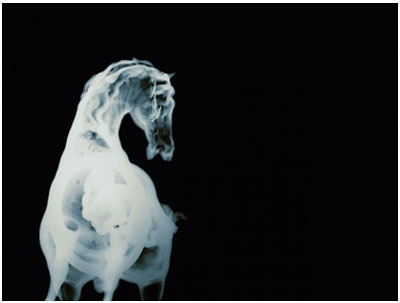
David Maisel is responsible for some of the most beautiful, yet disquieting works in contemporary photography.  His latest project, History’s Shadow, is typical of the meticulous, systematic, indeed forensic, approach that he brings to all his work.  In this series, Maisel re-photographs x-rays from museum archives that depict art works from antiquity, scanning and digitally manipulating the selected source material.  See here for sample images.

History’s Shadow is published by Nazraeli Press, a specialist publisher of photography books.  The dependably high quality of Nazraeli’s design and reproduction is the perfect complement to Maisel’s photographs.  Time magazine and American Photo have both selected it as one of the best photobooks of 2011
Maisel’s previous work, Library of Dust, is equally concerned with the survival of traces from the past.  It consists of a series of sombre and beautiful photographs depicting canisters containing the cremated remains of the unclaimed dead from an Oregon psychiatric hospital.  Dating back as far as the nineteenth century, these canisters have undergone chemical reactions, causing extravagant blooms of colour, revealing unexpected beauty in the most unlikely of places.

For those becoming familiar with Maisel’s photography only through these more recent projects, it may comes as something of a surprise that, for the bulk of his career, he has been a landscape photographer – of a particular sort.

Using aerial photography, Maisel has photographed civilization's aggressive advance across the American landscape.  From the vantage point of a low-flying aircraft, Maisel has constructed skewed landscapes that seem at times to have no horizons, no up or down, no near or far.  The Lake Project documents Maisel's work around Owens Lake. This arid expanse, located just east of the Sierra Nevadas, is for the most part a desiccated bed of mineral deposits. Drained for the water needs of Southern California, it now contributes carcinogenic particles to the atmosphere during ‘dust events.’  In other projects, the devastation wrought by deforestation and open pit mining has been clearly demonstrated.

On reflection, there is considerable continuity between Maisel’s earlier and later work.  Both use photography to examine the interaction of humanity and environment on a chemical level.  In pre-digital photography, of course, this capturing itself requires the mastery of complex chemical processes.  Also, like Ed Burtynsky, Maisel explores the uncomfortable relationship between images that will appear to many as aesthetically beautiful while depicting processes of pollution and destruction.
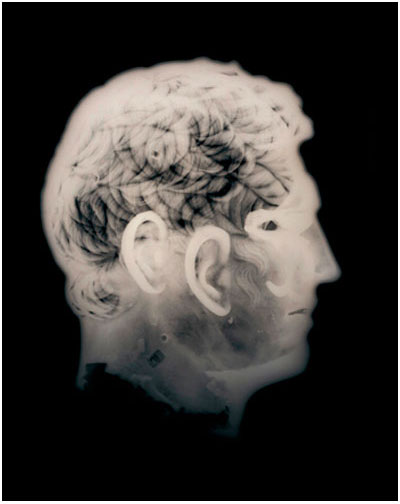
As Leah Ollman states, “Maisel’s work over the past two decades has argued for an expanded definition of beauty, one that bypasses glamour to encompass the damaged, the transmuted, the decomposed.”

Bruce's review, and conclusion

I think Leah Ollman has something of great value to state about David's work, and in particular the definition of beauty.

David's book is a large affair approximately - it's very substantial and the plates reproduced within are really beautiful. It is a book to inspire you to consider and think again about what photography really is.

His images in this book are photographs of photographs (x-rays), of objects archived in museums. I think there's something interesting in his approach to re-translating what is already done. I've personally never thought of taking images of my own images, and re-translating them.....

The toning of the images is beautiful, and the compositions, flattening down a 3D object into a 2D space sometimes leads to interesting results. Being able to view the skeletal stucture of the horse statue, makes for more interesting dissection of the image. I spent a lot of time pondering these images.

I'm very proud to have this book in my collection. If you have an interest in exploring other photographic styles, and considering how these may affect your own photography, History's shadow would be a welcome addition to any budding photographic book collection.

History’s Shadow is published by Nazraeli at £60 and Library of Dust by Chronicle at £50.  Both are available at 10% off from Beyond Words, here in the UK.

Patronising the arts

I've been so busy the past few years with my own work, and sometimes, it's felt as if the whole world revolves around me. It's not a feeling a like particularly, but when you're so involved in what you do - it's hard to take a step back sometimes and look at what else is going on around you.

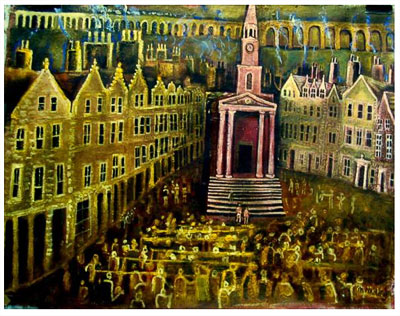
Last week I was conducting a workshop, and one of the participants gave me a lot of inspiration. Coming purely from an arts point of view, my participant asked me a lot of questions about what I do, and about specific images. It was so nice to 'reconnect' with my own work. I'm so used to teaching everyone around me, looking at their own work, and not for a moment do I ever cover my own work on my workshops.

During some downtime, I'm not sure how this happened, but I ended up looking at the work of a local artist that I like very much. I own a few of Michael McVeigh's prints, but until tonight, I've never owned any originals. Well, I feel that as an antidote to so much focus on my own work, and that of workshop participants, I bought one of Michael's paintings.

I feel immensely good about it, despite not knowing why. I love his work, would have been happy with a print of this piece of work, but there's something very satisfying about supporting him. I believe in his work, and it's great to not only own an original, but also to feel that I'm validating what he does (not that anyone cares what I think), but just to put my money where my heart is, and pay for something that means a lot to me.

So I'm asking myself a few questions tonight about photography, and the role of an artist. There are so many of us out there, who would love to turn our photography into a living. To be appreciated for what we do, and to bask in the limelight of acknowledgement that we create beautiful works... images that others respond to.

But how many photographers do you know who own work from others? I would hazard a guess that the answer is 'very little'. That's a real shame isn't it?

If we were so willing to look at, enjoy, and purchase other peoples work and not just our own, maybe we'd all be living much happier lives. Not just by supporting other artists, and by the very act - supporting ourselves, but by also giving ourselves a much needed injection of inspiration into our own 'art world' that we reside in.

Maybe it's time to go out there, if you haven't already - and buy someone's work. Maybe the act of being an artist, is to explore other people's work, embrace and enjoy it. It will not only give them satisfaction to know others appreciate them and what they do, but it might also act as a catalyst to propel you onwards with your own art too.

Image selection for forthcoming book

Just back from the isle of Harris, after a workshop. What a nice group I had! Thought I'd share the image selection for my forthcoming Iceland book. Click to enlarge.

Be back in a few days, after I've had some time off. Away to St.Kilda in a week's time to do a personal photography project. More to come on that I hope.

Feel the need to go exploring in a different direction. Thinking of Ladakh for August. Portraiture images only.

No landscapes.

Been too long doing landscapes and there's a whole big world out there. Been speaking to Matt Brandon and Gavin Gough in Asia - both very fine photographers and worth looking at their sites. I think some time out there later this year may be on the cards.

What are your inspiration plans?