Something in-between Sunlight & Shadow

For a long while now, I've been fascinated by the power of suggestion over a more literal interpretation. I was initially attracted to this aspect of photography through the work of Michael Kenna in the late 80's. His use of shadows and night often convey a sense of mystery or at the very least mood to his imagery.

Just recently, I found out about Ray Metzker, who passed away last year. His work conveys similar concepts to Kenna's. He was interested in suggestion rather than a literal translation. His use of sunlight and shadow to conceal his subjects often lent his work a sense of mystery.
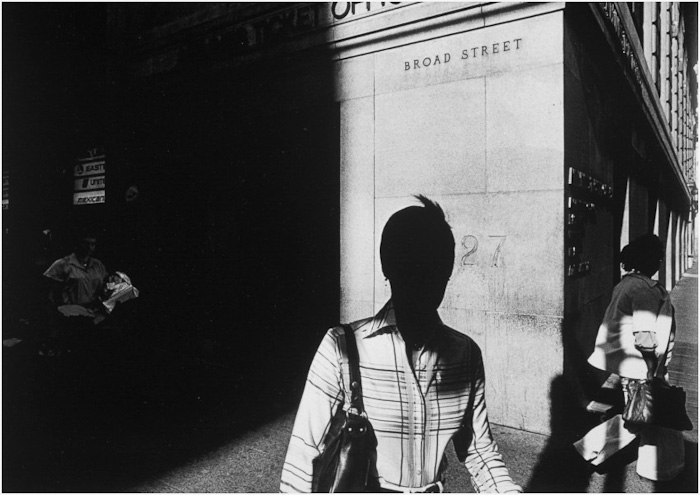
 Solitary pedestrians and urban spaces transformed by sunlight and shadow. Image © Ray Metzker

 Solitary pedestrians and urban spaces transformed by sunlight and shadow. Image © Ray Metzker

Suggestion is a powerful tool to possess as a photographer - because being able to get your audience to stop and listen to what you are doing often happens through the art of suggestion.

 In Ray Metzker's images, he shows tremendous skill in using sunlight and shadow to convey mystery. What may have otherwise been an ordinary scene becomes more interesting and thought provoking when shade is used to conceal or reveal.

Ray would produce portfolios based on these tonal suggestions rather than by subject matter. This resonates with me because I feel I have been doing something similar; for a while now, I have been choosing images where they are related either by tonal response or by colour palette.

Ray Metzker's use of sunlight and shadow was masterful. Image © Ray Metzker

Ray Metzker's use of sunlight and shadow was masterful. Image © Ray Metzker

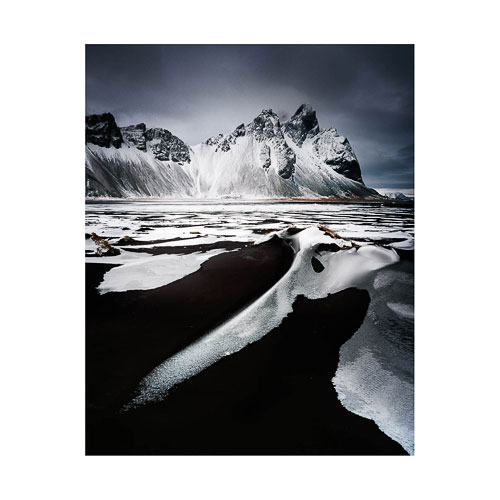
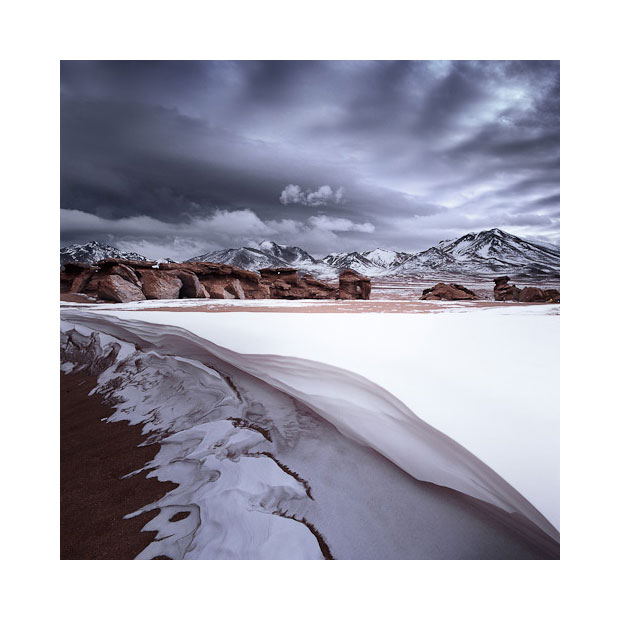
To explain further, I find Iceland to be a monochromatic place: black sand and white ice. Bolivia is about blues and reds: the lagoons of red sediments and the salt flats at twilight intertwine to offer up a particular colour palette. So I tend to go looking for subjects that fit together tonally or by colour - as a collection. These two places are responsible alone for me branching out into monochrome work. They have taught me that the portfolio - the whole is greater than the sum of its parts.

I see a similarity in Ray Meskier's work where he chooses subjects that are collected together by tonal similarities. People in the city often photographed as silhouettes, or with their identities concealed by use of shadow strengthen his portfolio as well as lend a very decisive look.

Images don't always have to utilise the full tonal range. Here Ray Metzker uses mostly shadow to mid-tones only. I find the deliberate concealment of the people's faces adds further mystery to the image. Image © Ray Metzker

Images don't always have to utilise the full tonal range. Here Ray Metzker uses mostly shadow to mid-tones only. I find the deliberate concealment of the people's faces adds further mystery to the image. Image © Ray Metzker

His work has a style - something that we are all trying to develop or bring forward in our own work. And this is perhaps the most important lesson from looking at this work: it's clear that Mezkier has thought about the aesthetic qualities of his final selection of images and also the subject matter in such a way that we are clear each photograph is by the same author.

I learn a lot by looking at work that I find inspiring. It doesn't have to be landscape related for me to 'get it'. I just have to find a connection in the work - to see something that I find intriguing, or that makes sense to me in some way that I hadn't thought of. With Ray Metzker's work, I do exactly that. I learn about image selection based on using tonal responses but I also learn that his choice to make people very anonymous or to conceal their identities through his use of shadow and sunlight can lend the work a thematic quality which goes a long way in conveying a photographic style.
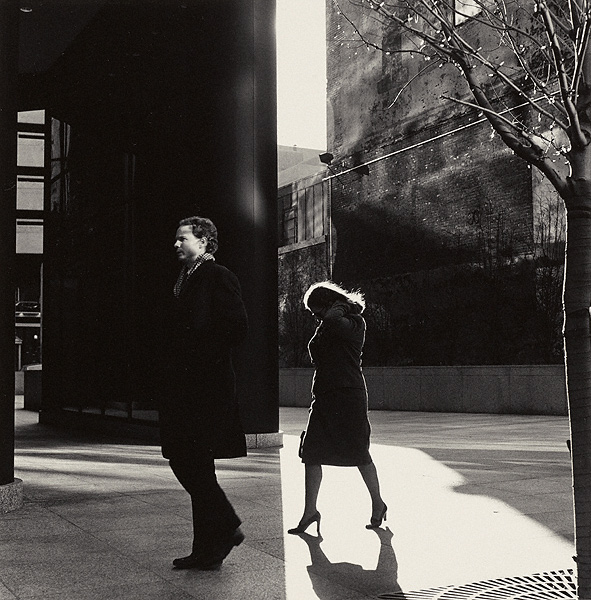
And sometimes it's the sudden split between shadow and sunlight that throws a contrast; like two images spliced together, providing a sense of tension between the two subjects in the frame. Image © Ray Metzker

And sometimes it's the sudden split between shadow and sunlight that throws a contrast; like two images spliced together, providing a sense of tension between the two subjects in the frame. Image © Ray Metzker

And then there are his choices in composition. I've always thought that street photography has less to do with aesthetics and more to do with narrative. But in Ray's work the story is missing. He has deliberately chosen to conceal most of his subjects so we know very little about them. Instead we are presented with compositions constructed through form and tone only. They are like landscape studies about the people in a city.

A study of graphic qualities. Image © Ray Metzker
A study of graphic qualities. Image © Ray Metzker

On the subject of Blogging

If you feel I'm not on here much, or not writing as frequently, it's simply because of two things:

1) work commitments
2) only wanting to write when I have something to say

In the age of 'social networking', I'm aware that many people expect a constant, frequent update on what I'm doing.

I'd just like to point out that when I'm running workshops / tours, I usually have very little free time to myself. I love my workshops and tours, enjoy the participants company, but it's a very intense period of time - often getting up at 5am and not finishing until 9pm. So I have very little free time to blog.

Also, I don't wish to pollute my site, or your free time with noise.

So just to let you know - I do intend to keep on Blogging and I do intend to keep filling this blog with my thoughts on photography. I just want to make sure that what I post, is of value.

So please do keep checking in from time to time :-)

Michael Kenna comes to visit :-)

Just wanted to share with those of you who don't read my newsletter. I had a nice time with Michael Kenna in the landscape for 4 days this March. He's a lot of fun and hope to see him again some time when / if he can fit it into his schedule.

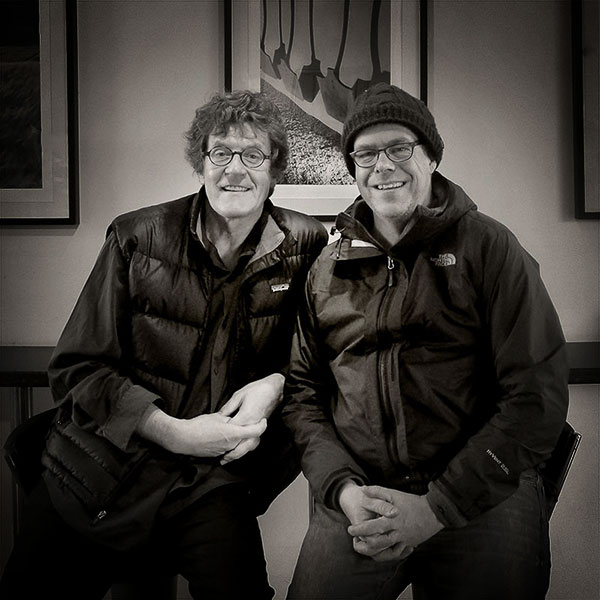
Michael Kenna & Me, March 2015. It was a lot of fun MK - thanks for the visit !

Michael Kenna & Me, March 2015. It was a lot of fun MK - thanks for the visit !

He has been a terrific influence on my own work, so it was a real pleasure and honour to spend time with him. Best of all, he such an unassuming, fun person to be around :-)

The Journey

Tonight I'm busy editing a lot of new images from Iceland and also Lofoten and I can't help be reflective about what I've captured this year so far.

There was so much snow in Lofoten that I didn't know where to take my group, until one of them said 'are there any beautiful tree's we can photograph?'

There was so much snow in Lofoten that I didn't know where to take my group, until one of them said 'are there any beautiful tree's we can photograph?'

As much as I might want to plan a shoot, decide on what I want to capture, things never turn out the way I expect them to, and that is alright with me. In fact, that is very good indeed.

In last month's newsletter, I discussed the need to not pre-visualise before turning up to a location. We all do it - we've seen countless photos of places, so much so, that it's practically hard to see them any other way. And yet the art of a good photographer is to work with what he's given, and not lament what we didn't get. This means turning off any pre-visualised ideas of what you want your trip to be, because photography is a journey. 

I never know where I will be taken. I never know what I might see, and even though I go back to many locations each year in similar seasons, I still find new things.

There was so much snow in Lofoten that I didn't know where to take my group, until one of them said 'are there any beautiful tree's we can photograph?' I knew of a place, but it has never been too successful for me in the past, because the background behind the trees is always too visible. This time it worked because there was no background. It also worked because there was so much snow in the sky and it was so similar in tone to the earth. 

Perhaps I'll see this scene again next year when I'm back in Lofoten, but I'm not counting on it. In fact, it's better to just go along for the ride and see what happens and where the light and the atmospheric conditions take me.


Trusting one's own judgement

I'm just home from Iceland, and I just got word today that an interview that was conducted with me many months ago has finally appeared in the UK magazine 'Black+White Photography'. 

Front cover of Black+White Photography magazine.

Front cover of Black+White Photography magazine.

Interviews are funny things and in particular, the written word can be so 'final' at times - what I may say in passing, becomes a more fixed and immutable statement in print. Whereas, I find real conversations have more fluidity to them - they are always unfinished and there's more give and take as a result.

Mark Bentley, who conducted the interview, has decided to focus on my thoughts and feelings on doing photography for oneself. I would just like to cover with you why I feel it's important that we create our work for ourselves.

I believe there comes a point in our development that we go beyond seeking others approval of what we do. We reach a place where we realise that no amount of praise or criticism from others will make any difference to how we feel about our own work. I'm not entirely sure if it's a confidence thing, or just that over time we develop a sense of trust in our own abilities. Regardless, after a while of hearing other people's opinions, you realise that the only opinion that really matters is your own. The whole exercise becomes a form of meditation. There is no drive to impress, no hunger for affirmation from others. Just your own need to meditate and do the work as a form of therapy.

I might have touched upon this in previous posts with the aim of describing one's own style. But I think that in order to get to a place where you feel you have found your voice, you need to be able to let go of others opinions and just trust yourself to feel what you feel and do what you do. I can't say it any simpler than that.

My Philosophy on Equipment Failure

I’m in Iceland right now. Everyone is saying the weather has been very challenging since December. With one storm front after another sweeping the country every four days or so, it’s been quite an adventure to be here.

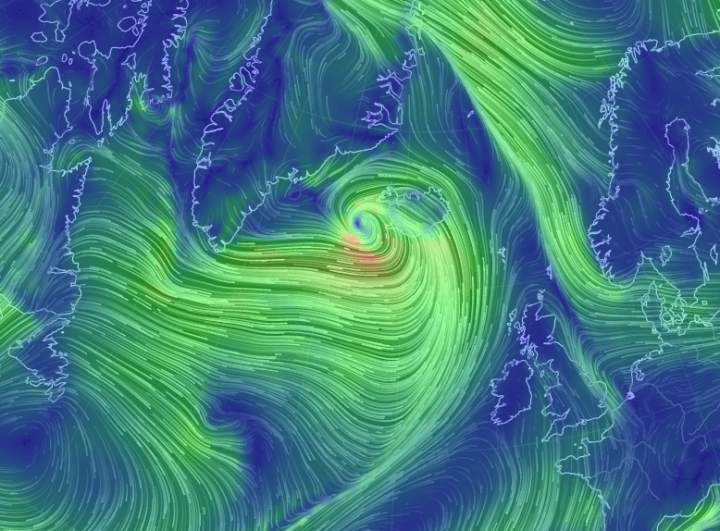
And today they say we have the worst storm this winter (see weather chart below). The cabin I am in is shaking with the wind :-)

Big storm today (Saturday 14th March) means we're staying indoors :-)

Big storm today (Saturday 14th March) means we're staying indoors :-)

I’ve had a few equipment failures in the past two weeks during my travels. One of my Mamiya 7 cameras was pushed over by the extreme winds and the outer casing of the body literally shattered in two. It’s now being held together by some duct tape which I always bring with me. I’m convinced it still works, but it’s been put away in my bag while I use a spare body that I always carry with me now.

Years ago, when I was a hobbyist, I had one of everything: one camera, one tripod, one light meter. I could keep these items for many years and see little wear and tear on them. But over the past few years of being out on location more often than not, I’ve been finding that I seem to be going through tripods every few years, Lee filters every six months and sometimes Sekonic light meters every year or so too - my second failure in equipment this week has been a Sekonic 758DR light meter which had been working perfectly fine all the duration of the trip but didn’t come on one morning after being stowed away in a cold camera bag for a few days.

I’ve been thinking about how my backup strategy is just getting more involved. I now travel with two of everything and I think I will be changing my plan to travel with three copies of the vital things in future (camera bodies and light meters and ball-heads).

I have two sets of clothing: two sets of gloves, two sets of waterproof shells, several hats (I  keep losing them), and now I will be travelling with at least two camera bodies, and at least two light meters.

I love to look after my equipment and I like to have nice copies of everything I own. Mostly it’s because I treasure my equipment, but there is also a more practical side to this: if I have equipment that is well looked after, it will be less likely to fail. So although I use my equipment a lot, and it is used in sometimes very challenging weather conditions, I don’t abuse it either. 

I’m not sore or sorry for the failures in the equipment I’ve brought with me. I’m quite philosophical about it, as the way I see it, the equipment you buy is meant to be used. It's not meant to be coveted or kept out of the rain or snow. It's there to be used to photograph the things you see and experience. If you use your equipment a lot in challenging situations, failures from time to time are going to happen and they should be expected also.

Photography is about getting out there. If we restrict ourselves to being fair-weather shooters only, then our photography will be restricted to a very small avenue of possibilities also.

Equipment is there to be used. It it gets used a lot, it will get damaged and fail from time to time.  I have accepted that this is part of the price for getting out there and making images.

And image making is after all, what we are here for :-)

Bolivia spaces available 2015

I've just had notice of cancellation for my Bolivia photo tour this June 1st to 10th.

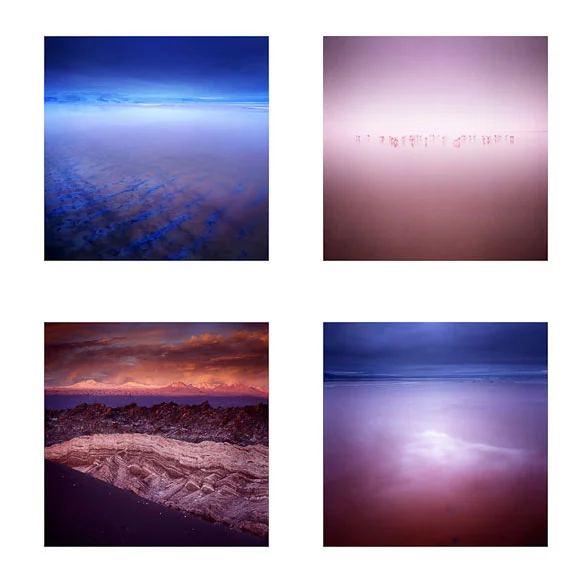
Containing the world's largest salt-flat, and a landscape that resembles a Dali painting, there is much scope for abstract and graphic photographic compositions. It is my favourite place to photograph right now. 

If you're interested in coming, you can find out more, and also book here.


Bracing Myself

In just a few days time, I will be thrown back into Winter. Each February I spend two weeks above the arctic circle in Norway's Lofoten islands, and each year it's just like a winter reset.

Made after several days of looking at this scene. Sometimes I like to let a view sit in my mind's eye for a while before I know how I think I want to capture it.

Made after several days of looking at this scene. Sometimes I like to let a view sit in my mind's eye for a while before I know how I think I want to capture it.

It can be a bit of a jolt to the system, to have to go to Norway at the end of January. While winter is starting to show signs of loosening it's grip here in Scotland ( the days are gradually getting longer), it's not the case in the Lofoten islands up above the arctic circle.

One of the ways I cope with this, is to review my images from Lofoten. It helps me get my 'head into gear' for the trip ahead. My mind is filled with mountains and that beautiful northern light for days before I arrive.

I think there always has to be a 'settling in' period when we venture out with the camera. Go somewhere so different from where we've come from, and it can me physiologically challenging.

But today I've been thinking about the image at the top of this post. It is the view from my friend Camilla's spare bedroom. Camilla lives in the beautiful town of Reine, and her home is situated on the very edge of Reinefjorden. It's one of the most amazing views in the world as far as I am concerned, and it's a place where you can constantly study the shifts in light and season.

Making the photo you see here was hard. Simply because each time I looked out my bedroom window, the view seemed to suggest that although there was something beautiful happening every second, trying to capture the essence of it, would be a challenge.

I think some locations can be quite intimidating on that front. They're just so enigmatic, that the act of trying to start, to begin to make photographs of it, can be quite daunting. Start on the wrong foot and you might just screw up. Take the wrong approach and you might find you feel dissatisfied with what you create: often I feel there has to be a right time and it's best to just leave things until it feels right. So I left my camera in the bag for a few days.

The pressure was gone.

I just enjoyed what I was seeing and this in turn allowed my mind to become immersed in Lofoten. I found my mind and my dreams of what I was seeing began to sink into my emotions over the coming days until it eventually became second-nature. 

I started to understand, to anticipate what the winter storms were going to do to the view I had in front of me. I knew by now where the snow showers were going to go and what parts of the mountain scenery would be obscured and it was at that moment that I took up my camera and started to make photographs.

New e-Book - Simplifying Composition 2nd Edition Available

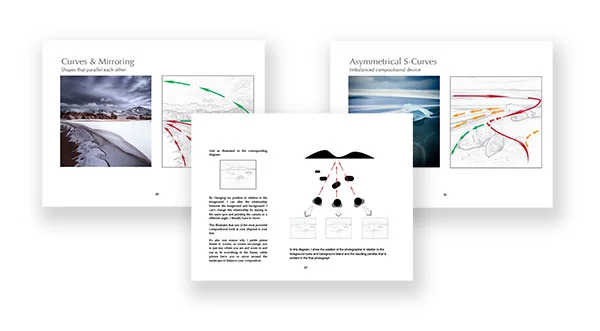
I'm pleased to let you know, that as of today, I've released a second edition of my popular 'Simplifying Composition' e-Book.

completely re-written and expanded (now 68 pages long).

completely re-written and expanded (now 68 pages long).

I felt that since writing the first one in 2010, my abilities as a workshop teacher had moved on quite a lot. Over the years I've been teaching my workshops, I've added to my thoughts on composition, so much so, that I felt I needed to update the book to reflect this.

But rather than updating the e-Book, I've chosen to totally re-write it from scratch. So it's definitely worth getting if you liked the first one, and want to learn some new things :-)

Flow..... and relationships between similar shapes and patterns.

Flow..... and relationships between similar shapes and patterns.


More about the new edition


The new edition is double in size - 68 pages long to be exact, and is packed with lots of new advice and tips on improving your compositional awareness while out in the field and when reviewing the work later on.

In writing this edition, my aim was to utilise the experiences gained over the past six years teaching workshops, to give you an updated view on how to simplify your compositional skills.

The book is split into three sections:

  1. Flow. Learning how to guide the eye through the frame in a comfortable and pleasing manner    
  2. Compositional Devices. By using certain features within the landscape,  we can strengthen and simplify our compositions    
  3. Fieldwork. Best practices, techniques and approach while out in the field

And here is the table of contents to the new version:

S-curves and also background emphasis with focal-lengths.

S-curves and also background emphasis with focal-lengths.


Table of Contents


3    Introduction Part 1. Flow
6    The flow of your eye
7     Interpreting the flow within an image
10    An example


Part 2. Compositional Devices

13    Introducing the diagonal line
16    Looking for diagonals in the ground
20    Looking for diagonals in the sky
23    Introducing the curve
25    Curves & mirroring
28    Introducing the s-curve
31    Asymmetrical s-curves
33    Patterns, mirroring & tonal separation
35    Cohesion in the landscape


Part 3. Fieldwork

39    Foreground emphasis
41    Background emphasis
44    Vertical spacing between subjects
47    Avoiding the fish tank effect
52    Visualising in 2D
56    Working with parallax
59    Strengthening composition
62    strengthening cohesion
65    Improving your workflow
68    epilogue

Mirroring in the landscape, asymmetrical shapes in the landscape and parallax issues.

Mirroring in the landscape, asymmetrical shapes in the landscape and parallax issues.

I feel particularly pleased with this updated edition. I felt I got the sequencing of the chapters right because one aspect of composition seemed to lead onto another in a way that has made the book very easy to get into.

I do hope you enjoy reading this one. I fully intend it to be a reference that you can return to time and time again.

Rusty

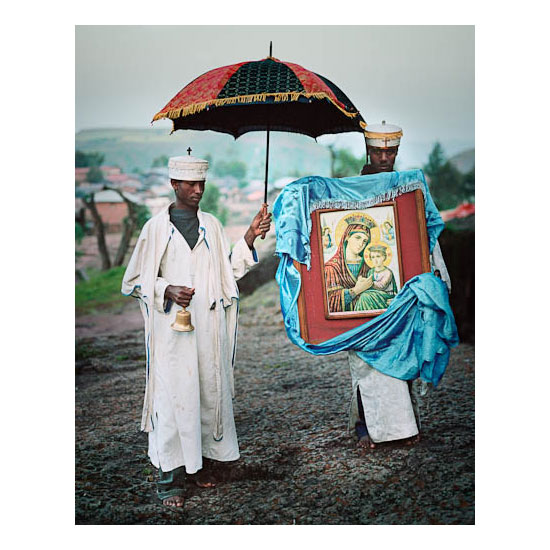
A few days ago I posted that I was currently in Lalibela, Ethiopia for a special orthodox christian celebration. It’s been wonderful to come back and experience the place for a second time and I feel I’ve done much better this time in portraying the soul of some of the inhabitants of this town. There are a few images etched into my mind that really stand out: I have a few of local priests and of some of the beautiful children here, but maybe the ones that really stand out in my mind are those of the Ethiopian woman wearing traditional head dress.

Ethiopia-21.jpg

I’ve been thinking today about why it might be the case that I’ve done better this time. Especially since I feel my efforts haven’t justified the images that are imprinted on my mind so far. Four years ago when I came here, I really worked the place as much as I could and felt I didn’t really ‘get’ the place. This time round it’s the opposite way - I feel I’ve put very little effort in and yet I think I’ve captured quite a few memorable portraits in the space of two days.

How can this be? I’m really not sure, and currently it’s just a hunch as I haven’t seen the final processed films yet. But if I have learned one thing over the years of shooting film, it is that when I manage to make a memorable photograph: I tend to know it at the time of capture. The good ones just seem to be like that - they leave an indelible impression on your mind and emotions and I’ve found that they stay there, powerfully, right up until I get the processed films back from the lab and the confirmation that what I felt and saw at the time really did work.

Of course, it would be very easy to say that the reason why everything has gone so well this time is due to my improvement as a photographer. But I don’t think so. In fact I’m feeling rather rusty when it comes to photographing people, particularly in developing world countries. 

First there is the issue of feeling that I’m exploiting my subjects, even though I know I’m not like that and would never take advantage. But being surrounded by poverty tends to make you stare at yourself a bit more than usual and ask yourself some awkward questions.

As I stated a few days ago, I seem to have become really shy in front of people I really want to photograph. My guide helped a lot, but he couldn’t read my mind and he didn’t know when I was secretly longing to photograph someone. Inside, I’m crumbing to pieces at the thought of approaching them. God, I really am rusty as a people photographer.

But perhaps there’s something in this unfocussed approach to my trip that’s working for me, rather than against me. My feeling of helplessness is in some ways, making me go more with the flow. I’ve more or less decided that it’s just great to be here, and any good photos are an added bonus. I can’t help but wonder if serendipity is paying me a visit and offering me more than if I’d tried to orchestrate it myslef. I really don’t know.

As well as myself changing in the past four years, so too has Lalibela. Coming back has allowed me to compare, but it’s also forced me to notice the differences between what I was looking for back then, and what I’m looking for now. Years ago I would be very happy if I managed to get someone’s attention to work with me on a photograph, whereas now I feel I’m looking for more of a connection in the way they smile at me or how they talk to my camera.

And Lalibela is a bit more confident these days. Everyone seems to have mobile phones - Chinese fake Samsung Galaxy phones, and the town is a little more touristy than it was back in 2010. Tuk Tuk’s are everywhere - those strange little car inventions from India arrived only six months ago and I can already see the streets of people and mules being replaced by two stroke engines in four years time if I do ever return. But mostly I feel the inhabitants are getting used to cameras being around and I guess that’s maybe why I’m finding things just a bit easier this time. Ethiopian’s are very generous people at heart, sincere and open and they like to share. It seems that asking to make photos of people here is considered a compliment rather than an intrusion.

One last thought before I go. Coming back to Ethiopia has made me re-connect with why I got into what I do in the first place. The wonder of exploring a place that is completely different from my western existence has always made me feel more alive. It also offers me the chance not only to see new things, but to see things about my own life and myself that I had never had the luxury to consider before.

Next stop Japan, then Bhutan in April. I can’t wait to see what unfolds as I feel I’ve found my passion again for photographing people, even if I am a little rusty.