Photographic Club Talk - Inverclyde 18th October

I will be at Inverclyde photographic club on the 18th of October, to give a talk about my photography. I'm sure if you want to come along, they will be very happy to see you. Last week I had a really excellent night at Perthshire's photographic club. Not only did I feel I got a well researched introduction, but the closing speech was also well informed, and the speaker even had a copy of my first book, which he had read thoroughly. It's so nice when I feel the club in question has put a lot of effort into finding out about me before I come to give a talk. It was a very pleasant evening.


Altiplano

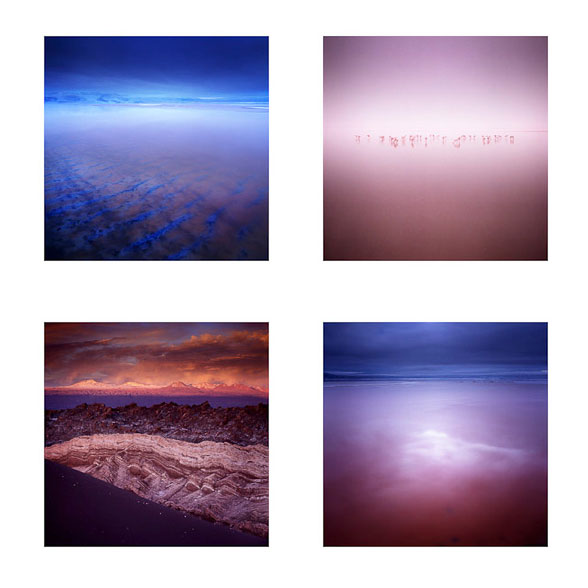
Some news to come about the Altiplano (Bolivia & Chile) at the end of this month, in my monthly newsletter (due out on the 31st at 7pm GMT). altiplano-2

What should we be asking?

A few days ago, I sent out my monthly newsletter. I got several replies back asking me to provide more technical data or technical workflow to my images. It was interesting to see these emails come through, as I've never had this kind of response before to my newsletter.


So I thought about why this might be. I came up with a few conclusions. One was that I had recently released a few e-books which are more technical than my usual offerings. One is about how to interpret images using Photoshop as your image editor of choice. The other e-book is more about how to look for clues in the structure of an image, as this will often guide the way forward in how you choose to edit your work. Both e-books attracted a lot of attention and there were a lot of sign up's to my newsletter.

So I wondered if the reason why I got emails asking me for more information on what ISO i'd used, exposure time and aperture, were maybe tied to the recent interest in my technical e-books.

I've been thinking about how much use it would be to provide ISO and exposure times for the readers of my newsletter. I believe  the answer is 'not much'. This of course is partly a reaction on my part to not wanting the technical side of  photography be the emphasis. I believe photography is first and foremost an emotional response to our surroundings. I see it as an emotional pursuit.

So I've been thinking about what I could possibly offer in the way of information about the images contained in my newsletters, that might aid in helping others gain better understanding. What I think we should be asking when we want to know more about a photograph, is 'what motivated you to make this image?', 'what did you latch onto?'. Was it the subject matter? or was it the speed of the clouds racing over the landscape? Was it perhaps the quality of the light in that particular area of the scene? We should be asking about the photographer's motivation.

I do feel that when others ask for technical info, they're really trying to get underneath the construction of the image. They wish to know how it came about, and an emotional language is often at a loss to do that. For example, me telling you that I thought the light was very soft and beautiful, and that I felt there were elegant curves and shapes in the scene drew me to that particular are of the scene - doesn't translate well. On the other side of the coin, being able to talk in a language that we all understand - such as 'I used a 30 second exposure and f22' certainly provides clarity and fact to an image (if I could remember the technical details - which I don't because I use film, so meta data isn't recorded). But it's missing the mark entirely.

I think language about emotions can be too broad, too intangible at best when describing the creative process. That is why I think people ask for technical data. It is at least a common language that we all understand. It is factual, and although on the surface it may appear to give answers to our questions, the real questions are often still left unsaid and as a result, unanswered.


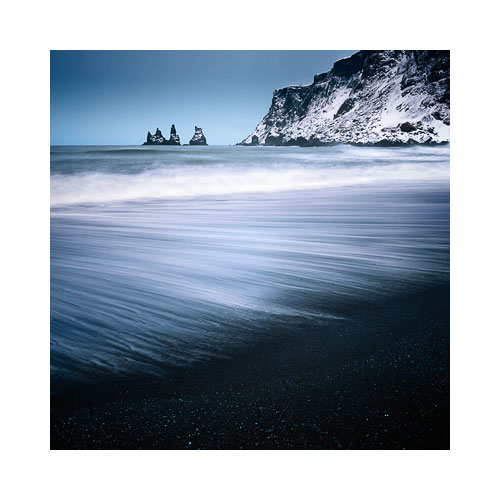
Today we are in Vik, Iceland

  I'm just about half-way through my September photo tour of the south Iceland coast with my group.

Thought it would be nice to pop-in and say hi. So ..... hi !

Reynisdrangar-1

So much talent, for such a small country

I'm in Reykjavik this week. I've just been to a local record store - 12 Tonar, which is no ordinary record store. It is also a music label for upcoming Icelandic musicians and bands.

I've just had the most inspiring afternoon in there. Firstly, the guy who runs the store has little CD players all over the place, and you're encouraged to just pick up an album and put it on and listen. Needless to say, I've just left the store with around six CD's of music that sounded really wonderful to me.

https://www.youtube.com/watch?v=jJlPLOJxAbs&width=400

What I would like to know is, why has such a small country - with a population of around 330,000 people, have such an amazing array of musicians and bands? It seems I am hearing about new music from there almost every week.

What is it about Iceland that the country is producing such an array of music?

I would love to think it's due to the landscape.

[vimeo 37124408 w=400]

I feel though, that it has more to do with the remoteness and identity of icelandic people. There is something very unique about Reykjavik. The downtown section of the 'city' (more like a rustic little town), has a vibe about it - it's very bohemian. It's like a place designed by artists, for artists to live in. Perhaps Iceland is a place for artists?

I wondered today, if I could live here. Being from Scotland, I find our winters pretty long..... and Iceland is one further step on from that. So I'm not so sure if I could do it. And this led me on to think about how where we are from, and what we experience in terms of climate, can shape and mould us.

I know for sure, that Scotland has moulded who I am. So I know that growing up and living in Iceland would have certainly moulded the musicians here, and their music.

As a creative person, I'm aways wondering how much my photography would have differed, if I'd grown up somewhere else. Surely I wouldn't be the same person I am now? We are definitely a product of our environment.

Half concealed, half revealed

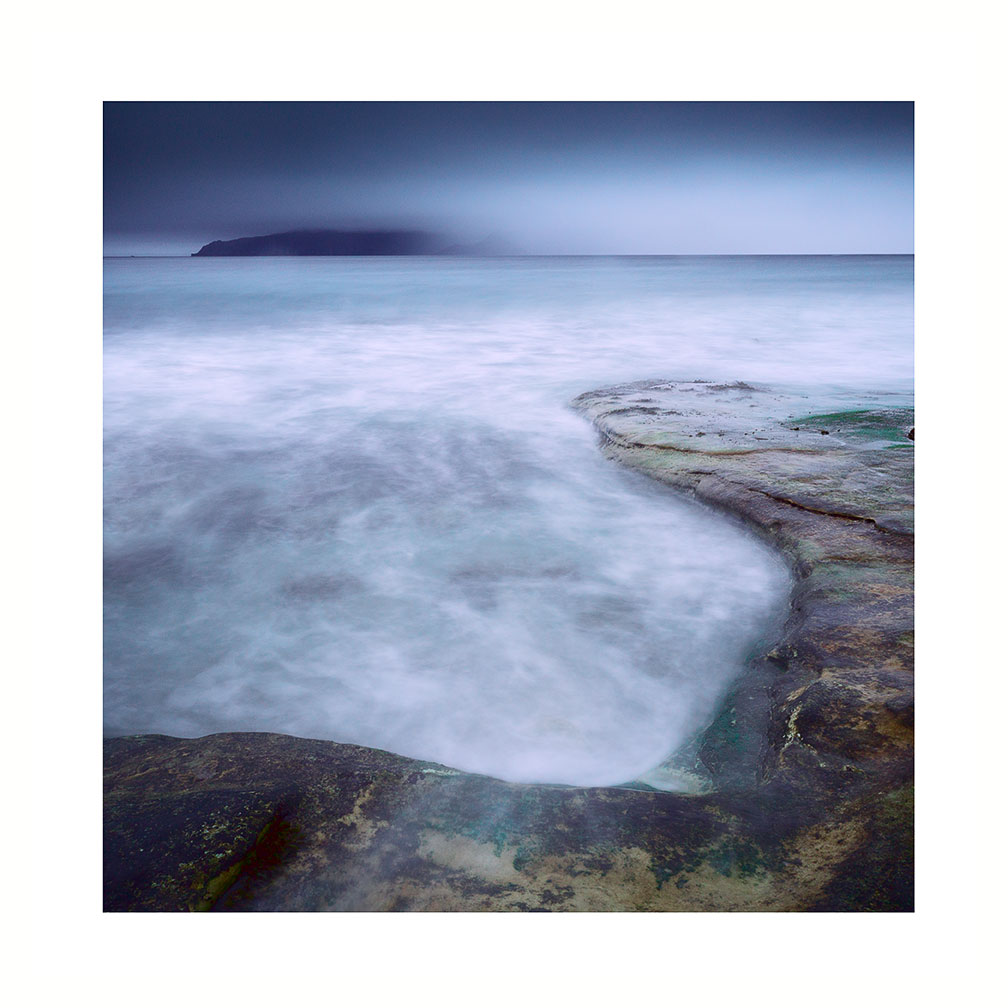
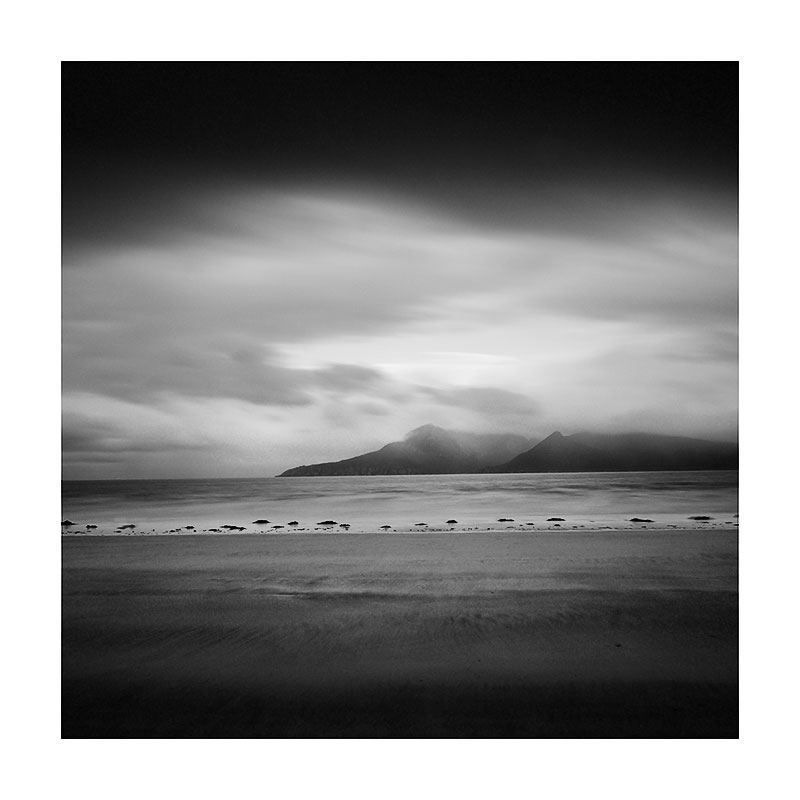
I love it when inclement weather hides part of the landscape. Rain clouds came in today and hid most of the isle of Rum (the land mass you can see on the horizon) from view. For most of the morning it wasn't visible to us, and just as we were getting ready to depart for lunch, it decided to start showing itself to us.Tràigh a' Bhìgeil


This is a digital file from the little Lumix GX1 camera with the 12-35 panasonic zoom lens. As I explained a while ago, I got this system for my workshops, so I could help explain compositional ideas to participants. As you may also know, I am really a film shooter and everything on this site has been captured with film.

It's nice to have such a little camera with me to illustrate and work on sketches. The thing is though, this kind of image is not one to go back to repeat (ideally, I would go back with my film camera to get this shot). The inclement weather provided a unique opportunity. As too, did the tides. My group spent a bit of time last night discussing how a landscape changes over a week. At the start of the week we had high tides, so many of the features of the landscape were hidden from us. I personally feel this is a good thing, as most beaches can be too busy with too many rocks competing for your attention. Towards the end of the week, the tide is lower and we are now finding other areas of the beach that we did not see on day one.

With this particular image, we ventured here at high tide. There is a lot of redundant rocks and kelp hidden under the water, which allowed this 'curve' to stand out. Normally, it wouldn't present itself as a possible composition option because of the 'noise' around it. But also, I feel this image wouldn't have presented itself because of the rain shower that managed to completely hide Rum on the horizon, and for a brief moment, revealed it to me.

Isle of Eigg, Lummix GX1 Style

This week i'm on the isle of Eigg with a group. We were out this morning shooting on Laig bay.Eigg-September-2013


I've got my little Lummix GX1 system with 12-35 Panasonic lens and Lee Seven5 filter system with me, mainly for illustrative purposes. I made this little shot just before we headed back to the guesthouse for breakfast. I deliberately used a 3 stop hard grad on the top 1/4 area of the frame (to intentionally get a lot of burn-in into the image, and I composed it square at the time too (the Lummix is one of very few cameras that allows you to change aspect ratio - something I feel ALL cameras should offer as a matter of course). Aspect ratios are vitally important to how we see, compose and how we find images in the landscape, in the first place.

Anyway, I really wish I knew how to make the colours in digital 'sing' like my Velvia images do, but I've never been able to achieve it. I personally feel it's just not possible right now with the capture mediums as they are right now. But that's my own personal feeling and I know many will not agree with me. So I decided to opt for a black and white interpretation of the isle of Rum here, with a beach littered with evenly distributed kelp.

Approaching Silence

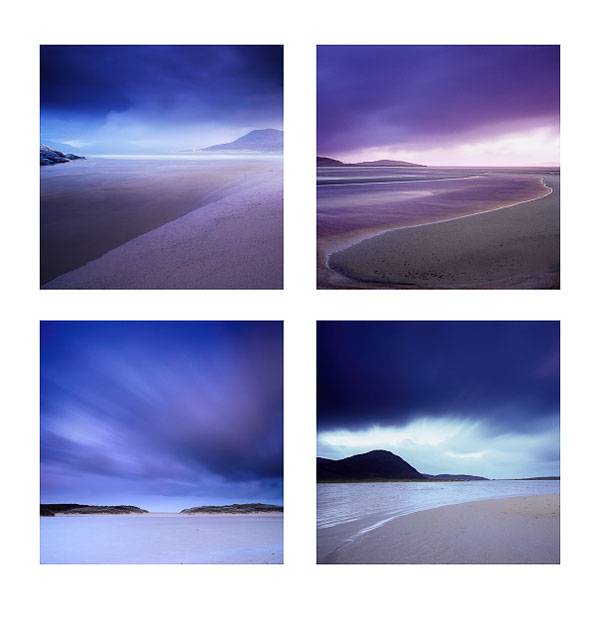
In my post from a few days ago, I suggested that as part of the 'searching' we do as photographers, we tend to make many interpretations of the same subject. Approaching Silence #1

I love to do this even with subjects that, on the surface,  seem to offer very little opportunity to do anything more, other than the obvious.

What may appear to need only one shot to covey a message, seems to spur me on to go looking for something more.

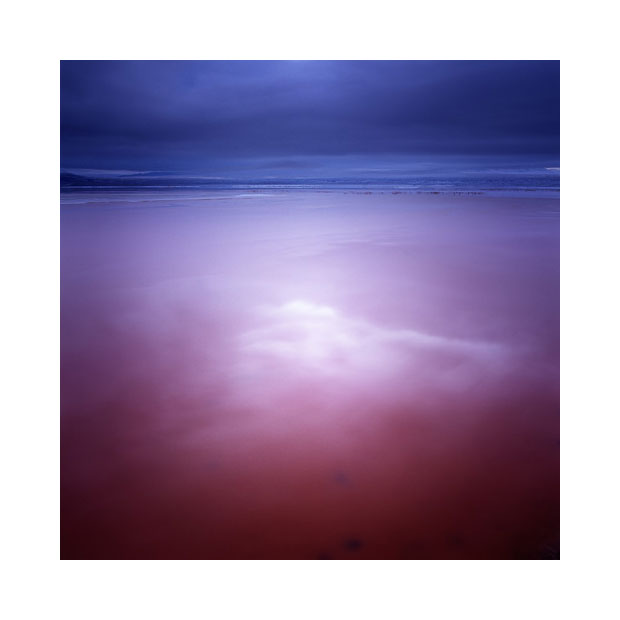
Take the images here of Laguna Colorada in Bolivia. One could be forgiven for thinking that there is possibly only really one image to be made here. There is no background or foreground subject matter and there are no interesting rocks to place in the foreground. So why would I shoot more than one 'interpretation' of it?

I believe the answer has to do with how we react to each image emotionally. The subject matter may be similar, but through variances in tonality and form, the emotional message is different.

I didn't need to change the composition too dramatically between both images. All I had to do, was watch and listen to the changes inside of me, as the light altered the landscape before me.

I could argue that having less material in front of my lens to shoot, made this a much simpler task to do. The less visual stimulation we have to process, the easier it is for us to notice changes, especially if they are small ones.

Approaching Silence #2

I was torn as to which image to choose as a candidate for the final portfolio. I decided to select both. Although to some, it may seem as though I have already told the story once, and need not do it again, the truth is that for me, both these images speak to me in different ways.

I believe that when we are making images of the landscape, our emotions tend to mirror the variances in light, shade and tone that we encounter. We are emotional beings and we are responding to our environment all the time. Light and colour are sounding boards, used to reflect back to us what we are feeling.

Some people talk about images being quiet, tranquil. Others will describe images as tense or relaxed. When we do this, we are essentially describing ourselves, how we feel as we respond to the work we are viewing. The photograph is not calm, you are. The photograph is not tense, you are. Good photographers know this deep down and they understand how colour and tone can be used to affect our moods and our feelings, just like a musician knows he can affect our moods by playing a minor or major chord.

For me, I felt I was trying to convey a sense of 'approaching silence'. Each iteration that I made whilst at the edge of this lake felt like an attempt to get closer to this notion. Ultimately, I was attempting to capture a mood, a feeling. Unwittingly, I was attempting to capture my very own thoughts.


Searching Laguna Blanca

As a landscape photographer, I believe that part of my nature is that of 'restless searcher'.


I know many people who have turned to photography, as a response to the routine in their lives. I will often hear clients tell me that they feel more alive, and in touch with nature through photography.

I think this is because routine tends to dull our senses. We stop noticing things because anything that does not change in our environment does not tend to stand out after a while. Routine seems to contain a lot of  background noise - information that we do not need to process again and again, because we already know it.

Consider the commute to work, where you felt you were on auto-pilot. All you know if you got to your desk on time, but you can't specifically remember details of the journey any more, because, just like how you know which key to type on your keyboard, everything has become second nature. You have stopped looking.

I think that most people thrive on new stimulation. For example, one way to become stimulated is to go on holiday. Being in a new environment, with different sights and sounds can seem to awaken part of us that has been lying dormant while we go about the routines in our everyday lives. This awakening is something I think most of us find attractive about photography, because the very act of making a picture forces us to engage in our surroundings in a way that we normally wouldn't. I think this is why I often hear participants on my workshops tell me it takes them a day or two to get their 'vision' working - they're out of practice, because the routine of their lives does not require such intense processing of their visual surroundings anymore.

In this way, making images with a camera isn't really about making images at all. I think it's more a vehicle  that encourages us to engage with our environment. Give someone a camera and they will go looking. Or more specifically, they will go searching. A camera is a baton, a symbol that says 'now I must open I eyes and go see, look, find, enquire, engage'.
I had a client a year or so ago, who expressed his view that we should try to avoid routine in our lives - even in the smallest of ways. He would for instance, take different routes home in his car each day from work, so that he was able to think more. Or if he was walking, he would deliberately leave his office and make up his journey home. He wouldn't look at a map or plan his trip. He would simply go, and see what he would come across as he made his way from one side of Philadelphia to the other. During the workshop, he was keen to encourage the group to choose different seats each day. As much as this seems perhaps a bit eccentric, I can fully appreciate what he was doing. He was trying to reduce the level of routine in his life because it allowed him to engage more.

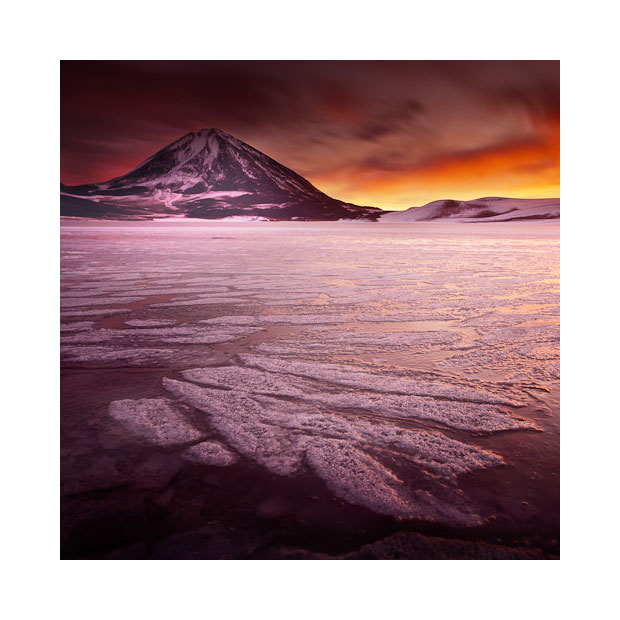
I've been looking at these three images the past few weeks since I worked on them. Essentially the same location, same volcano in the background - Licancabur - just on the border between Chile and Bolivia. I could have shot this scene once and decided that there was little point in making another image of it . But as you know, we don't tend to do that as photographers. We will often shoot the same subject again and again. Sometimes it's because we don't think we quite 'got it', and other times, it's because we're still noticing things about the landscape and recomposing to take into account the new information we have at hand.

In my own case, these three images came about because of two things: firstly, my awareness of the colour temperature, and secondly, my awareness of foreground subject matter.

With regards to colour temperature, I had started my shoot at this location in twilight (the blue hour) and as the morning progressed I watched the hues change the landscape dramatically from blue to golden yellow / orange towards daylight temperature. There is this inquisitiveness we have as photographers to go study the changes in the light. To take pleasure in noticing the small changes in our environment. We have the luxury to stop and watch, to notice and to enjoy.
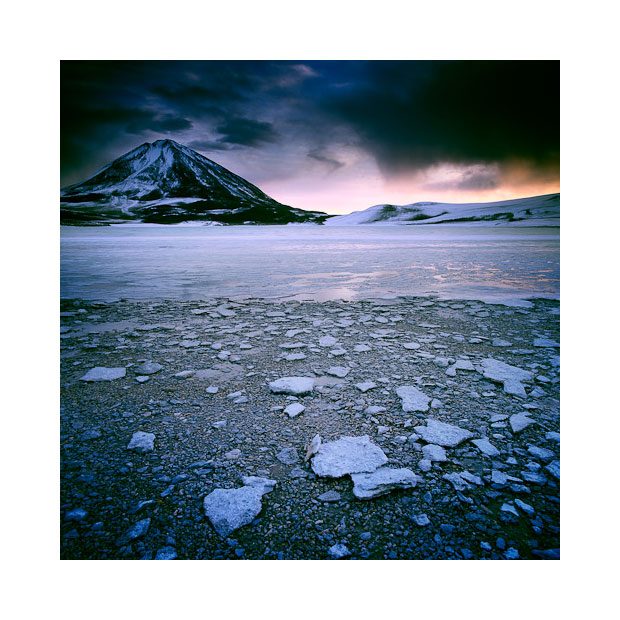
My second point, about being aware of foreground subject matter meant that I kept searching for a better composition. I like to think of this as re-interpreting the landscape.

I believe that doing landscape photography is about having a conversation with our surroundings. When we alter composition, we are effectively asking a new question. How we feel about this new composition is our answer. Making landscape images is a dialog between ourselves and how we feel about our environment. As I said earlier on in this post, I feel that photography is really a vehicle, one that allows us to enquire, to engage and go ask questions. We are ultimately searchers.