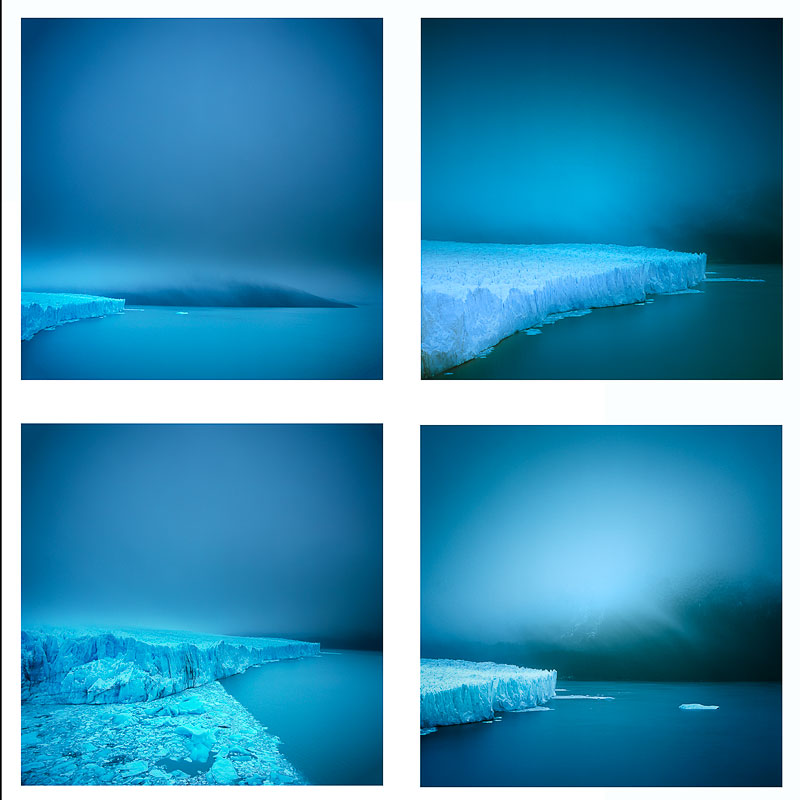
Do Children make more truthful images?

It's been four years now, that I've been self-employed as a full-time photographer. In that time, I've made the transition from looking upon my own photography as a passion / hobby to something that is at the core of my identity and is also my work.
I was told by a few friends who are photographers, that there is always the danger that turning any passion into a job, can kill that passion. It's true, this is a real possibility and I've had periods over the past four years when I've felt as if I'd hit rock bottom in terms of inspiration, simply because I was working too hard, making sure I was making a living, and spending most of my time teaching others, but not making many images myself. There has to be a dividing line and if you are to venture into something you love doing as a job, you need to make a distinction between 'work' and 'hobby'. It's taken me a while to get there, and part of that process has been to realise that each year, I need to set time aside for myself, for my own photography. It's a hard balancing act to do, when you're always thinking about ensuring you keep making a living, and is not, as I'm sure others assume, an easy life.
So I've been on the lookout for some inspiration. I'd dearly love to put my landscape work to one side for a while, and focus more on making images of people. The last time I did this was in 2011 in Ethiopia, and my real 'blaze' at making people images happened in India and Nepal in 2009.

A good friend of mine mentioned that there is a children's charity called Amantani, based in Peru, who's primary aim is to help Quechua children with their education. Often walking miles each day to get to school, Amantani have been looking for funds so they can house and educate the local Quechua children and prevent them from walking many many miles each day to and from their school.
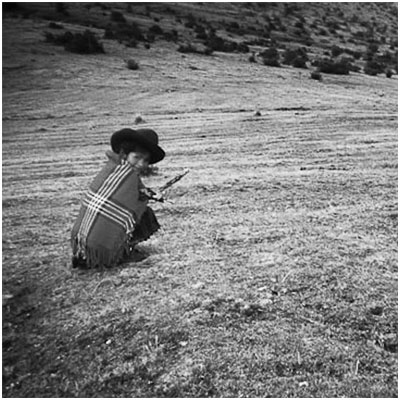
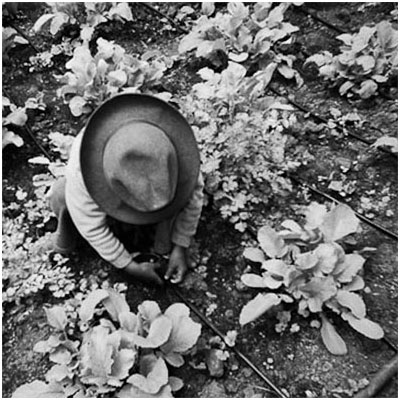
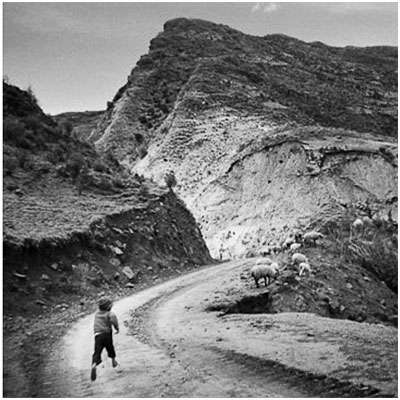
I decided to look into Amantani a bit more, and I stumbled upon a little photographic gallery (which they have kindly allowed me to reproduce here). The work was really beautiful. I thought, wow - I'd love to go there and work with these children if I could get images like these. They are fly on the wall documentary images. But what struck me most, was that they were taken by the children themselves.

I find it truly inspiring to think that little girls and boys made these images. It's made me wonder - do children in general make more truthful images?
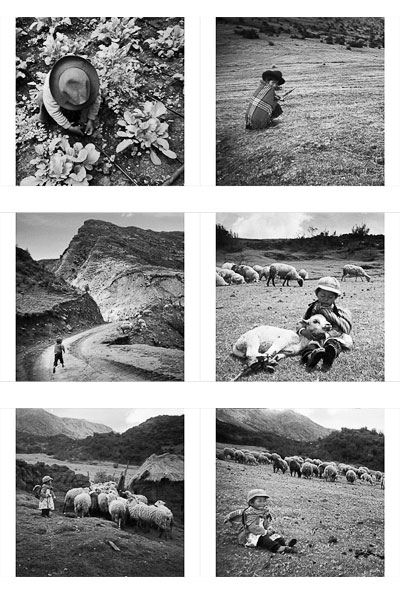
I think they do. Or at least, they must do. I can hardly imagine a child being full of pre-conceptions, and if anything, their eye's must be closer to their hearts and to what they feel, than the average adult.

And the thing is, I really want to get involved. I just don't know in what way as yet, or indeed, if it's a possibility, but it's given me inspiration, and any creative person should follow what inspires them.

One thing is clear to me though, the images captured here were made in the least self-conscious way. I'm fully aware that anything I could do, to document what these children experience each day as part of their Quechua lives, would only capture the surface. For one, I'm not a child (well, I do have some friends who would dispute this) - it takes a lot of effort to blend in, to become invisible. I'm so envious.... if only I were 7 years old again, maybe I could create images as honest as these are.

If you'd like to see the children's original photographs, or find out more about Amantani, then please go here.

And if you would like to donate, please go here.
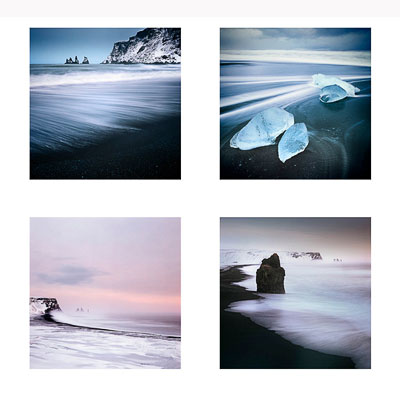
Baffin Island

A few days ago, a friend of mine showed me this video. [vimeo 33516816]

What a spectacular place Baffin Island is. Remote, wild, I'd love to traverse the frozen sea just like these guys have done. It reminds me so much of my time on the southern patagonian ice field.

But I'm also struck by the high production values that go in to making a movie like this.

I dislike the term 'post-processing'

It's like saying you're doing your washing. It lends nothing to the respect that any good image deserves after the shutter has been clicked. The term 'post-processing' could just as well be a way of doing a tax return on an incomplete image. It's a truly horrible phrase, and one that I feel should be removed from the dictionary of any self-respecting photographer who cares about his art.

The birth of an image requires care and attention. It is a long process - one with no defined beginnings or endings.

The conception of an image may start the moment you set foot out of your car, put your wellies on, begin that hike into the moors. It may have begun much earler - while you were dreaming the night before the shoot you eagerly anticipated. And let's not forget the point at when an image is complete. This step too, is ambiguous at best: I've never really known when my work is done on many of my images. It may be at the point of the shutter being clicked, or it  may be after a week or so of living with it in my digital-darkroom. Sometimes, I realise months later, it was nowhere near complete and is still unfinished.

I make this point because I don't think we should make a distinction between our time out in the field, and our time behind our computers. I think the word 'post-processing' helps create a divide, and it's unhealthy. It encourages the idea that any work done after the shoot, is an after thought. For some, it instills the attitude that their approach out in the field *should* be different from their approach once home behind their computer. But most importantly, it encourages one to separate the creation of an image out in the field, from the work that is done once the image is back in the studio.

I see no separation.

Image creation and manipulation are one and the same. I compose in the field; I recompose (by cropping) in the digital darkroom. I think about shapes and tones in the digital darkroom; I do the same whilst out in the field too. I think about the scene in 2D in the digital darkroom;  I've taught myself to look at a scene in 2D whilst out in the field. There is no separation. In fact, I'd say that there is a symbiotic relationship between my time out in the field and my time behind my computer. Things I learn behind my computer screen, feed back into my time in the field, and my time in the field influences the time I have behind my computer screen. Again, there is no separation.

While I am out in the field making images, I'm thinking about images. I have learned to abstract scenery into a photograph while I am on location. I have also learned what I can do with certain tones, contrasts I encounter out in the field during the digital-darkroom work. I see textures and tones in the landscape and I think about how they can be transformed, brought out, enhanced or subdued in my digital-darkroom. I do this on location. And because all of this is happening at the same time, there's never any post-anything to be done. It's just a continuous flow of creativity.

My main reason for bringing this up, is not because I feel it the term 'post-xxx' encourages us to become emotionally distant to our work (it does), nor the fact that it makes us think of photography as two different approaches (it does), but mainly, because I think a lot of photographers think about 'scenery' whilst out in the field, and they think about 'images' once back at home: there is an unhealthy contextual shift in attitude to ones work the moment we move from location to computer. Our approach and attitude to our work should not change, regardless to where we are or what we are doing, if we wish to be better photographers.

There should never be any dividing lines in art - images evolve. To assume that our time out in the field is one of two clearly defined steps, encourages ourselves to put limits on what each of those stages involves. It's creative pigeon-holing. Images are born and grow in the most surprising of ways, and by keeping an open mind, we let them go where they want to go.

Let your creativity flow by removing confining terms such as 'post-processing' from your artistic vocabulary.

Digital Darkroom Workshop Announcement

For a while now, I've been wishing to teach photographers more about how to 'interpret' their images during the post processing stage of their image creation. Like Ansel Adams, I do not believe that the creation of an image stops at the moment the shutter was fired. Learning to 'see' whilst out making images shouldn't just stop at the point of capture. Learning to 'see' is an extremely valuable asset in assessing images for post editing. What do we do with our work, how we manipulate it, should come from a strong sense of vision. We should be able to see themes, patterns, relationships within our images and know that these are the essential building blocks of our editing sessions. To do that, we must understand what is going on in our images so we can bring about our message.

Digital Darkroom Workshop Announcement

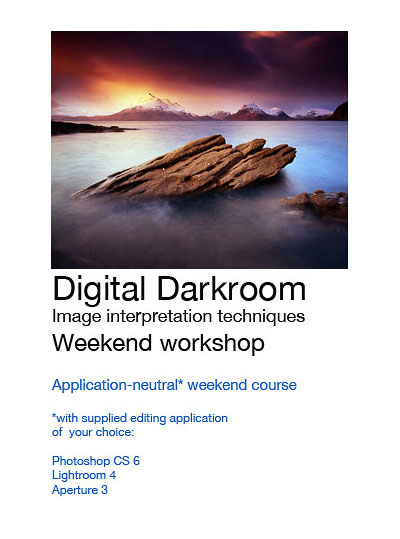
Starting this November, I am introducing some Digital Darkroom workshops, with the primary focus on learning to 'interpret' what is there, and how best to apply your tools of your choice to suit the nature of each image. The emphasis is on learning to look at your own images and know how best to approach them during the editing stage.

I must stress that these workshops are not about learning Photoshop / Lightroom or Aperture. Instead, they are about teaching you to interpret and understand what is going on in your images, and how best to approach them in the editing stage.

These digital darkroom 'image interpretation' workshops will be based at my office, situated in Edinburgh, Scotland. The workshops are weekend affairs, starting on the Saturday morning at 9am and finishing on Sunday at 5:30pm.

To find out more, click here.

Silver & Light - Collodion wet plate process

I've been interested in the Collodion wet plate process since I was introduced to it by a client last year whilst on the isle of Harris running a workshop. If you've not heard about this process, then I strongly urge you to watch this video to the very end. What appears to start off with someone making crystal-meth, is in fact the intro to a beautiful video about someone who is so passionate about creating images, he has converted a van into a massive camera. Each image he makes with the Collodian wet plate process costs him around $500 USD. Yep, that's right $500 USD.

[vimeo 39578584]

I would dearly like to thank Alex Learmont, who came on my Eigg workshop this April, for bringing this video to my attention. Alex is an artist himself, and it was so great to share some thoughts on photography with him and the group I had on Eigg.

I'm so keen to try out this process myself.

I think there is something inherently beautiful about an image that is captured once: when the negative and the image are one.

Ian Ruhter, who is featured in this video, defines himself as an alchemist.

Well, isn't that what all photographers really are?

Aren't we really magicians, creating an illusion? I think so - an alchemist uses chemicals to change the appearance of a substance.

Ian Ruhter shows the majesty and mystique of the photographic process to the full. In the good old days of silver halides, we were all alchemists, turning light into shapes and tones on paper. Only, with the Collodion process, Ruhter and others are doing it with metal and glass.

Before I end this posting, I would like to say that there are many photographic workshops here in the UK that deal with the Collodion wet plate process. From what I understand (very little to be honest), the plate has to be wet for it to work, so the materials have to be taken out into the field (which is partially why Ruhter takes a van out into the wilderness with him - the main reason is scale). Anyway, Alex Boyd, who is currently residing on the isle of Skye, is offering Collodion wet plate workshops. My dear client Anne Thompson has been on one of Alex's workshops and highly recommends it. Worth checking out.

Photographic Talk, Dundee 22nd April

If you would like to attend, you can simply turn up before 7:30pm. The society would appreciate a small donation - £2, and if you can let yourself be known to the treasurer Stuart Dodd on the night, that would be great.

Michael Kenna Exhibition Book for £10

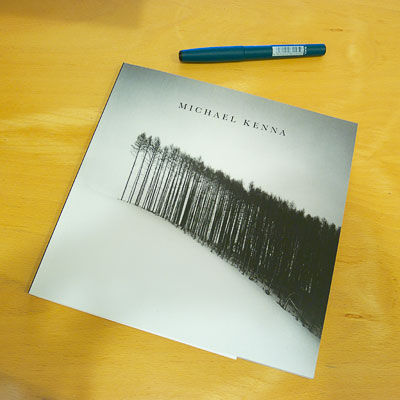
I love Michael Kenna's books by Nazraeli press. They're gorgeously printed. But last week, I picked up this soft shell book of Kenna's work for £10 from Chris Beetles Gallery in London.

As part of a recent exhibition at Chris Beetles fine art gallery, they printed up a small 210mm x 210mm book of Kenna's work. The book comes with a price list for his prints and also, what I liked the most, was that each image had the title written in Kenna's own hand. Which is rather unusual. It's also pretty cheap at £10 a copy.

It by no means as beautifully printed as the Nazraeli titles are, but it's an unusual offering, and one for those who would like to have something by Kenna in print, or maybe for those fans like myself, who just have to own anything he does :-)

If you'd like one, then best get it at http://www.chrisbeetlesfinephotographs.com/publications/michael-kenna.html.

How far have you come, in your own photographic development?

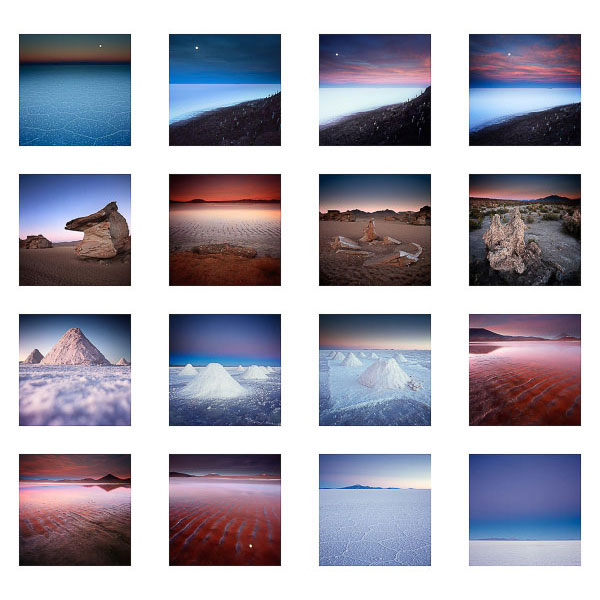
Last year, I conducted my first photographic tour of the Bolivian altiplano. We made our way from San Pedro de Atacama in Chile across the southern side of Bolivia to the capital La Paz over nine days. It was quite a tour.

I'd originally shot the altiplano in 2009, and the images from that particular shoot were at that time, an epiphany for me: I saw the start of my journey towards more simplified compositions.

Returning back in 2012, I wasn't so sure I could add anything new to what I'd shot back then, so it was a surprise to me to note that my compositional style has become more reduced and more simplified in the intervening years.

One could argue that shooting a square aspect ratio camera helped me achieve that look of simplification. I would indeed agree, that square offers the opportunity to be more abstract with compositional elements than any rectangular aspect ratio can. I also feel that rectangles are more traditional, whereas square has no deep roots in art history: rafael did not paint his images on square canvases.

One could also argue that I've had a chance to become more familiar with the altiplano. This is also true. I do believe that we often need two visits to a location: the first to understand it - to know what works and what doesn't work, the second visit to do the work with a more refined viewpoint.

I'll be heading back to Bolivia in two months from now, and I'm really looking forward to seeing what new material may transpire from the tour we will be doing there.

By looking back at my previous work, I'm often able to see that there has been a shift, a subtle change in direction. I feel all photographers should do this as a matter of course. Consider, reflect, open up an inner dialog, ask yourself some questions about your development. Other times, I feel the changes are less apparent, but usually something comes along to show us just how far we've come.

Note: I'm returning to the Bolivian altiplano in June to conduct a photographic tour with six participants. If you'd like to come along, I'm pleased to say there are two spaces left. The tour was originally full, but there's been a couple of cancellations due to health issues and other commitments. If you would like to find out more about this trip, you can read all about it here.

Think long and hard before changing your workflow

A few weeks back, I bought £1,000 worth of Fuji Velvia RVP 50 film. My reasons for the purchase were not only due to the price increase that has just been announced for all of Fuji's films, but more importantly, to know that my workflow is not interrupted over the next few years.

Before I get on to the main topic of this post, I'd like to let you in on a little secret: I'm not a prolific shooter. It has taken me about three years to get through 200 rolls of film.

Anyway, back to the main point of this post: Workflow.

Workflow is important.

My own workflow has been developed over a 20 year period, and I'm fully aware that buying anything new, changing software, doing something different to my workflow, can and will influence how my final images look. I have something good going on with my current workflow, that I'm unwilling to change it, and that of course means, not changing film stock.

And this is the core of this posting today: I think we should take time to reflect and consider any new acquisitions or changes that we take on board with our existing workflow. This I feel, should start with the kind of film / sensor / lenses - right through to the screen calibrator, film scanner / editing software that we choose. Small changes can have massive impact to how the final results can turn out. Change too many things in one go, and it can lead to creative frustration (as well as long learning curves ), when all that really matters is being free to create new work. After all, this is what we are here for. So the most fundamental thing for us, is to have a workflow that enables the creation of new work, rather than inhibiting it. I can't think of a more effective way of stifling my creativity than introducing something new into the equation with little thought or knowledge as to how it may change things for me.

So I would argue; if you are getting results that you are very happy with, and you have confidence that it's as good as it can get for you, then don't be swayed to introduce something new without much consideration as to what it might do to the look and feel of your existing style. I'm not advocating that you should stand still and never change, but instead, consider the impact of any alteration to your workflow, during the introduction, and also for some time to come.

I'm very happy with my workflow. It has become transparent (invisible) to me now. I seldom have to think about anything to do with the tools I use, because I know them so well. I may not have much new to learn from using the same tools, but I still have a lot of growing to do. There's a subtle but very big difference in that. If you know your tools well, you can continue to grow and evolve with your own style of work, because you're working in an environment that you feel comfortable and safe in.

I have two particular examples in mind that I would like to tell you about. Firstly, I found that my film scanner software is no longer supported and has problems running on my computer. After some battles, I decided I needed to change software. Well, it was perhaps a good year or more before I felt I was getting scans that matched what I had come to expect from my old software. I had to go through a long learning curve to get back to where I was a few years before. Some things of course are inevitable. Software becomes end of life, operating systems move on and drivers for hardware no longer work. I despise the term 'upgrade', as it often means 'headache' when all you really want to do, is get on and work with the tools you know so well, because they don't inhibit what you do. They are simply an interface between you and your vision. I was worried for a long while as to whether I'd reach the look and feel I was used to, from using the new software. I'm lucky that it was really just down to learning the nuances of the software, but some things aren't as simple as that. They can radically change your style and there's no going back.

About 2 years ago I bought a Hasselblad 500CM camera from a dear friend. I knew at the time that:

a) It would take at least a year or so to get used to it. This included being familiar with the actual mechanics, but also, getting used to composing in square. b) By using a new system, my style may change, for the better or for the worse. I really like shooting 6x7 or 4x5, so I wasn't sure if 6x6 was a way forward for me, or a dead end. I was also worried that I might not be able to go back to rectangles and if that happened - my older style would have vanished.

I had an awareness that by reaching out and trying something new, something that I may cherish about my current style may be lost in the process. Just having that awareness is important.

I'm happy to report that after a few years of using the Hasselblad, I now see it as an extension to what I do. I've found I can move between the Mamiya 7's 6x7 aspect ratio and the hasselblad's 6x6 aspect ratio when I feel I wish to. But It's taken a few years to get to this, and I was always thinking about the consequences of my choices when I did decide to give it a go.

Yep, I love equipment, and I'm a bit of a gear head at heart, but I also know that the final work is what's most important. I also recognise that by changing, or introducing something, or too many things in one go, what I may like about my current work may be lost. But it also may be enhanced in some way I never imagined. Change is good, but without time to master new things, and time to reflect as to how it is impacting your existing style, it's an unnavigable landscape we're working in. And for my own creativity's sake, I'd much rather be somewhere where the terrain is familiar, and isn't going to lead to any creative frustrations. Think long and hard before changing your workflow.