Black Canvas

Several months ago, I wrote a blog posting about tonal relationships in photographs, and how dark areas of a frame create mystery. This was all spurred on by something I read in Galen Rowell's excellent book 'Inner game'. In it, he had envisioned a time in the future when something like HDR would arrive and he (correctly) suggested that with the power of such a tool, it would be very easy to remove all depth and mystery from an image. He died in 2001, so this was well before the advent of HDR.
But the main point that Galen wrote about in his article, was that he felt that dark areas of an image convey a sense of mystery, because as part of our primal instinct is to associate dark with danger. For example a dark cave or a dark forest would be considered a possible threat to our ancestors.

I bring all this up, as a precursor to what I'd like to discuss in this post.

Dark areas in a photograph should be considered as a welcome dimension, if they do not disturb the harmony of the rest of the image.

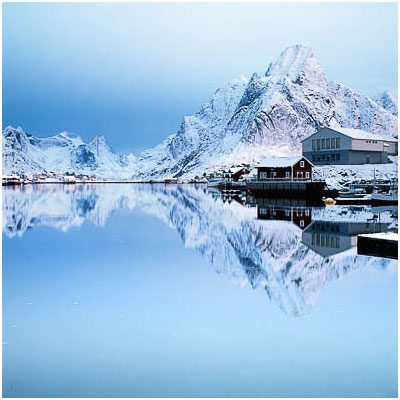
A few days ago, I discussed how using Snow in a photograph can create a sense of having a blank canvas, a space where the eye can float freely away (or over). Snow can simplify or distill our compositions down, reduce the landscape to the core elements that we wish our viewer to be attracted to. Similarly, black areas of a frame can be used in exactly the same way.

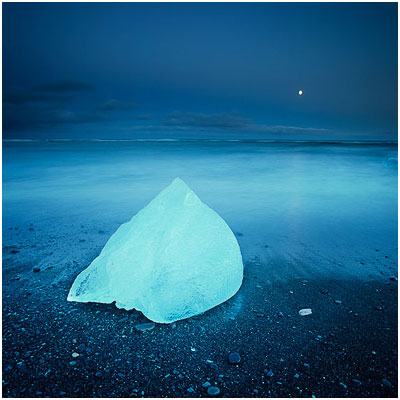
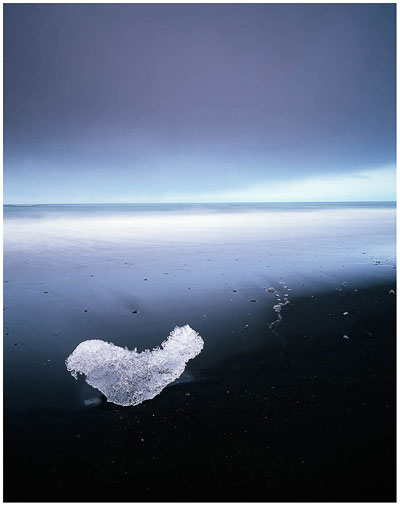
Take the above shot of my 'ice seal', shot in Iceland in 2011. Part of my attraction to a scene is often the lack of clutter around any interesting objects. This little sculpture was sitting on the beach separated from other ice debris. The black beach acts as a kind of 'filler' or blank canvas, pretty much in the same way as snow does. If anything it seems that there is a rule here - large areas of black act exactly the same way as large areas of white snow do. What this comes down to is recognising that spaces we encounter in a landscape can be put to just as much good use as the main objects of interest. If a photograph could be compared to a musical score, we would say that it's not just the notes of the melody that are important, it's the spaces between them as well.

I've always been intrigued that most photographers go looking for scenes with far too many things going on in them. It seems to be a natural conclusion that when we first think about landscape photography, we think about what we want to include in a shot, and seldom do we consider what we wish to exclude. Composing is partly an act of editing on location.

But when we do find good compositions, it's often because we have isolated out a few key objects in the scene for interest. It takes us a lot longer to learn to really see all the remaining clutter that was also present in the scene. So often do we return home only to discover that the scene we recorded, contains additional distracting elements that we never saw whilst there. This happens because we are selective in what we choose to 'see' at the point that the image was made. It takes years to begin to really see beyond what we have been attracted to, and notice subtexts. So in essence, landscape photography is a difficult thing to master, mainly because we have decided to start off with too many things competing for our interest within the frame. This is at odds with how many people find empty landscapes intimidating. I've often heard participants express a feeling of being overwhelmed by too little going on in the frame, when I have often believed that the less you have to worry about - the easier it should be to make an effective photograph.

Blank empty spaces in our landscape should be considered as inviting spaces to work in. They should be easy to work with, rather than hard, because we are trying to juggle a lot less than we would be, if we had to worry about numerous objects, each with their own conflicting shapes and tones.

Lastly, let's consider what a black canvas is for us, compared to a white canvas. I find snow scenes generally uplifting. The degree of bright tones within the frame convey a sense of openness and transparency. Darker images, like my 'ice seal' photograph do not. The adage that 'white reveals, and black conceals' is true. Black presents a less optimistic mood, and I often feel the images convey a less uplifting mood to them. So tones are an important element of our compositions, but I often feel they aren't considered until we are back home, viewing our image on a screen. It seems that while we are out in the landscape, we aren't entirely able to convert what is in the frame of our camera's eye piece into an abstraction (i.e photograph). We're still holding on to the notion of scenery to a degree. We may recognise objects, shapes and patterns and may have constructed a meaningful composition around what we've found, but all too often, we don't recognise the tonal aspects of what we have. A tree line across a snowy landscape can look like a line of trees while we are there, but when we're back home looking at the image on a computer screen, we see a black caterpillar crawling across a white piece of paper. Our line of trees have turned into something all together different from what we saw, because we did not understand that trees will render muddy and dark when encompassed by a much brighter tone (in this case, snow).

Maybe that's something for a further post.

White Canvas

Last year, on my Bolivia trip, Jezz said to me 'it's not that you like snow Bruce, it's just that you like white'.

I think Jezz hit on something with his humorous comment.

I do like white.

Over the past few years, as my photographic style has simplified, it's as if that 'white' that Jezz speaks off, has become something I seek, because it has a few properties about it that I find are an aid to my compositions and inspiration.

Like a blank canvas, these white spaces allow me to reduce the content of the frame down to the most elemental building blocks. Less objects in the frame can often suggest a much simplified view.

But these white spaces also allow the objects that I do include in the frame to be more separated out; for them to have breathing space around them. This breathing space implies a sense of calm to the photograph.

Snow is the epitome of space and 'nothingness'. Which is why I think I'm often attracted to the colder regions. There is something unblemished about Snow and Ice. It rarely has the mark of man on it, and through it, we are allowed to place upon it our own visions of what is or isn't there. And that's what space in photographs does for us - it allows us to have more freedom to conjure up our own thoughts and dreams.

So although Jezz thinks I like white, I really like space. Space in a photograph allows for things to be more calm. Space also allows for the image to be more simplified. Space is good.

But it's not just Snow that gives us this. We can reach similar levels of space and simplification by using other surfaces. Large areas of sand on beaches is another example, and so too is anything that has a simple texture and area to it with almost no break to its own continuity. This continuity I speak off, allows the eye to pass over, to float by and head towards the subjects we do wish the viewer to rest their eyes upon.

By isolating out regions of the landscape where it seems as though nothing is going on, we can create images where it feels as though there is more going on than meets the eye. Less is more. And by removing distracting tones, or overly complex structures in our images, we reduce our message down to one that is concise. Our message becomes much easier to digest, and more coherent as a result. Good images have often simple, but strong messages.

Yes, space in the landscape is good.

Is it right, to take, or to make photographs?

I've often wondered why sometimes, language used for image making often has an acquisitional aspect to it. Words such as capture, or  to take an image resonate with me in a rather negative way.

I was asked once, why I always seem to say that I make photographs, not take them. I hadn't been aware of my own language, but after some time thinking about it, I know why I use the word make.

Firstly, there is the sense that I am creating something, rather than pointing my camera at something and just copying what is there. To take a photograph suggests I'm copying what is already there, and this is perhaps a terrible mindset to be in. Our mindset being an important part of the picture making process (not picture taking process).

Secondly, I don't go making images so that I have a collection. I am not a collector, and the idea that I take an image, suggests stealing a moment. It suggests ownership of something that was not mine and never can be. It suggests the habit of a collector, rather than someone who is in empathy with his surroundings and wishes to work with it, rather than at it.

Thirdly, taking implies possession; possession implies a sense of oneself being superior to the landscape. It suggests a lack of respect for what is around me, and someone who is not receptive to what the landscape is. It implies a lack of emotional connection.

I make images. They are creations based upon what I saw and appreciated in reality.

I enjoy my time outside, listening to the sounds of the wind and rain, watching atmospheric conditions come and go. I feel very much in empathy with my surroundings. Like a camper who, once done 'leaves only footprints', I have the utmost respect for the places I make images of. I like to think of my images as being an interpretation of the places i've experienced. I can't take the landscape's spirit. I can only represent it, in the form of art that I make.

Perhaps this feels to you as if I'm splitting hairs. But isn't it true that, often it's the small things that matter, and by having the mindset that I do have, I feel I'm able to abstract my creations away from the landscapes they represent. I'm able to understand that what I do, is an interpretation of what was before my eyes, not a verbatim recording of it.

It's an important point, I feel.

Tripod Height?

I'm on my fourth tripod in 12 years. Mostly due to the fact that it took me a while to realise that salt water is highly corrosive, and leaving the tripod lying around for a week or two, rendered it ready for the dust bin (even a graphite vice wouldn't release the welded together legs). But recently, I've changed tripod for one reason alone: height. Looking at many tripod websites, such as Really Right Stuff's dedicated page to recommending what sort of height you should choose for your tripod, I've come to one conclusion over a couple of decades of making images: get the tallest tripod that you think you can handle carrying around.

Tripods are only useful if you can handle carrying them around with you. So make sure the tripod has a weight that you can handle carrying for more than a few minutes. Otherwise it's temping that it might become a rather expensive door stop or piece of furniture in your home.

The tripod I currently own is the Gitzo GT3542XLS. This is my personal preference, for a few reasons:

  • I'm 6ft tall and it's vitally important to me that my tripod can extend well above my own height
  • I hate center columns, as they make good tripods into poor ones, as the centre of gravity is compromised
  • I hate center columns, as they get in the way when I put the tripod down really low (see my next point)
  • I hate using center columns turning them upside down to get my camera down so low (it's a personal preference - this is actually a great feature for some photographers and I often suggest it on my workshops)

I wasn't too keen on it having four columns. I prefer to have a tripod with three, as it makes for setting up - much quicker and a breeze. Four columns is often an added complexity, but not so with this tripod, because of its height, I often only extend it to 3 columns at most.

The reason for the height though, is that there are times when I find that I'm standing on a high rock, or the side of a steep slope. Those times require a longer leg to extend below where I'm standing. If it's a beach, then it means I'm standing on a rock, and one or more of the tripod legs needs to extend below the height of the rock I'm standing on. If it's a slope I'm on, then some of the tripod legs have to extend down the slope, if I wish to keep the tripod at the height I want. And that's the main crux of the matter: height is a vital ingredient to a composition.

If the height is not right, then the composition may suffer. I've had times when objects in the scenery touch other objects, or overlap, causing a feeling of conflict within the composition. All because the height of the tripod was not correct.

So there you have it. I have a massively high tripod these days, and I'm not going back to any recommendations to buy a tripod that reaches my own height (Really Right Stuff make great products, but their recommendations for height are not worth listening to).

If you're in the market for a tripod that can cater for all the compositions you see with your eye, you should be thinking of one that extends well above your own height. But you should do this with the consideration that it has to be portable to. A tripod can never be too high, but it can be too heavy, and if it's that way, you'll often find it left at home in preference for one where you can carry, even though you can't get it to work with all of the visualisations you see on location.

Aurora

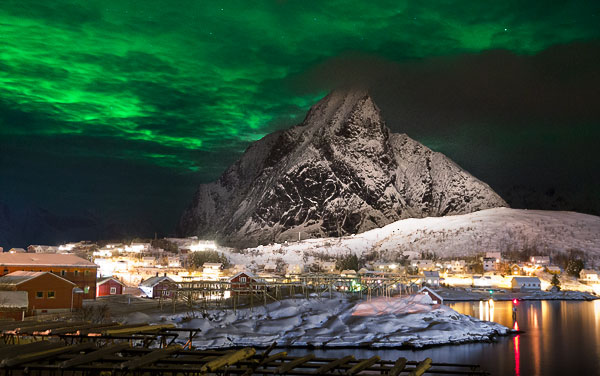
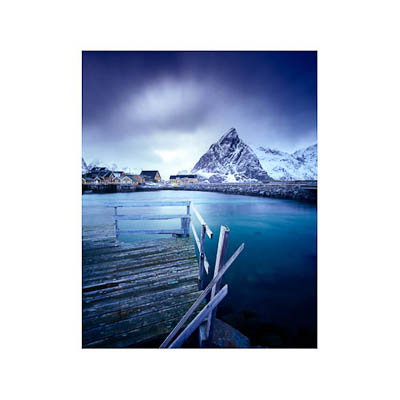
Just a quick post tonight. My first group have left Lofoten. We had a great week, lots of settled weather, lots of snow, lots of pink sunrises and sunsets, and we even had the Aurora.

This shot was made last night on my little Lumix GX1 camera. The group were out for a few hours shooting and got much better shots than this one. Might head out tonight for another look, as it was extremely clear tonight. Not a cloud in the sky :-)

I'm on the Lofoten Islands

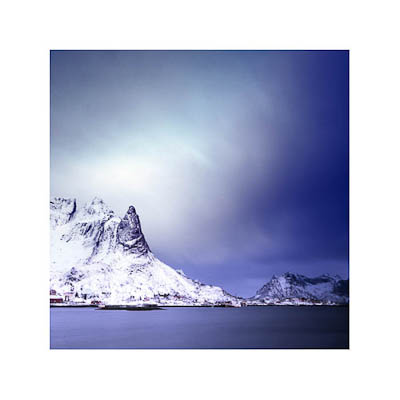
I arrived in Reine, Lofoten a few days ago. Tonight I will be picking up my first group for the next week. The weather has been unseasonably mild, but there is plenty of snow here. This is just a short post to send you all my little 'post card' from Reine.

I've got my trusty Mamiya 7II cameras with me on this trip, alongside a Lumix GX1 (fabulous little camera) and some fresh stock of Fuji Velvia. It's been great returning back to my Mamiya 7II. It just feels so comfortable and there really is something to be said about working with a particular system for a very long period of time: it becomes almost an extension of you. Like a duck to water, I'm finding that although I haven't really used the Mamiya 7II in a year, everything has come back to me like second nature.

I've given the Hasselblad system around a year and a half of dedicated time, to get to know, as I think it's important to stay with a system for a while to get to understand its strengths and weaknesses and most importantly, to see what kind of impact it has on my image making. I do love square aspect ratio images, but I often find that if I'm going that way, I will simply crop my Mamiya 7II images to suit. I just think I'm really a rectangle shooter, that sometimes goes for square. It's taken me a year or so to find that out. Just glad to return to a system that I feel works very well for me.

Rediscovering your past

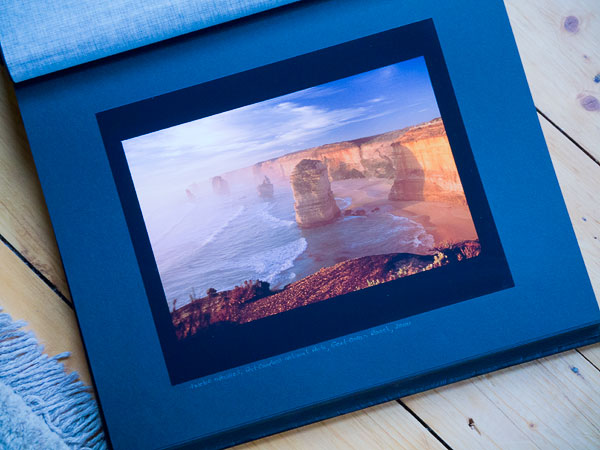
Way back in the late 80's, I got my very first camera. It was an EOS 650. I'd wanted it because I thought it was a really cool looking camera and it had lots of amazing things on it, like auto-focus. I was not, at that time, so motivated by the art element of photography. I was around 20 years old, and I just really wanted a camera, because my friend Craig had shown me his Pentax ME Super and Ansel Adams work. I was really a budding musician, but a camera was a lot cheaper to buy than a Synthesizer was. This week, I've been given the gift of discovering something that I lost a while back: one of the first photo albums I ever made of images when I had decided that photography was 'it'. I was busy looking around the house for something else and came upon the 'lost' photo album, much to my surprise and also delight.

It's been really interesting for me to look at the images contained within the album for a few reasons.

1) I've been able to see that elements of my current style were evident in some of the images contained within the album. In essence, these early images showed me a glimpse of where I was to go with my own photographic style / development. In my album, I see symmetry in some of the images, and a penchant for balancing objects in the frame. I had to laugh at how transparent my style was / is / has always been

2) There is an innocence in what we first create. When we start out, we don't know what we're doing, and that 'not knowing' is a form of freedom. We are not contained by rules, if anything, we think we need to know rules, so we can improve on what we're doing. But I'm really not in agreement with this line of thinking. I see things in my earlier work that I look at with pleasure and think - wow - that's really something that I tried that, and in some instances, what I know now that 'should not work', did in some of my images. It has reminded me that I should always try to be flexible and as open minded as i can in my own picture making. If only we could recapture some of that innocence we first displayed when taking up photography!

3) The path behind us, often indicates or tells us a lot about where we are going. I've seen how much I've changed. I've also been allowed to consider that this little photo album was perhaps the germ of what was to become a career for me, and a life changing occupation. It blows my mind to think that one thing can have so much power in shaping my own future.

So I guess I would like to ask you all, if you have been shooting for a while, to go back, dig out that first photo album, your first shots, and look at them again. All those shots you were maybe embarrassed about might contain some form of beauty that you are now mature enough to see, and would wish to develop. Conversely, all those shots you thought were 'ace' at the time are maybe quite embarrassing, maybe cliche, who knows? One thing is for sure, looking back on our work, is immensely satisfying. But additionally and more importantly, we can learn a lot about ourselves and our photography in the process.

Film Streaks Mystery

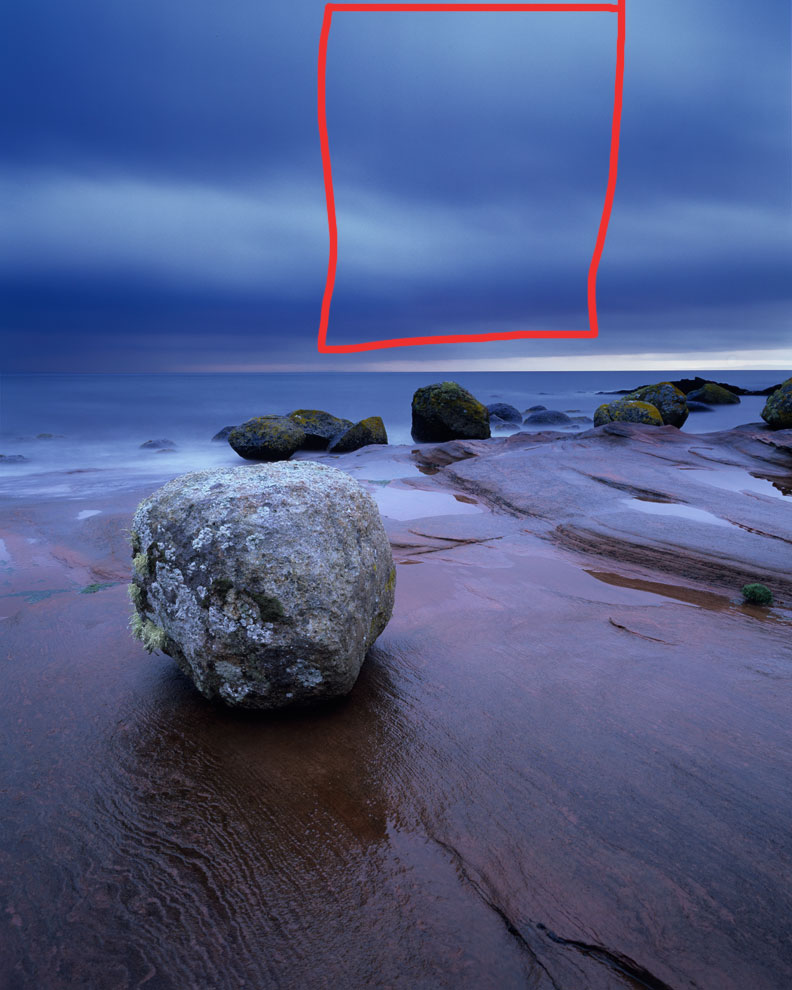
For the past five years, I've occasionally notice vertical banding in some of my Velvia films.

Please click on the image for better detail.

Here is what I have tried to do to eliminate the issue:

a) I've tried different labs for processing, and still get the same results.

This has led me to believe that it is either x-ray damage, film manufacturing damage, or the camera is at fault (possible light leaks or unevenness of film in the back of the camera), or filters in front of the lens?

b) I get the streaking problem with my Mamiya 7II camera, and also my Hasselblad, so I feel that rules out the actual camera body. Which baffles me, because it appears to be on the same area of the frame!

c) My lab has looked at the films and states that it's not x-ray, because it would also be evident on the dark parts of the film and it is usually a wavy streak going across the film anyway. So that rules out x-rays. I've never had any issue with x-rays ever. I've had some film in my bags over multiple trips and multiple x-rays and never seen any fogging or streaks like this.

d) This has led me to think it might be manufacturing issues with the batch of Velvia I have. I have looked at all my images since I returned from Cappadocia, and around 10% of them are damaged. I looked at my film stock and determined that I have a small batch of film left from around 3 years ago - when Fujifilm kindly sent me a lot.

I've decided to use the newest batch of Velvia I bought just before Christmas, for the next while to see if this eliminates the issue. But in the meantime, I would like to hear from you if you have had similar results with your films, particularly with Fuji Velvia.

Cappadocia

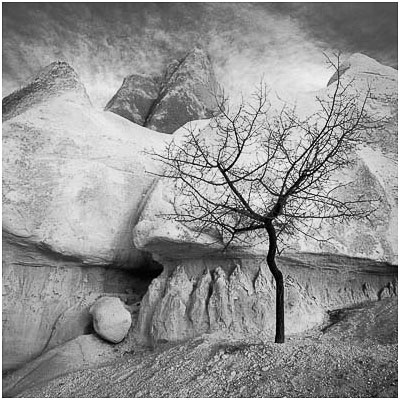
I'm just home from Cappadocia, Turkey. It's been a few days now, and I just received my Velvia films back. As much as I love to shoot colour, I'm being swayed at the moment to go Black and White with them. There's something about the landscape there..... .... I will be back in a week or so with the finished images. I didn't shoot a lot of film. It was my first venture there, and it's a challenging place to photograph. But it's also very otherworldly too.

Airport Carry on (part 2)

Is it  'carry-on', or  a carry on?  ;-) I'm leaving for Norway in a short while, heading to Oslo, then up into the Arctic circle to start two photographic trips in the Lofoten Islands.

I was thinking a few days ago, how my ThinkTank Airport International (a superb bag) has become almost useless overnight now, because the airlines are defaulting to carry on weight restrictions of around 7kg (which is pretty useless for most things). So I packed up different alternatives and tried them out at home to see what the weight was like.

Firstly, I'm pleased to say that Norwegian Airlines have a carry on policy of 10kg, with an additional 'personal item', which really usually means a small packpack or laptop case :-) The upshot is that I've been able to pack my entire Mamiya 7II outfit (four lenses plus a spare body), and film and filters and a cuddly toy too, and keep the ThinkTank TakeOff bag I also own, to under 10KG. So it is 'all go' as far as I'm concerned. I really hate using backpacks - I get sore shoulders and when you're moving around airports, it just becomes added stress because of the reduced comfort. I much prefer to travel with a roller bag, and the ThinkTank's are extremely robust and durable. The gear can get thrown about by taxi drivers, or thrown about whilst moving around places with no impact to my gear.

But lets consider if the weight restriction was indeed 7kg......

I weighed the Mamya 7II outfit, and had to reduce it down to 1 body, and I also had to go to a backpack bag - a LowePro Vertex 200 bag. I managed to get the entire thing down to 7kg, but it meant I would have to stick the spare Mamiya 7II body into my coat pocket (it's compact enough to do that). The bag has enough space for a laptop, but this would tip the weight of the system over the 7kg limit......

In short, if you travel with a laptop, and a reasonable SLR system that includes the usual 24-70 and 70-200 f2.8 type of lenses, I'd guess that you would easily go over the 7kg limit every time.

So what to do?

Well, maybe it's time that we started looking at the specifications of the gear we use - one thing we never really consider is the weight of the camera gear itself. I've seen a lot of gear over the past few years, and some of it is like carrying a small, dense brick around with you: consider the Pro level bodies out there by Canon and Nikon. And the pro series lenses too - they're not light!

I bring this up to wonder, why do Pro systems have to be 'big' and 'heavy'? Is it to make the consumer feel he's bought something more substantial? Shouldn't pro systems be like pro racing bikes? Lighter than their consumer versions?

This might come down to an argument about durability. Some people feel more secure with all the weather-sealing and magnesium bodies out there, but I've never seen an SLR system fail on any of my workshops due to rain (and we get a lot of it here in Scotland).

I would argue that if you want to travel on planes, start considering the weight aspect of the gear you're intending on purchasing. Opt for a more consumer version of the body than those bricks that the camera manufacturers sell at their top end. Go for a body that is less durable, but lighter. The same should also apply to lenses.

Maybe this is something that can be put forward to camera manufacturers in future: we need lighter gear.

If you're thinking of flying a lot, then maybe you need to work on a 'flight-system', one that you know will not upset any air lines when you do go for a wander.

I also think it is worth considering other systems, rather than the usual stock SLR systems we've been using for some time now. I think systems like Sony's Nex 7 and the Panasonic / Olympus Micro-four-thirds (I'm a fan of this system) are terrifically light and compact. Of course this only applies to digital shooters. For the film shooters, maybe we need to go back to the drawing board and think of buying lighter medium format systems. Some of the 645 options out there are lighters (the exception being the Contax 645 - I have one, and the body and lenses are very heavy). My Mamiya 7II system is extremely light and compact for it being a 6x7 camera.

And one last word: less is more. Often I feel we take far too much gear with us. We take what we don't need, or seldom use. Free up your decision making by taking a more reduced set of lenses. We will never be able to catch everything, and taking all focal lengths 'just in case', is folly in my opinion. The more stuff you have, the more decisions you have to make, the more delay you have in capturing what you see. Learn to use two lenses instead of trying to master four.