Objectivity & Intuition

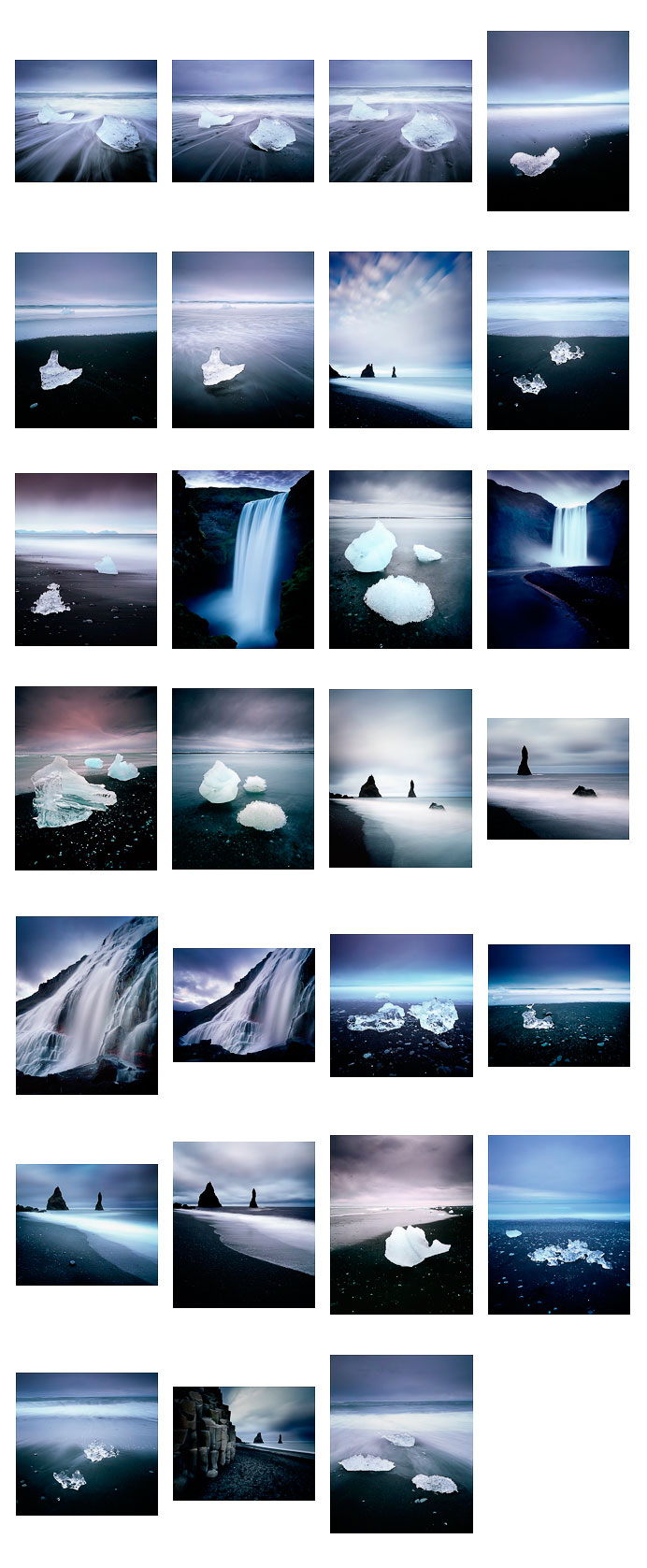
This weekend I was at the Scottish Natural Heritage conference centre at Battleby near Perth. I presented a talk and as part of it, I discussed my recent images that I made in Iceland this summer. I finished my talk today by saying that part of a photographers skill, is to gain a sense of objectivity about what you do.

So I'd like to discuss objectivity a little further.

The initial stages of photographic development

I'm sure that most of us, when we first buy a camera think that we just need to learn to use it. We think that what we need to do is learn what apertures do and what shutter speeds do. We think that technique is the most important thing.

Once we're familiar with the equipment, the second stage, I believe, is that we start to look at scenery and think 'oh, how do I convert scenery into good photographs?'. So we start on the life-long journey to improve our composition, and to gain a better understanding about light. We feel that this is where the real art is. Two stages, that's all there is isn't there to making good images? Learn the technique and then learn to 'see'.

But it's only still the beginning.

The hidden stage of photographic development

Well, what could there possibly still be to learn? The answer is - yourself.

So here are some questions I'd like you to ponder.....

Q. Do you have a tendency to narrow your view to one thing, and find it hard to see other potential images around you?

If you are close minded about your subject, then you are effectively walking past or through some great scenery and therefore great potential for images. You're walking around blinded by your desire to create something specific, rather than to create something from what is being handed to you.

Q. Do you notice how you feel when you make good images and when you make bad images?

I know when I'm making a good image because I feel it. I also know when I'm going through the motions, because my gut tells me that too. It's just up to me to listen to myself more.

Q. Do you notice small changes in light, shade and tone?

I'm not talking about whether you notice them, but whether you notice when they change. In effect, are you in tune with what is presented to you?

Q. Do you have a good sense of anticipation?

Developing a good feel for what is happening in the landscape and where it might develop, is key.

Q. Do you react badly to your photographic failures?

Being too hard on yourself kills photographic creativity.

Q. Are you impatient?

Blasting off several shots instead of letting yourself connect with what is there, is a form of photographic blindness.

Q. How do you deal with never being happy with your results?

Again, being too hard on yourself kills photographic creativity.

Q. How do you approach your projects?

Planning, patience, emotional involvement, letting things flow naturally, are all important aspects of a successful project.

Q. Do you listen to your intuition?

Your gut tells you a lot about how good the image is that you're making. It also tells you when it's time to take a rest. It also tells you to go for a stroll somewhere without any reason for doing so, only to discover that you've found a great location. Being able to let yourself flow freely and go with what your intuition is telling you - is a very powerful attribute to possess.

The above questions are really there to make you consider if you know your strengths and weaknesses when it comes to your approach to making images. What I'm really trying to do is make you consider if you are objective about what you do?

Objectivity is the key

What you think is a great image today, can, as your photographic ability develops, become a poor image in a year or two. But are you aware of your progression? Do you take stock from time to time and notice how you're moving forward as a photographer?

I'm not asking if you are progressing with your work, I'm asking if you're self aware. There's a big difference.
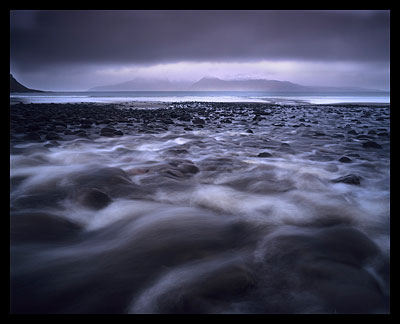
You may learn and progress with your technique, as too, with how you 'see', but you should also be developing skills to listen to yourself, so that you know where you are going with your art.

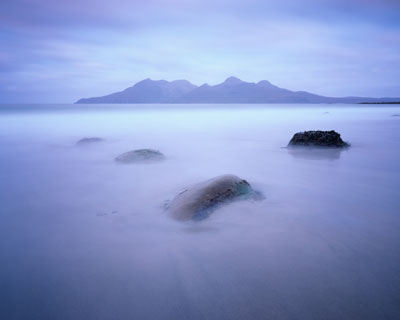
I've noticed in my own work a simplicity that has evolved over the last 4 years or so. It's almost as if each major photographic outing I do, brings another advancement in my style. My recent trip to Iceland is a perfect example of that. I found perhaps the most simplest of landscapes to date in my own work. Black sand and white ice make for striking images, and I'm now going back later this year, because I've tapped into something I have to explore more. But this has come about, because I'm in tune with where it is that my art (myself) wants to take me - and that's only happened because I've learned a lot about myself and how I tackle my photographic projects.

If you're not so self-aware, then I hope my blog entry has given you some ideas or thoughts about how you approach your photography. It really is all in your own hands.

ps. FYI - I write a lot of e-books about photography. Some of them, like the Simplifying Composition ebook are very popular, for obvious reasons. But the ones I really value personally, are the 'approach' eBooks like  Lofoten - a Photographer's Approach and Taj Mahal - a photographer's approach. These eBooks really cover the thinking processes I've gone through, rather than the 'what technical decisions' I choose. I get the occasional email from someone who tells me they find these the most useful... it's really what I want to hear, because I feel they are the most useful.
Printing Workshops

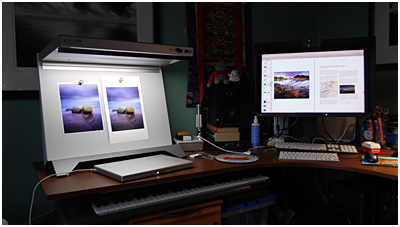
I'm in the middle of looking into setting up some printing workshops for next year. The way I see it is that i've had a lot of participants over the past few years who, if they've mastered the editing on a computer side (otherwise known as the digital dark room in my book), few, actually print their material out. For the select few who do, there seems to be an endless disagreement about what is the right way to do it. Some find their prints too dark (a common mistake), or when viewing them, I find there's a lot more that could have been done to optimise them.

What I find very interesting is how we 'read' a print. If you've been fortunate to seen the work of Ansel Adams in the flesh for instance, you soon realise what a great print is. It's very easy to think that most prints are good. Most prints are mediocre. Like your first photoshop edits, over a few years, you come back to your first prints and realise they weren't very good at all. It takes a long time to master the final print. Like I say on my workshops - there is no good-taste button in photoshop. You can go too far, over saturate, over sharpen, completely kill the image and not realise it at the time. That's where experience comes in.

I know there's a lot of technical stuff to cover, and most get very bogged down in that region. But shouldn't the final print be the final statement? How do you convey what you were feeling in the final print? Many suffer because they can't get their prints to come out in a consistent way.

Printing requires an understanding of , and adoption of colour management practices. Just how do you make sure that what you see on your computer screen - matches exactly what you anticipate in the final print? I've had so many emails from people who tell me they have their colour management 'close enough'. Well, it shouldn't be 'close enough'. That little statement suggests that it's not consistent and they're sometimes surprised by what pops out of the printer.

I'd love to give a workshop on making prints. I thought it would be great to cover some of the principles of colour management right through to digital dark room techniques and then the preparation for final output. Lastly, accurate print evaluation is really important.

I'd like to run some practical hands on workshops in my office, in the centre of Edinburgh next year. At the moment, my idea is to limit each workshop to a group of four, each with a computer, Eizo display and screen calibrator - for over a weekend. We'd go through setting up our environment for colour management, editing in the digital dark room, and producing high quality prints in a repeatable - expected way on an Epson printer.

Please don't ask me any specifics about it just yet - as I'm in the middle of trying to work it all out, but I'll let you know when I do have a more concrete syllabus for a weekend workshop.

Scottish Nature Photography Faire

Just a wee reminder that I'll be doing two talks this weekend (Saturday and Sunday - 11am - 12) at the Scottish Nature Photography Fair in Battleby near Perth, Scotland. More information and prices for tickets for the fair can be found at www.snh.gov.uk/snpf

Perfectionism is Procrastination

In 2009, I wrote an entry on this very blog about creative procrastination. In it, I expressed a view that when one is procrastinating, it's often a sign of something else, and in this entry, it was about lack of drive. There are those that do and those that talk about doing. The people who carry through with a project are driven to do so by something deep within, while those that think about doing something and never carry through lack drive. That lack of drive can stem from a number of factors: either they're not really that interested in it, or perhaps they're suffering a form of writers-block. But what if perfectionism is the culprit?

I bought the Brooks Jensen 'single exposure' series recently. They're small A5 booklets containing small, easy to digest articles by Brooks on many subjects related to photography. One that got me this week was his article about perfectionism. I've written about this a few times in the past myself, and I entirely agree with his viewpoint that perfectionism is a form of procrastination. Except, that I think that what perfectionism does, is create a form of creative constipation (otherwise known as writers block).

By setting the bar too high, your abilities are no long able to keep up with your own standards, and ultimately, everything you do, is found to be wanting, lacking in some way. This causes severe dissatisfaction in what you're doing (which kills the whole point in why you started photography in the first place), and before you know it - the whole thought of going out with your camera to do anything, fills you with dread.

In my previous posts about Perfectionism, some of the replies indicated that Perfectionism is ultimately a destructive attitude. I completely agree. But what we need to do instead, is strive for Excellence. There is a subtle but major difference between Perfectionism and Excellence. Perfectionism is the act of striving for something that is not possible while striving for Excellence allows you the freedom to reach the best of your current abilities.

Being too much of a perfectionist, means that you may never actually finish anything, because it's never good enough, or because you feel it's not reached some unobtainable standard - and it never will.

In my own photography, It would be all too easy to look back at some of my best images, and worry that any new work will not be as good, or will not be an improvement. I think measuring yourself in this way is dangerous to your creativity. For creativity to flow, you need to let go and see what happens. By placing no constraints on yourself when you are out making new images, can you possibly create some new work. It is only when you return from a shoot that you should allow yourself to be critical and strive for excellence, but don't strive for Perfectionism, because you'll never get there.

Which reminds me, that next time I'm out shooting, not to beat myself up so much, when I feel things aren't going the way I hoped - this is a reference back to my recent trip to Iceland in June, where I just so happened to create a body of work I'm extremely pleased with, but didn't feel it was coming together at the time of the shoot.

Last batch of book proofs

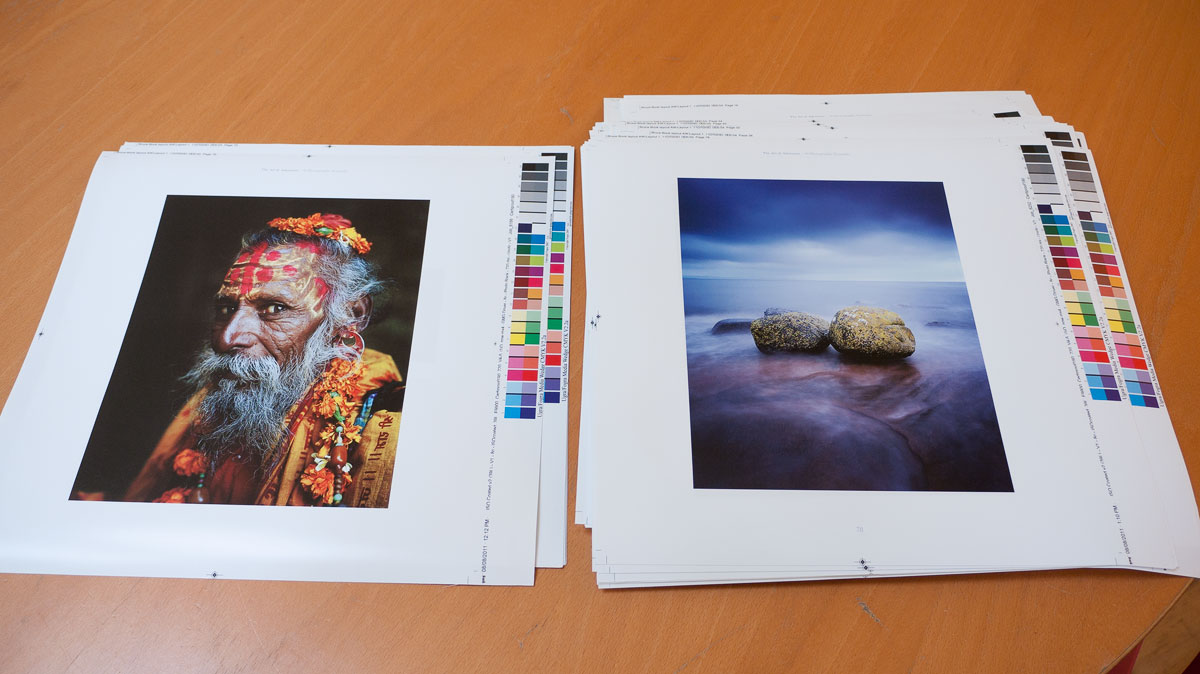
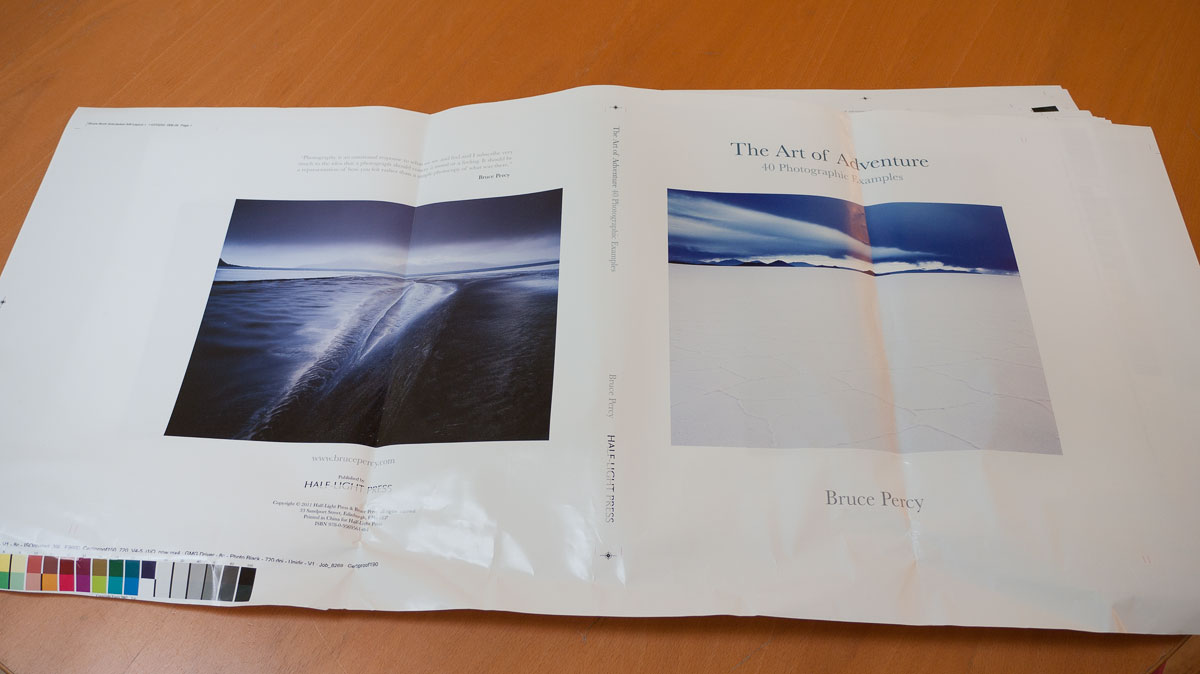
Today I received the last batch of proofs from the printer of my book, and I'm very happy with what I see.

They are printed on FOGRA approved paper. Which basically means that the paper is certified to be within a certain ISO colour standard. The have also been printed using one of the best CMYK simulation RIP's available (GMG). In a nutshell, the proofs give a very accurate simulation of what the final press output will be like.

It's been a very exiting and interesting project, working on this book, and I feel I've learned a lot in the process too.

Once I've approved the proofs, the next stage will be onto printing the book. I'll give you all more details about the expected arrival date of the book once we're past the proofing stage. Until then, I can't really say for sure just when the book will be here, but I'm hoping for sometime around October or November.

invasive-book

Today I'd like to write about something that has nothing to do with photography, but everything to do with how the social-networking thing is panning out. Last week I logged into my facebook account to find out that it has my personal landline and mobile numbers on full display to everyone who is linked to my account. I remember a month or so ago being asked to provide them as a matter of security, and once I'd given them, kind of hit my head and thought - duh - why did I do that?

The thing is, why am I so mistrustful of Facebook?

Well, there are a few reasons:

1. Most of it is invasive. Did you know by default, it sends out invites to folks in your email address book?

2. Their user interface makes it hard to switch stuff off, which by default, should be off anyway.

3. I deleted my personal account several months ago. Oh, I think it was March I did it. Friends told me that it would be deleted after 2 weeks anyway, but I was able to log back into it a few weeks ago, and it was magically re-activated.

The same with Linked-In. I deleted my linked-In account, because I felt it did not represent me anymore, and I'm more aware of public profile than I ever have been. Yes, we all have a public profile whether you know it or not. But I still get 'invites' to Linked In. I don't think they're 'Invites', because an invitation has the option of saying 'no'. Linked-In Invitations give you the option of accepting, or waiting for a reminder to accept, and if not, a reminder later on to accept, and then another reminder to accept......

So I'm a little tired of the invasion. It's invasive. There is no etiquette.

When I worked in IT years ago, you had a choice. There was a way you could decline, but I feel these companies are giving you one choice: sign up and be on their records forever.

If you have a facebook account, go in and check if your mobile number and landline numbers are available. You can also check who has given their numbers out for the public. Here's how to do it:

Go to 'Account / Edit Friends'. Once there, you will see on the far left hand side a 'contacts' list with a mobile phone icon. Clicking on this will give you a list of everyone who has given you public access to their phone numbers.

I would so love to show you a picture here of all the people on my facebook account. Every one of them has given their phone numbers, and I could show you a screen shot of it - but it's not appropriate for me to do that.

I'd like less invasion, and I'd like these companies to stop treating me as some form of information that I have no right to decide how I am represented or recorded.

By the way - I just logged in again, and I see that I have Steve McCurry's phone number. Brilliant. I'm sure he'll be really pleased to hear from me :-)

Why work with something like Facebook, if it can't be trusted to work with your details and keep your information private?

Today's inspiration

I love Ryuichi Sakamoto's album 'playing the piano'. What struck me upon first listen, was his classical ability, and how, some of his compositions remind me of Debussy so much. I don't mean to draw comparisons for any particular reason. I just enjoyed his album very much, and it gives me a lot of inspiration.


I'm fully aware that this might not be to everyone's taste, but it suits mine very much. I think it's important to spend time with art, music, books, anything that you can lose yourself in, or connect with. Photographic inspiration does not just come from looking at other photographers work, it comes from all around us.

Ideology in Paradise

This week I spent a small fortune on books at Beyond Words Edinburgh festival stall. I thought I'd go for a visit, catch up with Neil and see what he has to offer.

I came away with an exhausted bankers card, because I bought:

Hiroshi Watanabe's 'Ideology in Paradise' Paul Caponigro's Meditations in Silver Editions 1,2 & 3 of Brooks Jensen's 'Single Exposures' series Michael Kenna - images of the seventh day.

All are excellent books, but I'd like to talk about Hiroshi Watanabe's Ideology in paradise book.

A beautifully put together book, I found it on Neils book shelf at the back of his display purely by chance. I think I was intrigued by the front cover and of course the title. What could 'ideology in paradise' mean?

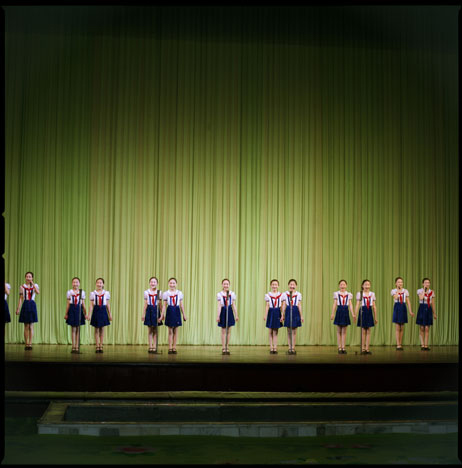
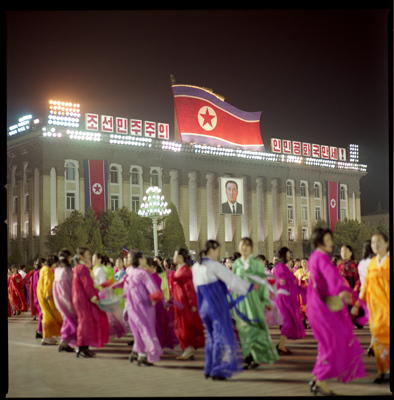
So I opened up the book and browsed the contents. Don't you find you make your mind up about a book in a matter of seconds? Well the image above drew me in. The people dancing, and those vibrant colours, just made me want to find out more.

I wasn't even entirely sure just what the book was about. In fact, I went through it, and wondered just where in the East the photos had been taken. There is nothing in the text or title of the book to suggest it's North Korea. It was only when I decided to read the inside flap that I understood. To quote, it says:

"One is quietly lulled into a sense that life in North Korea might, in fact, be just as it appears within the frames of these images - normal - instead of like the stories of kidnappings, military posturing, and famime. To Watanabe, it is this sense of tension between the news stories flooding the media in both Japan and in the US and his experiences travelling and photographing - that interests him in this topic".

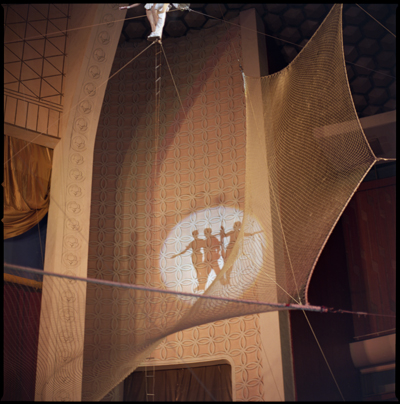
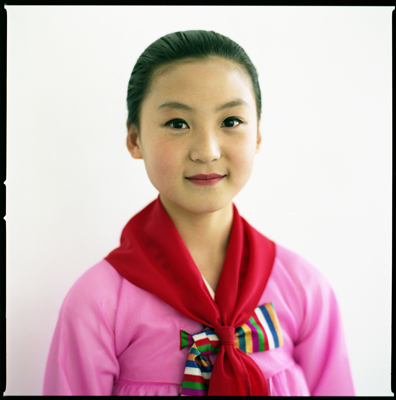
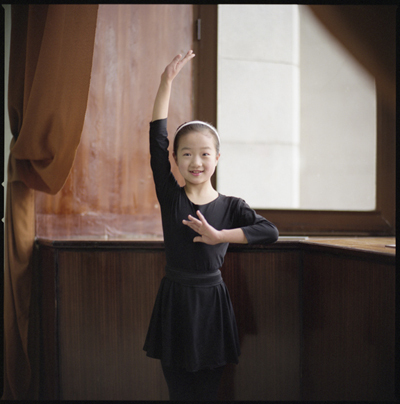
On the surface, looking at a lot of the pictures in the book, which have a very beautifully over-processed look to them, you feel that Watanabe is making casual snaps of friends.

It would be so easy to think that people in North Korea do not do as we do. They do not laugh, they do not go for a walk, they do not live normal lives, but as his book shows, human nature comes through all the while, even if the regime that is above them has a grip on how these people live.

I really enjoyed the book. I was intrigued and I think that's the hallmark of a good book for me. I'd already bought the other books I listed above, and all of a sudden I was breaking the bank and going for this one. I had to own it.

One thing though, I'm sure some of you wonder why I'm so interested in the subject matter. These images look like reportage shots to a degree, and that's not really how I shoot. True, but talking to Neil from Beyond words about this, he has told me that a lot of photographers he sells books from - are similar. What they shoot, and what they like to look at, or enjoy in terms of photographic sensibilities, often is a different world away.

Ideology in Paradise is available from Beyond Words, if, like me, you have an interest in other cultures and a documentary style of photography.

Paul Caponigro

Today I was tweeted the following interview with Paul Caponigro. In it, there is one particular thing he says which really cuts to the chase for me: "In order to be a good photographer, you need to work more on your emotions, than you do on your technique"

That is it, in a nutshell for me.

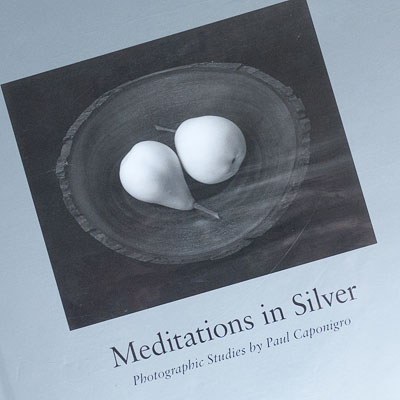
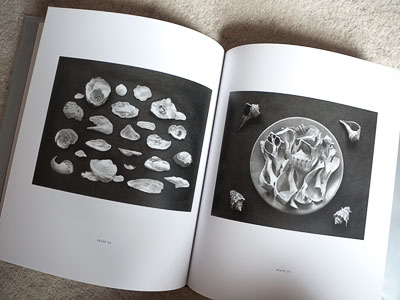
The tweet posting was timely, because this week I bought a very beautiful book by Caponigro called 'Meditations in Silver', which I believe is now out of print.

Meditations in Silver by Paul Caponigro

The images are finely produced, and show an attention to detail, symmetry and tonal range in his work.

In his interview he describes how he gets inspiration from everywhere and mentions music. I'm a music fanatic and not a day or hour goes by without it. I find music fuels my imagination and gives me a way to be inspired. I think it's important to tap into your imagination as often as you can.

I have a lot of workshop participants who tell me that they spend a lot of time with very technical or factual thoughts, and don't get enough time to dream. Dreaming is important, and it's something we do really well when we're children, and less so, perhaps when we're older.

I also think Caponigro mentions how he appreciates silence. I too, am finding as I get older, that I enjoy silence around me, and certainly, when I'm making images, I'm almost drawn by the quietness of a location. Everything around us, feeds our imaginations.