
Sometimes the shoot goes well, but I struggle to edit the work to my satisfaction. In those moments, I often find myself asking the question: Is it simply that the work isn’t any good? Or it is more a case that I simply lack the skills at this present time to bring the images to a successful conclusion?
Knowing the difference between a bad idea, and a good one that has been poorly executed, is never easy to know at the time of the edit. For if I lack the skill to execute it, then I may lack the ability to judge it correctly.
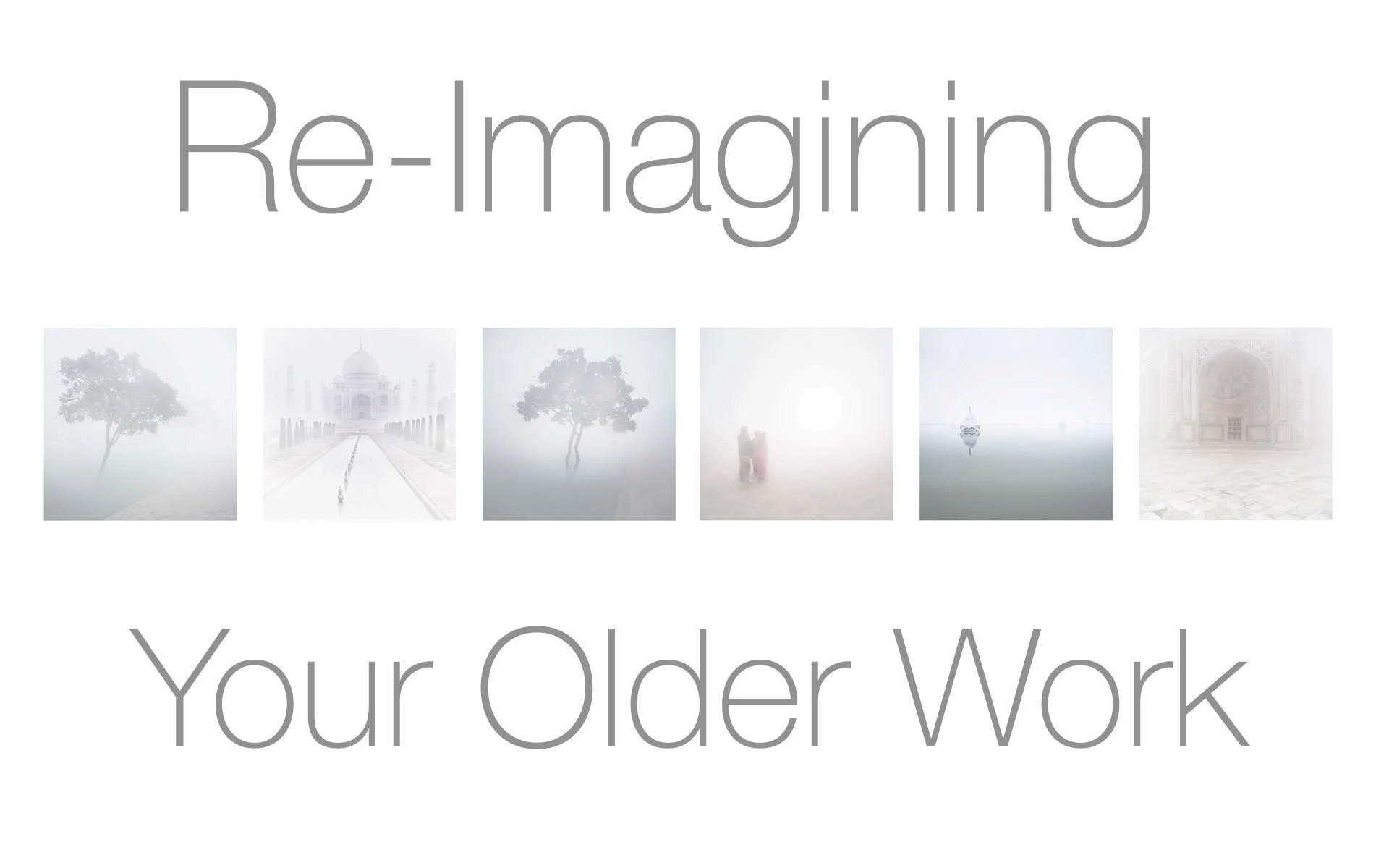
My original edits of these images of the Taj Mahal were just like that. Originally shot in 2009, the images lay dormant, filed away, because I had never been entirely happy with them. I couldn’t figure out at the time if the work was wanting, or whether I just lacked the skills to bring them to a successful outcome.
Looking back now, I could clearly see that the work held promise, but I had lacked the skills and experience to bring the images to a satisfactory conclusion. My use of contrasts and general tonality back in 2009 was rather rudimentary. To my inexperienced eye, I thought that by adding darker contrasts to the images, I would impart a sense of drama. Instead of drama, I got muddy images that lacked any focus.
I’ve learned over the intervening years that working in foggy conditions where definition is reduced, can be advantageous. Indeed, I often like to play with the edge of definition and deliberately lose it in my edits by pushing my images towards a more hi-key look.
Foggy locations, seem to excel at being edited with this approach in mind.
As I reworked the images to give them the treatment I now felt was more appropriate, I found myself looking over my original edits as one might look over some historical documents.
I had a sense that I was being given an opportunity, to see who I was back in 2009, and to notice how far I have come in the intervening years. Where the original edits had been full of uncertainty, I was aware that my new edits were more immediate. They had a clarity of intention, that only confidence from working on similar imagery, over many years can bring.
It is my view that clarity of intention and good execution can only come through practice and experience. I had 17 years’ worth.
Yes, I was much happier with the new interpretations of the work. But what I got out of the exercise the most, was an understanding of just how far I had come in the intervening years.
Progress is often subtle, invisible even. We need the passage of time – often many years – to see that our progress has been more substantial than we first assumed.