
Q. How do we convey a sense of 3D, or depth in our imagery when our photographs are 2D?
A. The answer lies in using tonal separation and varying degrees of luminosity throughout the frame.
In the example below, I chose to make the foreground subjects brighter, and the background subjects darker. Sometimes I reverse this and the foreground subjects can be darker than the background subjects. Irrespective of which way you choose to go with this, the perception of 3D is conveyed by there being a difference in luminosity between your foreground and background subjects.
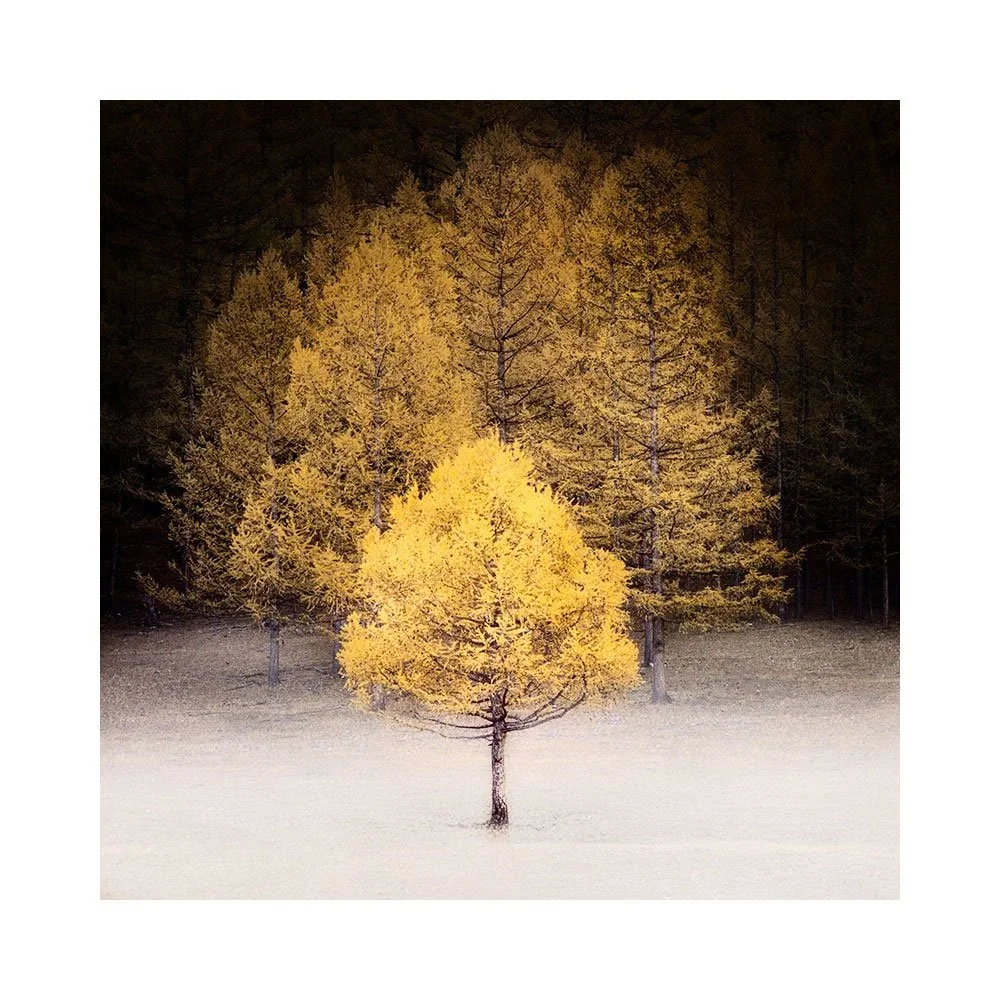
Understanding this is easy. It may even seem ‘quite obvious’.
Yet in practice, I find myself sometimes unaware that this is what the edit requires. What may seem obvious in the final edit may have taken some time to arrive at, as was the case with this image.
Consider the two images below:
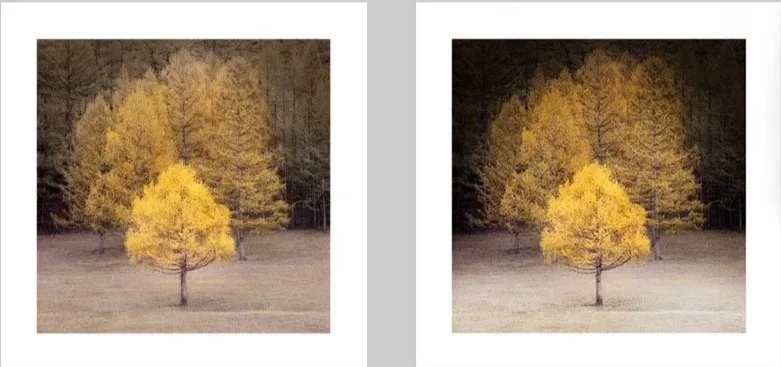
The left one is around 50% of the way towards the 3D look of the final image on the right. I sat with the left edit for a couple of days not quite knowing if it needed to be pushed further in the edit. All I knew was, that something wasn’t quite hitting the mark for me with it.
I have found that in order to reach the final edit, I sometimes have to sit with an intermediate edit (left) for some time. Perhaps a few days. I need to let my eye fully adapt to the intermediate edit, before I can then advance forward and push the image even further (right image).
In the final edit, the background is darker, and the foreground lighter. Making the background even darker took some confidence on my part. Once I had darkened the background, I think chose to lighten the foreground. I did this knowing that when I lighten areas of a frame, darker areas may be interpreted as being darker. It also enhances the perception of 3D.
Similar to learning to compose, editing is a skill that is not learnt overnight. It is a life long endeavour in learning to ‘see’.
I have met some who say ‘I rarely need to do anything to my images’. It is, in my view, often an admission of an untrained, or inexperienced eye. For there is always more that can be done. It’s just that we may not yet possess the visual skills to recognise it.