Michael Kenna's response

Yesterday, in my blog post titled ‘Nocturnes‘, I explained that I had recently been inverting some of my images. I explained that I think the catalyst for me doing this may be down to the photo ‘Beach Path, Hastings 1984’ by Michael Kenna:

Beach Path, Hastings 2984. Image © Michael Kenna

Beach Path, Hastings 2984. Image © Michael Kenna

I’ve been very lucky over the years to have a very nice correspondence with Michael. Indeed, I consider him a good friend now. I have been very privileged to spend time with Michael here in Scotland showing him around, and I’ve also been out in Tokyo on a Karaoke night with him (another story perhaps for another time). He is a very nice person and I’m really grateful that our paths have crossed over the past decade. It’s been such a nice thing for me to find out that someone who I greatly admire is also an extremely fun and nice person to become friends with.

So I felt that I could ask him about the photograph above, to find out how he made it.

Below is his reply, but also, he was generous to submit three other photos to expand upon my initial question which was:

‘Is your photo of Hastings Beach an inverted photo?, or was it created by artificial light?’.

Here is his reply:

“Hi Bruce,

“A beautiful morning moon set is happening before me as I sit and type this : )

IMG_2792.jpeg

“The image you refer to “Beach Path” (see first image to this post) was photographed at night without any additional lighting on my part. I just used the nearby street lights.

Title Poles. Image © Michael Kenna

Title Poles. Image © Michael Kenna

“The image titled “Tilted Poles” above is another example of this lighting.

So that cleared up any illusion that I was under that Michael’s Hastings photo was an inverted print. But he continued to expand on this:

“I suspect that reversing images is almost a rite of passage on many photographers journeys. I did a lot of color reversal experiments when I was studying photography. Later, I played around with black and white. I remember being in Yosemite Valley in the seventies following in the footsteps of Ansel Adams and realizing that to be creative in a place like that needed a radical shift of vision. I came up with a reversal of trees reflecting in a hotel pond. I printed from a color transparency:

Trees, Yosemite, California, USA. 1978

Trees, Yosemite, California, USA. 1978

Michael’s conversation turned onto another subject. That of playing around with 3D elements in a 2D space. I think this is very much related, as I will explain further below:

“I have long been intrigued by images that play with three dimensional movement on and in the two dimensional print. “Conical Hedges” and “Avonmouth Dock, Study 7”, both below, have this aspect for me.

Conical Hedges. Image © Michael Kenna

Conical Hedges. Image © Michael Kenna

“In Conical Hedges (above) the dark shapes seem to float forwards out of the paper toward the viewer. In Avonmouth Docks (below) the 3d buildings become a 2d flat form.

Avonmouth Dock, Study 7.  Image © Michael Kenna

Avonmouth Dock, Study 7.
Image © Michael Kenna

Michael’s thoughts on turning 3D elements into 2D flat forms wasn’t something I had anticipated that he would discuss. I had not expected my initial question would turn into an explanation that for Michael, everything can be abstracted.

His last two photos illustrate how he plays with real objects to create 2D flat shapes or patterns. In the case of the conical hedgerows, they aren’t conical hedgerows anymore, but instead black serrated shapes that float off the page. In the case of the Avonmouth dock buildings, they are no longer buildings, but pleasing symmetrical graphical shapes. Indeed, the lack of 3D quality to the dock buildings helps reduce them from buildings to effective compositional form.

It is something that I like to play with myself a lot. For me, a picture isn’t about what is there. It’s not about trees, snow, sky, mountains, rivers, etc, etc. Instead, photos are about graphical forms and tone. They are pictures instead of photos. It’s a subtle difference but a difference nonetheless. I like to abstract scenes down to their fundamental framework if I can. To do that, I like to reduce real objects down to the graphical forms they are made from. Perhaps for a few reasons:

  1. graphical forms are easier to compose

  2. graphical forms make for stronger compositions

  3. graphical forms aid in abstracting a scene from ‘reality’ to an interpretation (and hopefully a highly personal one).

I’d like to thank Michael for his generosity and time to reply. I know he is super busy. So I greatly appreciate it.

Nocturnes

You may have noticed that I’ve been playing around with inverting some of my old photos of late. I’ve just come to the conclusion that they should be called ‘nocturnes’, which the dictionary defines as ‘a picture of a night scene’. This is simply because once I put that label on them, they sit more comfortably in my mind. I find I’m able to accept them more readily as possible night scenes, than positives that have been inverted in Photoshop.

So here’s how the ‘Nocturne’ series look on this very website:

I really like them, because they fit what I’m trying to do with my photography: create another reality. But it’s struck me today that I think I’ve always been aiming for this. I tried night photography many years ago but I failed at it. I couldn’t get the results I was looking for, and this method of shooting minimalist scenes and inverting them gives me the control I was looking for.

It also struck me that this has all come from one photo: Michael Kenna’s intriguing photo of Hastings beach, England. I came across this image way back in the late 80’s. Indeed, it was my introduction to Michael’s work.

Hastings, Image © Michael Kenna

Hastings, Image © Michael Kenna

Curiously for me, even though I was no photographer at the time : I got really interested in this photo. Even more curiously: I bought the magazine that this photo was on the cover of, because I was so intrigued by it.

Looking back, perhaps this image has been a subliminal plant in my mind for a long while? Most probably :-)

Which brings me to two points:

  1. All I know for sure these days is that: my subconscious often knows what I like, before I do :-)

  2. Influences can stretch way back. Michael’s work has had a lasting, long standing impact on me.

Elliot Erwitt

I’ve been a Magnum photo agency fan for many years, stretching back to the early 90’s. Contrary to what you may think I like to look at, I’m more attracted to reportage images than landscapes, and I seem to have a particular liking for photographers from the 40’s, 50’s and 60’s. Eugene Smith for instance is another photographer that I love the work from.

Image © Elliot Erwitt Magnum Photo Agency

Image © Elliot Erwitt
Magnum Photo Agency

This has to be one of my favourite Elliot Erwitt shots. Elliot is now 91 and I’ve read many times that he likes to look over his back catalog of negatives (yes, the good old film days) each year to see if there’s a shot he’s missed before. He says he often finds something that he’s passed by many times before, and I think that just proves that what you like or see today may change each time you revisit your work.

With this photo, it’s just beautiful. I think photography is all about telling the viewer ‘your’ story. What ‘you’ saw. What ‘you’ felt.

Photography is not a contest. Photography is just about creating a point of view.

Well, to me at least, photography is about a point of view. I personally abhor competitions (that does not mean I am suggesting you or others should not enter them - do as you like). I just think the merit of a photograph is not in any awards or gravitas it is given. The merit of a photograph is in how well it tells its own story visually. And that is a highly personal thing which will differ greatly from viewer to viewer.

Photographs shouldn’t have to be explained. The seeing and enjoying of the work should be all that’s required.

On Creativity

When you’re creating work, there has to be an element of ‘I don’t know how I got here’, Or ‘I didn’t see this happening’. Otherwise, it’s most probably contrived. Creativity doesn’t work to a plan or a schedule.

Lencois-Maranhenses-2019.jpg

Trust yourself, and let got. See where things take you :)

Take it from me: I seldom know what it is that I am going to create, and I find it very inspiring to live in a world where perhaps some of my best work hasn’t been created yet, and I have no idea of what it will be, or when it will be.

Just go with the flow.

We're getting closer.....

My Hálendi book is moving forward. We’ve completed the image sequencing, text and book prefaces. One nicely written preface by a very fine Swedish photographer. And another by my Icelandic guide - quite a heartfelt account of growing up in Iceland.

All the press files are complete and we have a printer in mind.

But things take time.

Just wanted to let you know that the book is still moving forward.

halendi.jpg

Positive Inversion

Still paying around. Nothing more, nothing less.

I’m just enjoying seeing how opposite areas of the frame become more interesting when an image is inverted. This one seems to be very successful and to me, it’s the rim of the lake - the highlight tones fading off to black that attract me the most.

Lencois-Maranhenses-2018-(5).jpg

Grasleysfjöll Inversion

Like a surreal night scene.
Or perhaps a view from standing on the Moon.

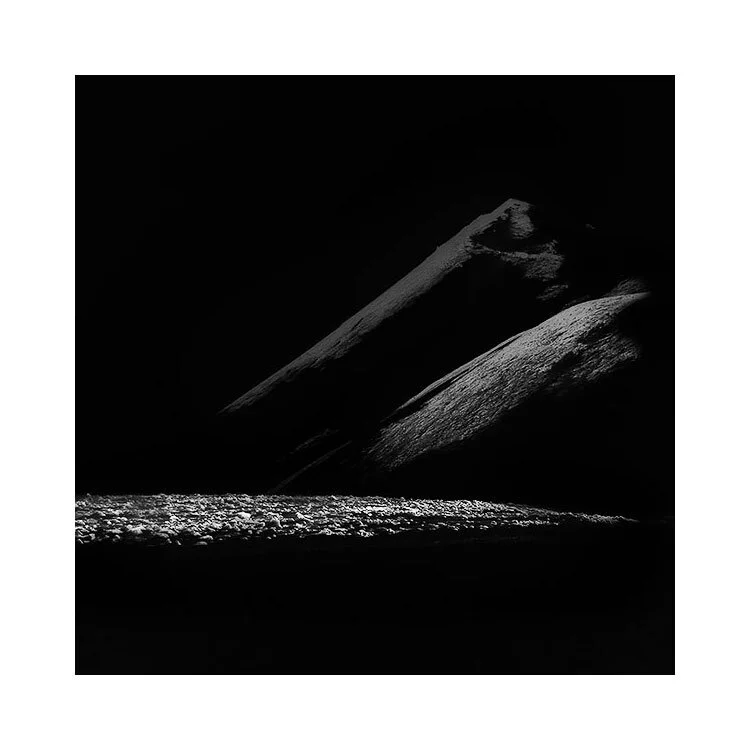
Some of my images work very well when inverted. Others do not. This one of a mountain range in the central highlands of Iceland works very well.

Inversion-Grasleysufjoll-1.jpg

Shot in the depths of winter when there are no roads, nothing to speak off, I noticed that the wind had swept part of the mountainside off. We saw just faint black lines hovering in space. I asked my guide / driver to take me closer (we were on a valley floor) only to find he went much further than I thought we could - he took the vehicle up the side of the hill in deep snow to the brow of the hill. This photo was made from just a few steps outside of the car.

The inverted photo has a completely different meaning for me. The feel is completely different and it almost feels as though I am standing in some surreal night scene, or perhaps standing on the Moon.

Breaking the spell / building a new one

Motifs are very important in my photography.

I can see them more clearly when I remove the ‘landscape’. When I remove the auto-response to go ‘this is a picture of a piece of reality’.

Inverting an image of scenery forces the viewer out of their comfort zone.

It helps to break the illusion or spell that photos are ‘real’. They’re not. In the place where ‘reality’ existed, there now exists an abstraction. One that hopefully casts a new kind of spell over us.

Hokkaido-2018-(20).jpg

Inversions

We should all be pushing the boundaries of our work. We should be trying to push the boundaries of what the norm offers. We can grow so much by entering areas of photography that we have not visited before.

For me, I’m more interested in the edge of reality, of the edge of definition. By inverting my photos I have broken that spell that says ‘this is a capture of reality’, and set a new contract between the viewer and myself. The work is no longer verbatim. Instead it is much more open to being interpreted in any way possible.

Inversion.jpg

You may dislike the work, or find it too strange. But I think that’s good if it generates that kind of response.

For me, I’m just exploring. I have yet to reach an opinion, and indeed, feel that trying to strive for one so early in any direction or path I take would be a bad move.

Right now, I’m just enjoying seeing familiar work anew. I’m noticing different things in familiar images but most importantly, they feel quite different. There is a different atmosphere to these.

Art, photography, craft, whatever you call it. It is allowed to be transient, to be a product of the moment. Why does everything have to be produced with the intention that it last forever?

Grads still have a place in digital photography

Today I’d like to discuss the validity in still using Grads in an age where digital cameras have so much dynamic range that many believe that grads are no longer required. To do this, I need to go over what happens to the exposure when we apply grads.

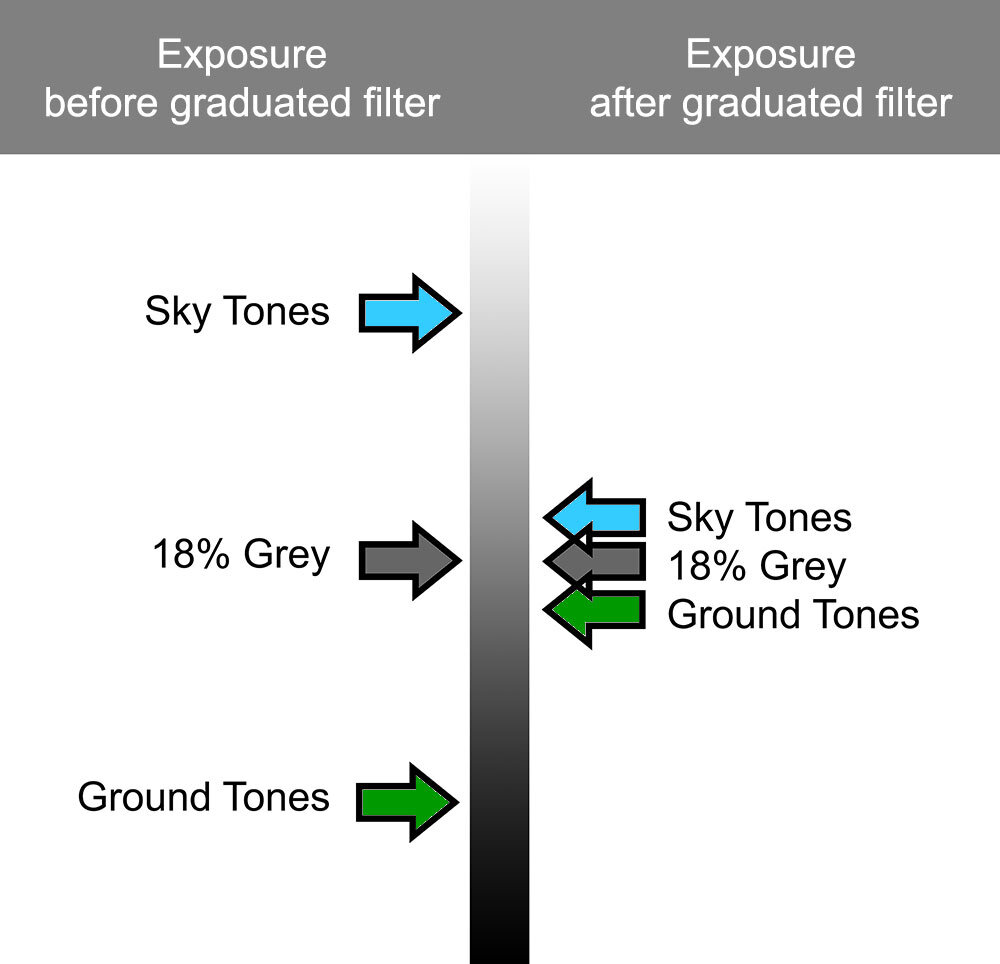
Yesterday I discussed why using Aperture Priority is better than using Manual, particularly when using grads. Aperture Priority automatically re-balances the exposure as the grad is applied:

exposure-grads.jpg

As you can see, the grad reduces the difference in contrast between sky and ground. And since the camera wants to take an average between the two values, we find the sky and ground moving towards mid-grey (18%).

In the above illustration you can see that the ground values are now lighter once the grad has been applied. This is key to my post today. When you apply grads, what you are essentially doing is opening up the shadow detail in the histogram / exposure of the photo.

sky-ground.jpg

Consider the histogram on the left. No grad was applied, so we end up with a classic ‘double humper’. The ground has been squeezed into the lower tones of the histogram while the sky has been squeezed into the upper registers of the histogram.

Note where 18% grey is.

The ground is essentially underexposed, while the sky is overexposed.

Also consider that the ground is residing in the shadow ‘darker’ area of the histogram. This results in loss of tonal information in the shadows as many dark tones are being quantised. Many tones become one.

Now let’s consider the same image shot with a graduated filter:

sky-ground.jpeg

The ground values have been moved towards the middle area of the histogram. Same for the sky values. The important points to consider are:

The shadow information has been opened up (marked in red). We now have more tonal information stretching over a longer tonal scale way down into the shadows.

The highlight information has also been opened up (marked in red). We now have more tonal information stretching over a longer tonal scale way up into the highlights.

For me, the main reasons why I use grads are:

  1. I wish to avoid underexposed ground and overexposed sky

  2. I want to go home with a pleasing negative to work with.

  3. I don’t want to have to jump through additional hoops in the processing to figure out if the image is any good. Working with an image where the sky is overexposed and the ground is underexposed isn’t very inspiring at all !

  4. if I didn’t grad, I’d have to process every file I shot to see if they were any good before I began work.

  5. Working with a nicely balanced exposure straight out of the camera can be, and often is, a very inspiring way of working. You can see straight away whether the composition and image works or not, and I remain engaged.

Engagement is the key for me.

I don’t want to struggle with bad exposures to make them nicer. I want to work with images that inspire me, and that means pleasing, balanced exposures.

If I go home with a nicely balanced exposures, I am more likely to work with them. Conversely, having to trawl through hundreds of images with dark foregrounds and bleached out skies wondering if they might be good once I’ve put them through my editor of choice isn’t going to fuel my creativity. And it’s certainly not going to inspire me.