Good light vs ugly light

I’m in Iceland right now and today we visited one of my favourite lakes where we can get graphical shapes and tonal separation from the sand bars and water.

I’ve become more ‘accepting’ of shooting in the middle of the day, if the light is right. Where I once religiously stuck to sunrise and sunset only, I now shoot when I think the light is soft and gives me something to work with that is beautiful. But not all light is beautiful, and no amount of dynamic range in a digital camera will compensate for it. Beautiful light is beautiful light. And ugly light is ugly.

So here I was today, at around 10am at a lake in Iceland and the conditions were perfect as you can see from this iPhone shot. And so, I had to do a dance to celebrate it :-)

Image © Finnur Frodason

Image © Finnur Frodason

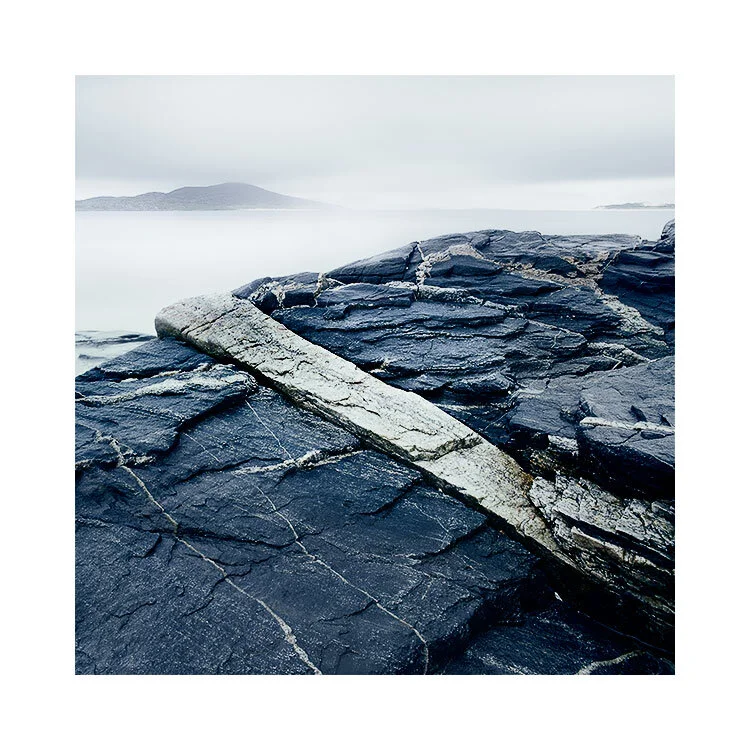
I'm going back to Harris next year

I’ve just published a photo workshop to the Isle of Harris for October next year (2020). If you’d like to join me?

Isle of Harris
from £748.00

November 13-18, 2025 (5-Nights)
November 20-25, 2025 (5-Nights)

November 13-18, 2026 (5-Nights)
November 20-25, 2026 (5-Nights)


Price: £2,495
Initial Deposit: £748
2nd Deposit of £748 due six months before tour start date

5-Day Photographic Mentoring Workshop

Introduction

Harris is a beautifully compact island with wondrous expansive beaches and a rugged eastern side.

This trip is specifically great for simplifying your compositions as most of the beaches have a lot of space where only light and tone are the predominant features.

We are staying down on the beaches, in two different houses with our own private caterer. The houses are beautiful. Please note however that bathroom facilities are shared. Being near the beaches is ideal. The nearest hotel is 30 to 40 minutes away.

The trip is now fully booked. If you’d like to join the waiting list for any cancellations, please just email me at bruce@brucepercy.com

The Pendulum Swing of Colour use

I find that each time I edit a new set of images, my application of colour varies. Some times the work has very muted tones. Other times the work has too much colour and I find that a few days later I’m re-adjusting the work to be more muted.

Part of the problem is colour constancy, or the lack of ability in oneself to correctly gauge the strength of colour, the more that one stares at the work. Part of the problem is that I’m still figuring out what my style is, and I find as my mood changes, my feeling towards the work also changes. Sometimes the work is stark and monochromatic, devoid of any colour at all. Other times the work is very colourful, and I feel a need to tone it down.

Lencois-Maranhenses-2019-(2).jpg

This is not just a case of my mood changing. It mostly has to do with how our brain ‘auto-white-balances’ what we see. Our visual system innately compensates. What we perceive is not always true .

And I’m sure I’m not alone. Most of us have a hard time judging the level of colour to use in our work.

I’ve seen some photographers who completely lack any colour judgement at all. The work is overly garish, the colours sci-fi, horrific in application because there’s just simply too many strong colours competing with each other. I am convinced that photographers who create this kind of work are at the beginning of their photographic journey. They haven’t developed their colour awareness yet, and are still very much in love with the need to over-excite the work they create. They are so enraptured by having strong colour in their work that we can’t get past it. I believe this, because I suffered from this in my early years.

When I look back at my earlier work, delicate application of colour is pretty non-existent. Despite thinking at the time that the colours were great in my photographs, I now realise that I was working from the belief that ‘more is good’. I had a lot to learn.

At the time, I had no idea about colour relationships, let alone that having too much colour, or competing colours in the frame could sabotage the composition. I also had no idea that composition was more than just the art of placing subjects within a frame. Composition is also about the application of colour, as well as tone and form. Each of these three elements has to work with the other for the composition to be successful. Simply plastering lots of strong colour across my images was clumsy at best, and at worst made my images look infantile.

Lencois-Maranhenses-2019-(4).jpg

And now twenty years later I’m still wresting with colour. In that I’m wrestling with ‘just how much’ to use. In other words I struggle with the degree of colour to use. I appreciate that colour is dependent on the subject matter, what the actual landscape offered. Some places are simply more colourful while others are naturally less so. So I understand that some photos or portfolios call for very little colour, while others require the colour to be applied selectively to aid the composition.

My recent images from Brazil are interesting because there appears to be a return to stronger colour for me. They are the strongest set of colour images I’ve made in a while.

But if I look at how I used to use colour over a decade ago, I’m aware that the application was more broad, more clumsy back then. Nowadays, I’m more selective. I feel I can produce a colourful image, without swamping the composition.

Colour is a balancing act.

Put too much in and you can swamp your compositions and ruin your work. Put in too little, and the image can appear dead or lifeless. Some sets of images require more colour than others, and of course we have our visual perception of colour to struggle with while we are deciding upon just how much colour is required.

The use of colour is a skill. Just like working on composition is as life long learning experience that never ends, so too is our application of colour. For colour application cannot not mastered overnight and we should expect our perception of it to pendulum swing from too much to too little, and back again.

Harris 2019

The Scottish island of Harris is an old friend. I’ve been coming here since around 2009. It’s taught me so much and has been instructive in the development of my photographic style.

Harris-2019.jpg

 I’m not looking for the things I was looking for when I first came here. That’s what’s so special about revisiting a place after a few years have passed. You notice that you see new things, and not just because the landscape has changed, but because you have changed. What was once interesting to you has been cast aside, like the shedding of old skin, to be replaced by a new awareness.

Harris-2019-(5).jpg

The island hasn’t changed much, despite it turning into a photography mecca these days. There are so many photographic workshops and tours that run here each year, yet when I am there, I feel I have it all to myself. Which is wonderful.

And as for Harris ‘being done’, I beg to differ. Most landscapes are seldom ‘done’. The mere fact that I find myself seeing things anew, is a telling reminder. The landscape always has something to show us, we just have to listen.

I feel alive when I create new work

I’ve just completed work on a new set of images. Well, to be honest, I have a backlog of around four portfolios worth of images right now, so the shooting has been done. I just need to edit and arrange the work. The new set of images were shot in May this year, but it’s only this week that I’ve had the free time and space to review the work and edit it.

Lençois Maranhenses, May 2019.

Lençois Maranhenses, May 2019.

For me, I feel alive and strong when I have finished new work. It’s always very empowering to find that I’m now sitting on top of a new set of images. There’s a freshness to it all: these are new! I’ve not seen them before, nor have I lived with them for many years…. they make me feel present, and they make me feel as though what I am doing is fluid, free, and on-going. Not creating any new work for many months gives me the feeling of being static, done, and tired.

“You’re only ever as good as the last great thing you did”, is a quote from a Prefab Sprout song. I’ve always remembered it, because it’s a reminder to keep creating, keep going forward. Keep producing new work. It’s the only way to feel that you ‘are’.

I ‘am’ a photographer when I create work. When I don’t create new work, but just go over my older work, I am no longer a photographer: I’m a curator. Curating one’s work is fine, but the reason why we do what we do, is to feel alive, and we feel alive when we are creating.

Keep creating. Keep moving forward.

Making art, or making product?

David Lynch expresses the difference between making ‘art’ and making ‘product’.

It’s quite insightful to see how frustrated he is with the workflow, schedules and budgets. How does one allow for some creative freedom while at the same time not go bankrupt? It’s a fine line.

On being strange

A few days ago I watched an interview with Jonsi (pronounced Yoncee) from the Icelandic band Sigur Ros. In it, the interviewer suggests his band is the ‘strangest band in the world’, to which he replies ‘Really?’, I like strange’.

I do too.

If you are a Sigur Ros fan, you will understand. This band does not follow trends. They are unique. They are not a taste for everyone, they are a band I personally took about a year or two to ‘get’ before I became a fan. Now I think they are incredibly talented. But I can appreciate that they are not for everyone, let alone accessible. .

But I’m a bit obstinate about these things. I hate following trends, I deliberately try to go away from what everyone else thinks is cool (unless it really IS cool),and I admire those that are willing to do something that may not be accepted by others.

I love lots of kinds of music, and I have an ear for some things that I realise others may not ‘get’. What I think is special about this band, is that they have found their own sound. You don’t get a sound like this from trying to be like othersd. You get a sound like this because you’re open to failure, to trying things out, to finding out who you are.

So I embrace ‘being strange’.

Being strange in my book amounts to ‘not conforming’ - to being willing to break away from convention, and to finding out who you are. Fitting in is for the playground.

It’s all about being authentic. It’s all about being vulnerable. It’s all about being willing to give something a go that others may not ‘get’.

It is to be applauded.

That’s why I like ‘being strange’. Strange is fine in my book.

Shana & Robert ParkeHarrison

This past week I’ve been travelling. No internet, no signal where I’ve been, so I had to resort to good old fashioned book reading and listening to music on my ancient iPod. I collect and buy a lot of music and sometimes I discover something on my music player that i’d forgotten I uploaded, or just didn’t gel with at the time of purchase.

Precipice by Shana & Robert ParkeHarrison. Photographic art work I came across while listening to The Gloaming’s beautiful first album.

Precipice by Shana & Robert ParkeHarrison. Photographic art work I came across while listening to The Gloaming’s beautiful first album.

One band I really got into during my recent travels was The Gloaming, an Irish / American band. Some very beautiful imagery in my mind courtesy of the lyrics being sung in ancient Gaelic.

One aspect of The Gloaming’s work is their choice of album artwork. Photographs produced by Shana & Robert ParkeHarrison. I love what they do; the images are very emotive.

I love how one thing can lead to another. By simply browsing my iPod for some music to listen to, I end up looking at some photography that I’ve not seen before. Now that I am back in the land of the internet, I wanted to take a detailed look at the work of ParkeHarrison’s photographs, so I visited their website.

The visual arts are always developing and I think the division line between illustration and photography (verbatim work) is blurring more and more as time goes by. It’s great, and looking at the ParkeHarrison’s work reminds me that there are so many possibilities for photographers to create an individual style.

Screenshot 2019-08-27 at 19.18.09.png

I often get photographers telling me that I have a unique style, or that they can recognise my work. It’s a huge compliment, but I always feel that what I do is not too far away from classic traditional photography. In other words: the world of photography as an art form is much more diverse than anything I do and I am sometimes reminded that my own style could grow so much more. There are much more opportunities to go beyond the classical style of what most of us consider as ‘fine art’ Landscape photography.

I found myself getting lost in the ParkeHarrison’s work. It put a smile on my face at times - the imagery, the imagination that was employed to make these photographs clearly started in the minds of their creators. So I thought I would show some more of their work, and if you feel inclined, you can visit their website here: https://www.parkeharrison.com/

Why stop at making pictures of what’s before you? Why restrict yourself to thinking there are rules or ‘right’ or ‘wrong’ ways of messing around with a camera? I love photographic work when it departs from reality in some kind of visual story telling way, so I enjoyed the ParkeHarrison’s work very much.

Screenshot 2019-08-27 at 18.50.43.png

Don't get a job

Malcolm Gladwell has often been misquoted that you just need to apply 10,000 hours to become great at something. He didn’t really quite say that. In his book he talks about those hours being quality hours. In other words, some people are great self-learners and if they apply themselves the right way, they can improve. Others spend hours on something and never get any better.

Well, I hate to put particular formulas on the arts, but I do think you have to be driven, and passionate and I think most people who are great at what they do, most probably found that they spent all their waking free hours doing what they do. It’s not guaranteed to get you there, but certainly putting the work in goes a long way towards it. And conversely, spending little time on it and applying little effort is going to get you nowhere fast.

I like Eno’s belief in (admittedly a very old interview) where he says that getting a job will just get in the way of what it is you are wanting to do.

Well, I’m not going to argue with this, but I’m not exactly telling you to drop your job either if you want to improve as a photographer. My point of showing you his video, is that I think to be a better artist, you need to immerse yourself in what you do.

His argument isn’t really to ‘not get a job’, but more about ‘using your free time more efficiently to spend on your passion’. Or perhaps ‘re organising your life so that you can spend more time on the things that are important to you’.

How many of us are time efficient? How many of you have heard others say ‘I’d really like to do that but I don’t have the time’. I’ve always felt this is a bit of a cop-out argument. If you really want to do something, you tend to find a way don’t you? You can’t not do the thing you want to do, because you so badly want to do them. So when I hear ‘I’d really like to do that but I don’t have the time’, I’m hearing that they have different priorities (which is fine).

If something is that important to you - you make the time, you find it some way, somehow. You just can’t not do the thing you are burning to do.

I also think that in the process of re-arranging your life to spend more time on the things you value most, things just start to change, and it’s almost as if the universe starts to give you more of what you want.

Venturer Ball head BH-1 Review

About a year ago, I was looking for a light weight tripod ball head, that is Arca-Swiss compatible for a hiking project I had in mind. Since I already owned a few Really Right Stuff ball heads, I was tempted to buy one of their more light-weight models. But one thing held me back: the cost.

I just wanted a very cheap ball head. Something for the hiking I planned to do, but I didn’t want to spend a lot of money on it. So I chose to look around e-Bay and found the Venturer Ball Head BH-1. It looks like a Chinese copy of the Arca-Swiss Monoball . So I thought at £49 I’d give it a go.

Ventura-Ball-Head.jpg

I think I should first say that I’m not usually the kind of person that weighs price over quality. Most of the time I would much prefer to pay $$$ to have something that works well, rather than spend a lot less on something that works poorly.

So I was curious as to what I’d make of a £49 ball head, and whether it would be any good? Would it fall apart after a few months? Or rust inside (like my Arca Swiss Monoball Z did just after six months of use - where Arca Swiss did not accept it as a warranty repair and told me I’d have to pay to have it fixed). I was also curious if this £49 ball head would have ball-head-creep - a condition where you lock the ball head in one position and let go and the camera sags……

So I’ve now owned this ball head for over a year now, and I took it with me to Patagonia and also across the sand dunes of Lencois Maranhensis in Brazil this summer. The ball head is still in one piece, and I found it was pretty robust. I also found that it didn’t have ball-head-creep - wherever I set it : it stayed. It is also light weight.

So I’ve found that a £49 ball head has pretty much replaced the other ball heads I’ve been using. Because it works, it’s light weight enough, and it also has the very nice friction mechanism that the Arca-Swiss monoball has - all my other ball heads - the friction setting is an independent dial that always gets knocked. With this ball head - it’s recessed into the main big knob and stays where I set it. And it hasn’t rusted inside like my Arca-swiss Monoball did after six months of use.

If you’re looking for a cheap alternative to the costly ball-heads out there by some very high profile brands, I would recommend this ball head. It’s a bit of a bargain for the money. It’s of similar build quality to the Really Right stuff ball heads, and has an arca-swiss clamp. It’s also pretty light, and it does what you want it to do : it keeps your camera steady and it stays where you lock it, with no creep. And it does all this for a fraction of the cost of an Arca Swss monoball, or Really Right Stuff BH model ball heads.

You can get it on eBay here: https://www.ebay.co.uk/itm/Venturer-BH-1-46mm-Tripod-Ball-Head-Arca-Swiss-RRS-Compatible/273750526091?hash=item3fbccd888b:g:zxQAAOSwT6pV3DvR