My First Black & White Print

I've spent a bit of time over the past few months researching black & white printing. Until this year, I had deliberately stayed away from monochrome work as I feel that it is a very different space in which to work. It is also an extremely difficult medium to master because any tonal errors or tonal distractions are more evident in the work. With colour, tonal errors are less critical because we have the added distraction of colour.
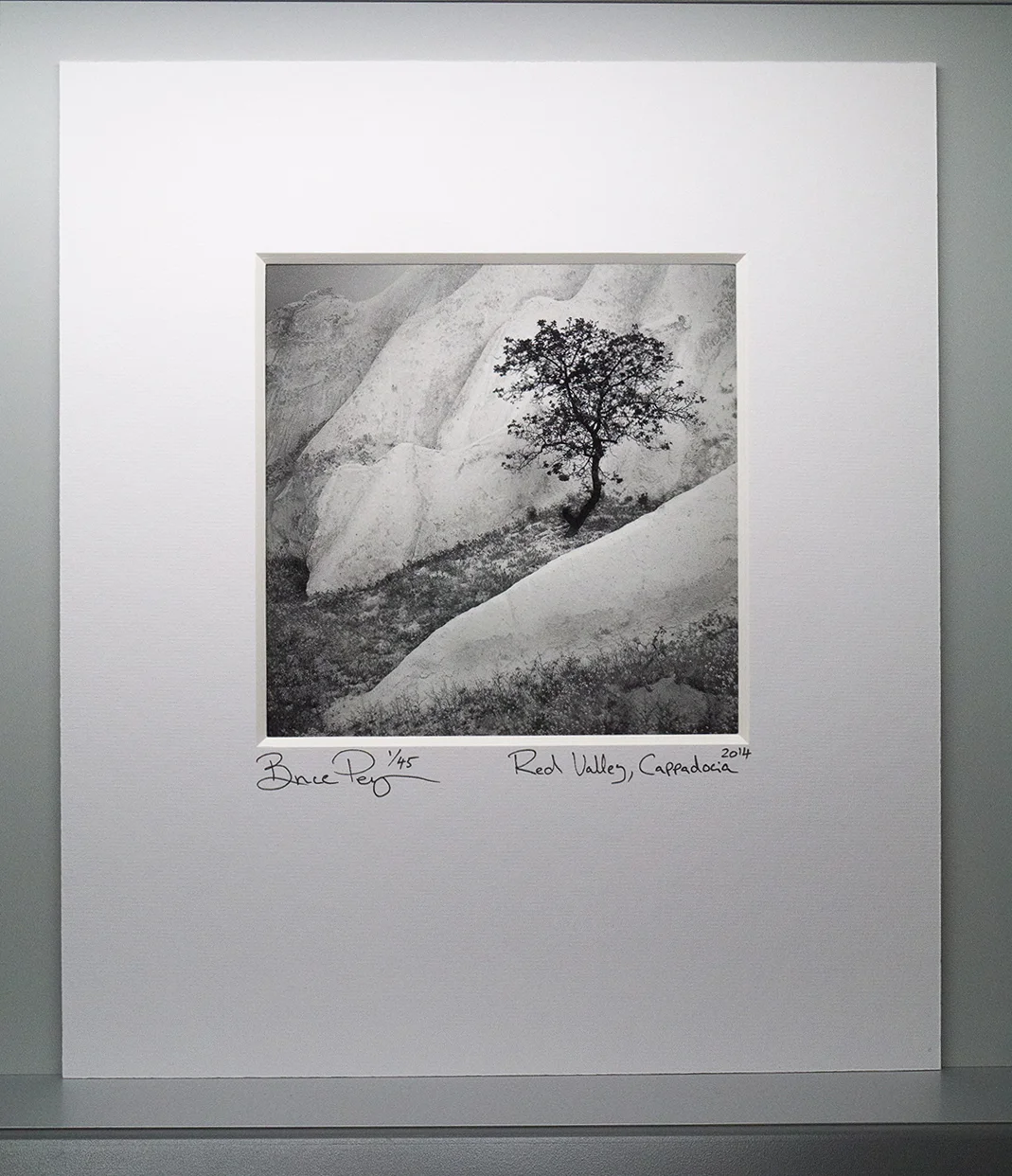
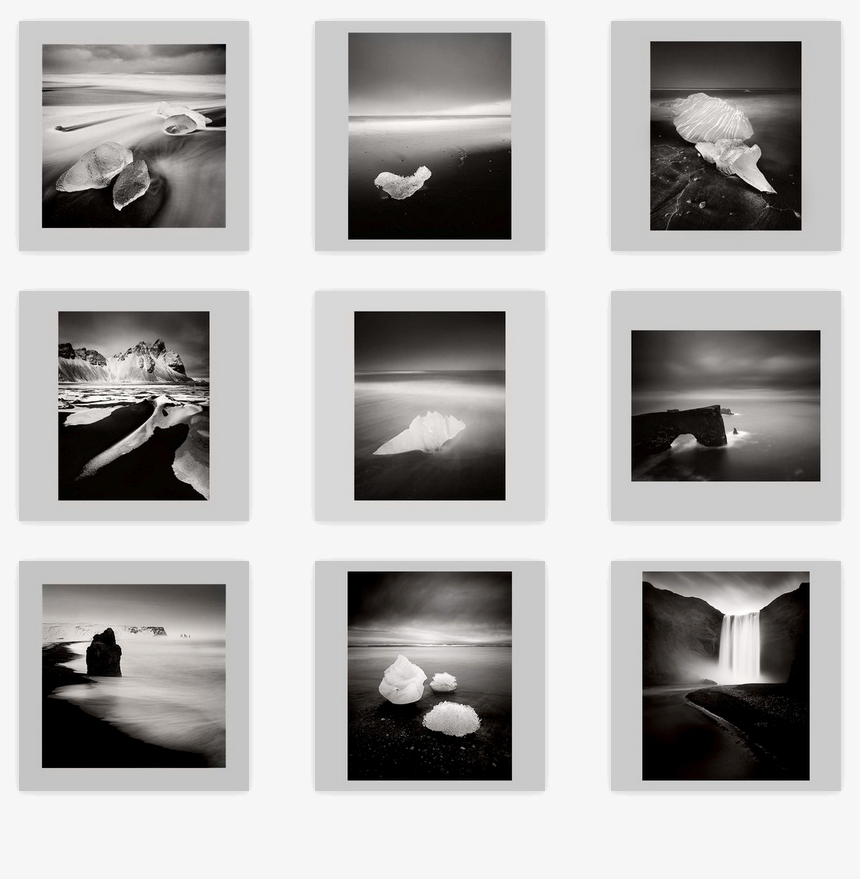
Printed on Museo Silver Rag paper, using Colourburst's RIP Print driver and Pixelgenius capture and output sharpeners

Printed on Museo Silver Rag paper, using Colourburst's RIP Print driver and Pixelgenius capture and output sharpeners

So I'd looked into using the John Cone system of loading up a dedicated Epson printer with monochrome ink sets. I really liked the sample prints I got from John, but I went ahead and used my own standard colour printer inks to do the monochrome print you see above. My feeling is that if you have a really well calibrated / profiled system, I think monochrome inks via the colour ink cartridges is really nice. I'm certainly happy with it and I would suggest if you are thinking of doing monochrome work with a colour printer, to use really good profiles, or as in my case - a dedicated RIP print driver.

When I looked into printing a few years back, I was amazed to discover that it is almost a religion for some and many people have different ways of tackling it. My system is very simple - I use BasICColour's Display 5 software to calibrate my monitor, and by using a RIP driver with good paper profiles installed, and suitable sharpening algorithms for the final print (I use Pixelgenuis' Sharpener toolkit), you can't go wrong. Oh, and of course you need a really good day-light viewing booth with which to evaluate the final prints.

The print you see above is my first monochrome print, and it's for my client and friend Stacey Williams, who is from Trinidad. Stacey will be on my Torridon workshop next weekend so I'll be delighted to hand her the print in person.

Printing is a very personal thing. The paper choices, how the work is presented are all personal decisions. But what sets a print apart from a computer screen is the fact that it's tangible, physical thing.

And with all tangible physical things, t's an extremely rewarding feeling to be able to actually give the work to whoever it was intended for :-)

The Multi-Medium Photographer

It's probably not news to you that I am a film shooter. I am 100% film and although I have a digital camera, I tend to use it for illustrating compositions while running workshops, only.

What some of you may not know is that I am a Hybrid-Photographer. I shoot film but I scan my images and then edit them in the Digital-Darkroom. So you could say that I'm half analog and half digital. My reasons for this workflow are purely personal as I love the look and feel of film and what it produces, and I also enjoy the creative freedom that the Digital domain gives me to further edit my work.

The look and feel of my images is partly due to the film stock I like to work with (Fuji Velvia 50) and my aesthetic choices in the Digital Darkroom

The look and feel of my images is partly due to the film stock I like to work with (Fuji Velvia 50) and my aesthetic choices in the Digital Darkroom

A few days ago, I was sent an email about a new kickstarter project to bring a new kind of film to the market. Apart from being very pleased to hear that a new film may be coming out, it gave me a chance to reconsider the future of film and more broadly, the future of photography.

When I looked into what the current state of play with the film market is, I was surprised to discover that many film manufacturers have noted a rise in film sales each year for the past five years and although the market is very small compared to what it once was, film manufacturers believe the decline in film sales has stabilised.

Looking into this a little more, the answer to why this has happened is complex, but at the same time, encouraging.

Firstly, Digital capture is no longer new, it is an established and mature market now. We perhaps live in a 'post-digital-capture' age where Digital is just one of many mediums that we can play with. This is very exciting as I don't think we've ever had so many different mediums with which to do photography with.

Secondly, because the initial rush for Digital is now over, I think many photographers can't help but experiment; there's nothing better to invite inspiration than to give something different a go. I think that's why sites like Lomography and iPhoneography have risen in interest. 

From my own personal experiences of running workshops, I have certainly seen a very small rise in the interest in film and other mediums, and I've had some participants tell me they now have their own analog darkroom at home, or that they have been experimenting with collodion wet plate processes. All this alongside being digital-shooters.

So rather than this being a case of a resurgence in film only, I think there has been a mind-shift for many photographers. We're far too interested to be stuck with one way of creating imagery, and that is just such a fantastic thing to witness, because about a decade ago, it felt that the mind-set was very much about whether you were digital or film, and in some cases sometimes I was asked 'when' rather than 'if' I was going to move to digital photography.

CineStill 800T Tungsten film is a new Kickstarter project to bring a Tungsten balanced Cinematic style film stock to the Still's market. The film can be exposed between ISO 200 and 1250

CineStill 800T Tungsten film is a new Kickstarter project to bring a Tungsten balanced Cinematic style film stock to the Still's market. The film can be exposed between ISO 200 and 1250

Photography has always been the act of self-expression. So if a photographer wishes to use a Collodion wet plate process to convey their work, or print in an analog darkroom, or use digital-sensors, the choice of medium is often a personal one. For some it's all about how the process feels and for others it's about how the final images look and sometimes it's a matter of both.

We are now in the age of the Multi-Medium Photographer.

As part of my current thoughts about how we're all changing as photographers, I decided to look into the viability of film remaining with us in the future. It seems that my ideas about film becoming end-of-life were unwarranted. Despite a small resurgence in it, I had believed until now that film manufacture could not continue to be a profitable exercise as time goes on. It seems I am partly right and also partly wrong about this.

Many existing film manufacturing sites are optimised for large-scale production. Apparently retooling them to produce smaller production runs is not a viable option for some of the large film manufacturers, and from what I understand, because of the chemical processes involved, would also require a redesign in the films so they could be optimised for smaller scale production runs. I don't see how some of the big film manufacturers are going to be interested in investing the time and money in developing and retooling. It's just not a viable thing for them to do.

But there has been an increase in new films coming out from small companies. From reading into this, it appears that it's much easier to optimise a small-scale production facility from scratch rather than trying to down-scale, so in this respect, I think if film is to continue to be around for the future, it is going to be in the form of small scale production and that means new films released by new start up businesses rather than the films we know and love now.

This is perhaps no bad thing, because film technology still has a lot of potential for further development and it may mean we see more exciting films coming out. Companies such as CineStill have just announced a new film stock that can be exposed anywhere between ISO 200 and 1250. That alone gives an indication of how film technology is developing.

I think the world of photography has never been more exciting and interesting than it is now. Rather than throwing one medium out for another (switching), some of us have begun a process of incorporating multiple mediums and many formats into our photography. The general mindset or attitude towards film & digital has changed over the past few years and this is proving to be liberating.

The future is a multi-medium, multi-format one where photographers work in analog or digital and sometimes (as in my case), both.

Dettifoss, North East Iceland Photo Tour

I'm just finishing up here in Iceland. I came out to run a photo tour through the centre of Iceland towards the north east. We were very lucky with the weather (when it rained, it was mostly manageable and didn't get on our camera filters too much). The group were a nice bunch of folk to spend 9 days with too :-)

Image © Ian Thoms, North East Iceland Photo Tour Participant

Image © Ian Thoms, North East Iceland Photo Tour Participant

Ian Thoms, who participated on my North East Iceland tour,  kindly sent me this photo of Dettifoss - Europe's most powerful waterfall. The photo is a lovely example of compression using a telephoto lens. It might be tempting to think the waterfall has been made larger than it really is, but it must be said that Dettifoss is quite an impressive power-house of nature, and lives up to the impression this photo gives. 

In Ian's photo, we have (from left to right) Stephen Naor from Canada, myself with red jacket and red hat, and Melvyn Pereira from Australia. I think I was discussing the simple shape of the rocks at the edge of the canyon and how they could be used as great foreground emphasis.

Anyway, it was a great trip and I'm hoping to repeat it next September. 

This past week I've spent some private time in the central highlands. We visited the Fjallabak region and further north too - where we just saw the first snow of the season arrive last night - it was a chilly time in our tents.

The central highlands are quickly becoming my most favourite location in Iceland right now - such a vastness, an emptiness of black sand deserts, and strange moss formations and large water filled craters.

What a wonderful landscape to explore and I look forward to getting to know it much better in the years to come.

Are digital darkroom skills undervalued?

Until the digital photography revolution, the concept of editing one's work was confined mainly to the traditional darkroom and the black and white photographer.

There came a time when the idea of touching an image in any way after clicking the shutter was deemed untruthful, or a lie. I really despised this period of photography because manipulation had always been integral to the making of images right from the birth of photography.

My personal dislike has always been the photography websites that claimed 'no manipulation or enhancement has been made to this work' because it propagated the notion that photography is real, and that it is truthful. It has never been real and it has never been truthful. It has always been an interpretation and a point of view.

But thankfully, things have been changing over the past decade for the better. To draw a contrast, years ago when I would talk for photography clubs, I used to find it very hard to answer the dreaded question of 'do you manipulate your work?', because it always felt that underneath the question was 'do you lie?', rather than commending the photographer for his skills at editing the work to move someone. These days when I'm asked that question, I now proudly say 'yes, of course, it's part of being a photographer'.

Things have also changed for the better, because just about everyone who has a digital camera that is serious about photography also has a photo editing application such as Light Room, Photoshop or Aperture for instance. It has become the norm now for people to edit their work and I'm pleased at the change in attitudes around us as to what is ok or not ok to do.

But one thing still troubles me is how we perceive the skills required in editing our work. We all know it takes years (and is a life long journey) to improve our field work, but I don't think we approach the darkroom editing work with the same attitude.

Becoming a master printer / darkroom editor, takes years and requires just as much skill as it does becoming a good photographer. In fact, it is 50% of being a good photographer.

Editing work shouldn't just be a case of 'moving sliders around until it looks good', it should contain the same amount of consideration that working on composition does.

That's why I wrote my e-Book The Digital Darkroom. Because I felt there should be some kind of guidance on how to interpret work and be able to look at an unedited photograph and see relationships, patterns or a message that can be brought out in the editing stage.

Similar to the notion that buying a great camera does not make us a great photographer, buying a copy of Lightroom and learning the application does not make us a great photo editor. 

The art has always been in the act of 'seeing' while the skill has always been in the art of interpretation and I still feel we have a long way to go before we truly appreciate the skill and art involved in a really good edit.

The path to black & white

Today I was chatting to the editor of a major photography magazine and he was asking me why I had decided to start working in black and white. The correspondence was on e-mail, so I wrote down very quickly for him my thoughts on this, and when I read it back, I felt it would be a really good thing to post here on my blog. So below is my reply, which I hope may give you some food for thought about colour, monochrome and more importantly the relationships between all the objects present within the frame of your viewfinder.

"Over the past 5 years, I’ve spent a lot of time teaching people about landscape photography. Through the teaching, I’ve had to look at what I do and figure out just what’s going on for me when I choose a certain composition. 

These images all started out life as colour images. Through working in a monochrome landscape such as the black beaches of Iceland, I learned a great deal about tonal relationships. This has, over the years trained my eye and I think when I compose …

These images all started out life as colour images. Through working in a monochrome landscape such as the black beaches of Iceland, I learned a great deal about tonal relationships. This has, over the years trained my eye and I think when I compose in colour, I'm very aware of tones and their relationships, which is why I think these converted straight into monochrome with little or no further editing.

"In the past few years, I’ve found I have started to talk more about tones and their relationships in the frame. As a way of helping others think more about composition and what they’re putting into the frame of their viewfinder, I’ve asked them to consider if certain tones merge when put side by side, and also if some tones compete for attention with other tones in the same frame.

"My feeling is that black and white is harder to do ‘well’ than colour is. Many may disagree, but I feel that with colour, you can have lots of tonal ‘errors’ in the frame and you still get away with it because you’re distracted by the colour elements. With black and white you’re only dealing with one thing and although that may seem much simpler, it actually means that any errors you get in tonal relationships really stands out.

"What I found was, that many of my existing colour images worked really well when converted straight into black and white with little or no editing involved. I think that’s because for a long while, I’ve been composing my images with tonal relationships in mind. My style of photography is of a more ‘simplified landscape’ and when you reduce your compositions down to more basic elements, you’re forced to look at tonal relationships more than if you were simply trying to cram a lot of subjects into the same frame.

Bolivia was where i felt I started to work with more simplified compositions, simply because the landscape has so much space to it, you can't escape it if you work with what's given to you.

Bolivia was where i felt I started to work with more simplified compositions, simply because the landscape has so much space to it, you can't escape it if you work with what's given to you.

"So for me, the path to black and white started when I began to shoot more simplified colour landscapes. I found that understanding the different tones and their relationships between the objects present in the frame has been a great primer or foundation for beginning to work in black and white.

I’m often surprised that when someone has an images that doesn’t work in colour, they feel that a simple way to fix it is to turn it into black and white. As you and I both know, good black and white work is extremely difficult to pull of well. The key word here is ‘well’. I think a lot of people are happy when they turn something black and white, but it takes a lot more to make it special, and a good understanding of form and tonal relationships is behind that".

When close isn't close enough

Dramatic photograph's are often dramatic because they have presence and one such way to achieve it is to 'get in close'. 

Image © Atri Ray (with a wee bit of help from myself)

Image © Atri Ray (with a wee bit of help from myself)

I think my dear client - Atri Ray - from Canada - has captured a dramatic photo photo (see above).

Shot on my Eigg workshop this April, the image has a dramatic feel to it not just because of the lighting and not just because there is a lot of symmetry going on in the frame, but mostly because of the dynamic movement of water in the foreground of the frame.

Getting in close has become a recurring theme in most of my workshops as I think it is perhaps the most common issue photographers have with their photography. A lot of work lacks presence because we don't give the most important elements of the frame enough prominence or 'focus'.

In the image below, sent to me by Fabian (thanks Fabian!), hopefully illustrates how close we were to the rocks and waves in the image above.

My client Atri Ray and myself (I'm in the red jacket) making the landscape image this post is about. Image © Fabian Herzog

My client Atri Ray and myself (I'm in the red jacket) making the landscape image this post is about. Image © Fabian Herzog

I've included this image for a few reasons, but mainly to illustrate how close we were.

Looking at the main image in this article, it would be easy to assume that the waves are enormous. This is the optical effect of using a wide angle lens. With wide angles, you tend to push the horizon and anything from about 3 metres from you - further away. In order for the lens to capture a wider field of view, objects have to get smaller in the frame so that there is room for more of them. The downside to this is that it's easy for a picture to lose presence because nothing has any prominence anymore. By moving in really close to the foreground, presence can be restored. But that's not all - redundant objects are often removed out of the frame at the same time, so the image tends to become more powerful because of its simplicity.

If I remember correctly, I'd noticed the waves coming over the striated rocks and suggested to Atri that we go and shoot there. I kind of knew it would be an exercise in getting in close. The tide was on the rise but it was still very safe to be where we were.

On a clothing note, I like to wear Gaiters a lot while out shooting. They are great at stopping the wind go up my trouser leg, but also, they are great at delaying water going over the top of my boots. So Atri and myself were very comfortable where we were standing.

Fabian has captured a particular moment when the waves were crashing over the small ridge in the rock formations. And importantly, Atri and myself were waiting, observing and taking note of the frequency of the waves to coincide with the exposures we were making.

So I include the image of myself and Atri making this shot not just to show how close we were, but also to show that we had noticed a frequency in the landscape. We were waiting and timing our exposures on Atri's camera to match each wave that crashed over the top of the rock. And we did that, because we'd noticed that there was a beautiful texture created each time the waves lapped over the edge of the rock. A form of visualisation, if you will.

Sometimes you need to get in much closer than you think you do. But it's important to do it when you know there is a strong motif or 'pattern' that you can utilise in your photos. Movement in the landscape whether it is a wave crashing over a rock, or the movement of clouds racing over the landscape can often give us strong elements for our compositions.

Lastly, I'd like to mention the quality of the light. It was a grey, often rainy day as far as I remember. Perhaps a day where most people would go inside rather than be out making photos. I love overcast days because there are no hard shadows in the landscape and because the tones are much softer and easier to work with in the digital darkroom.

But mostly, I love this kind of light because I've learned that although it might not feel like it at the time (being cold and wet can often hijack your impressions of how well a shoot is going) the truth is - this is really great light - it really is.

Many thanks to Atri Ray for allowing me to reproduce his fine image here and also to Fabian Herzog for allowing me to reproduce his image of Atri and myself at the point of capture of the main image in this post.

Just check it in

A while back I wrote an entry about flying with gear. There were many discussions at the time about the best approach etc and I for one was wary of checking any equipment into the hold of an aircraft.

Since I wrote that article, my view on the matter has changed through circumstances forced upon me over the past eighteen months of travel. 

If you don't know by now - I do a lot of travelling. Last year for instance, I travelled to Iceland four times, Norway twice, Bolivia, Chile, Argentina, Turkey and also Australia, New Zealand, Switzerland and the USA. All in twelve months and in that time, I was forced by the airline around four times to put my camera gear in the hold because they decided to ask me how heavy my trolley bag was.

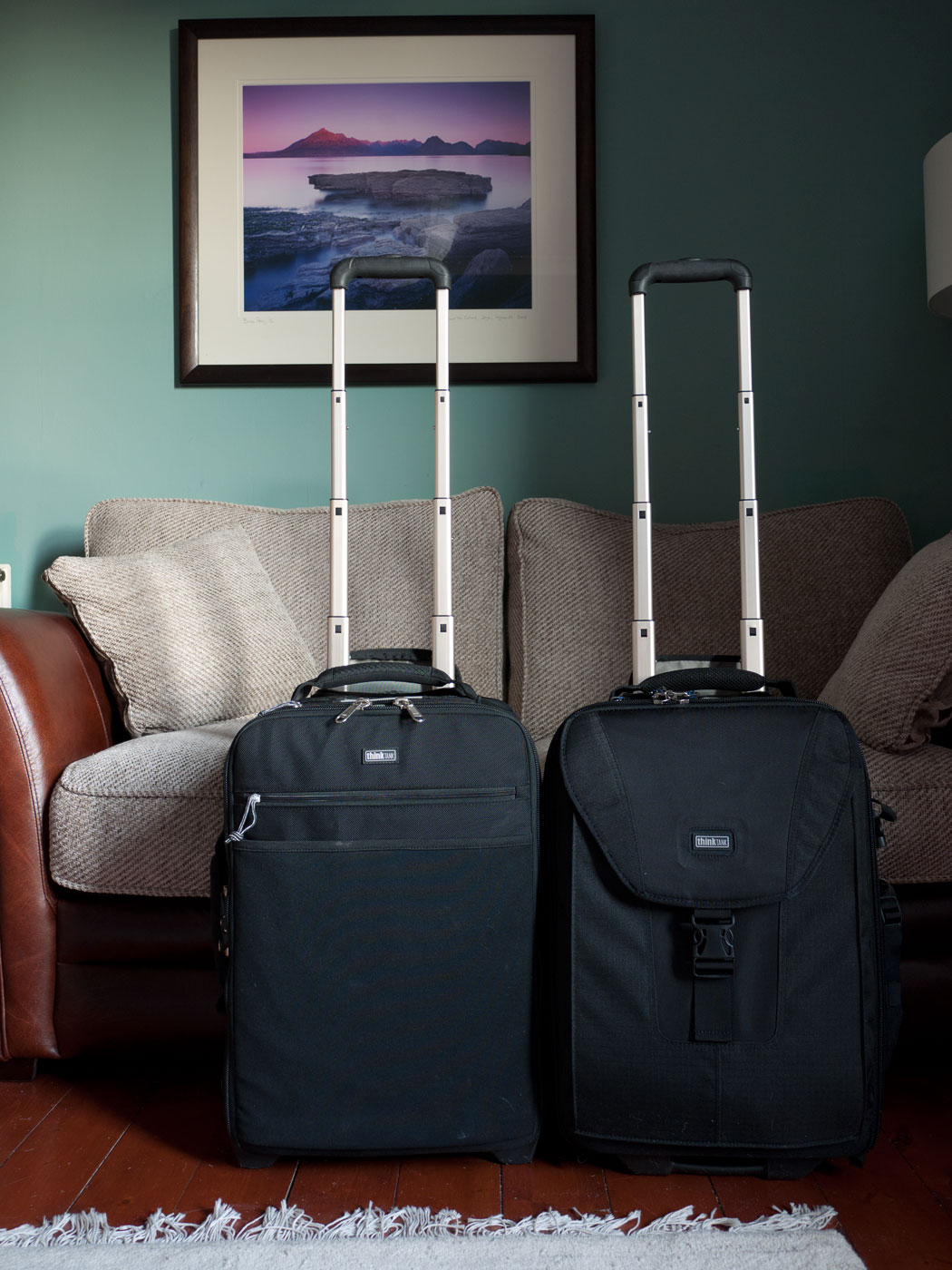
A sturdy trolley bag, such as the Think Tank Airport International bag gives me great confidence when carrying 'over my limit' gear as I know it can withstand some abuse in the hold. Another alternative would be a nice Pelican case. If you're not ov…

A sturdy trolley bag, such as the Think Tank Airport International bag gives me great confidence when carrying 'over my limit' gear as I know it can withstand some abuse in the hold. Another alternative would be a nice Pelican case. If you're not over the limit, then just take your normal bag and carry it on.

I must say that it's unusual for an airline to check the weight of my carry on luggage, but I've noticed that on few occasions they ask. This does not always go hand in hand with policy, and I've found the rules seem to vary on the day based on who you get at the check-in desk.

My trolley bag is the impressively-invincible Think Tank Airport International bag. It has been designed to fit into most overhead bins and conform to most airline dimension regulations. But the bag is heavy and I've found that on its own, it is 7kg in weight and with some of the airlines, the carry on weight limit is sometimes as low as this or around 10 to 12kg. My bag when it's loaded is around 15kg.

So last year I got stopped four times, even though the bag is pretty inconspicuous and because I think the bag is very study and well made, I checked in my gear because quite frankly, there was no other option.

Each time the bag arrived safely with all my gear intact and it's now gotten to the point for me that when I travel, I would much rather just check it in rather than have the stress of being stopped or them confiscating the bag from me just before I get on the plane (as did happen to me in Chile). If I pay for the additional luggage and just check it in, I arrive less worried about the bag at the airport and short of some catastrophe during transit, it's much less hassle for me.

I'm sure that many readers will think I'm mad and will think there is no way they will part with their gear at an airport. If that is the case, then cut it down to something you know doesn't have the risk of being stopped and forced into the hold. A small bag with just the essentials - the lenses and bodies, and get all the other accessories checked in - things like your filters, battery chargers, anything that you won't be too upset about if they get delayed or damaged or lost. Make sure it's well within the limits of what the airline accept and you will have trouble-free travel. 

This is a typical look at what's inside my Airport International trolley bag.

This is a typical look at what's inside my Airport International trolley bag.

If you're going to be like me, and need to carry spare bodies, and lenses, then be realistic - it's over the limit and if the airline stop you, you might have to put it into the hold. In which case, pack it in a bag that can withstand some abuse.

So these days I travel with two camera bags - I have the Think Tank Airport International trolley bag - it's made of non-rip material and feels as though it could withstand an explosion. I also pack in my main luggage bag a flattened down waste-level bag for when I am on location. The Airport International bag is really for me just getting across the water.

If I were a digital shooter (which I'm not), I would be avoiding DSLR systems these days. There is no reason for traveling with such large systems any more. We live in an age where smaller, more compact systems give great results for a lot less weight and bulk. Go that way if you're worried about checking your gear in. Otherwise check it in and do it with a bag that can handle the abuse.

Visualisation is a muscle

Yesterday I met up with a friend who has not had a lot of time lately to make photographs. He was telling me how he often finds he needs a 'warm-up period' each time he goes out with his camera. It's certainly not a unique problem as I've often heard clients on my workshops tell me it takes them a day or two to get into the mode of 'seeing'.

Here be a dragon. Except that I didn't 'see' it myself. I was on a photographic-tour of Iceland and one of my participants - Stephen Scott told me he liked the ice because it reminded him of a dragon. I'll admit - I was tired and I wasn't feeling it…

Here be a dragon. Except that I didn't 'see' it myself. I was on a photographic-tour of Iceland and one of my participants - Stephen Scott told me he liked the ice because it reminded him of a dragon. I'll admit - I was tired and I wasn't feeling it until he pointed out to me how special this piece of ice was. My visual-muscle was taking a break but Stephen's wasn't.


On some of my workshops we've discussed this to varying degrees. I've often said to my participants that I don't have that 'warm up period' unless I'm very tired or maybe suffering from overdoing things ( too much of a good thing can leave you lacking enthusiasm and once that goes, you don't see anything worth shooting). 

Now some of my participants have said that the reason why I don't have that 'warm up period' is because I'm doing photography all the time. I can see their point of view, but for me I think it's always been an innate thing. I've been drawing and painting from a very early age and being an arty kid, I think composition, light, colour, tone were instilled in me from an early age. Even when I worked in IT for 14 years, I only ever made photographs when I took my holiday time and went traveling, and holiday time at work dictated that I got a maximum of six weeks a year. I'll often leave my cameras in their bags for months on end with no desire to make photographs, but once I'm on my travels, I'm making photographs right away and I've never suffered from a period of feeling that it takes me a while to warm up.

So I've been thinking about this for a while and wondering why it is that some of us need a day or two to get into the photography mode of 'seeing', and why some of us don't and I've come up with some ideas about how we use our vision most of the time.

Let's consider a commute. Each day you do the same trip in your car to your office. Each day you see the same things because everything repeats and repeats and repeats. I think you'd go mad if you noticed the same things each day and I believe that what our brains do is 'filter out' what we don't need to know. Rather than process the same visual images time and time again, we 'skip over' the stuff we are familiar with. We do this also with our homes. Each time I walk into my sitting room and nothing has changed, I don't notice the objects, but if someone comes in and moves something around - it's the first thing I notice.

This suggests that I build up a visual map of surroundings that are familiar to me. Just as you know you've taken a turn into a street you didn't expect to arrive at, but know it is familiar to you, your brain is basically mapping it to a known visual imprint.

So consider that most of the time, we are going around 'filtering things out'. We are now effectively walking around ignoring things.

Do this for 20, 30, 40+ years and we're now going to find it very hard indeed to 'see' each time we pick up a camera after an extended break away from it. Since our normal mode of operation is to 'filter things out',  the act of photography is to do the opposite - to notice the smallest details, to take delight in the shade or texture of objects within the frame. I think this is why many of us are attracted to photography in the first place - because it gives us permission to spend time just 'looking'. It's not something we do on its own.

For those that have been involved in the visual arts for a long time, I think this is an innate activity. 

I remember reading once that one way to get yourself tuned up for 'seeing' is to imagine you have a camera with you all the time. Each time you see something interesting in your day to day activities, blink and imagine that the blink is you taking a photograph. I've sometimes done this and it's great because I've noticed I start to anticipate things coming together. 

Visualisation is like a muscle. For some of us if you don't use it, you lose it. Each time we put our camera away and go back to our normal daily lives, we give ourselves permission to stop 'seeing'. We are in the habit of compartmentalising our life: if i have a camera in my hand - I am now 'seeing' and if I don't, I am no longer seeing.

If we consider that there are photographs around us all the time - regardless of whether we have a camera with us, - it's still great to watch these visual-photographs unfold before us. It's also great practice for the times ahead when we do go out to make photographs.

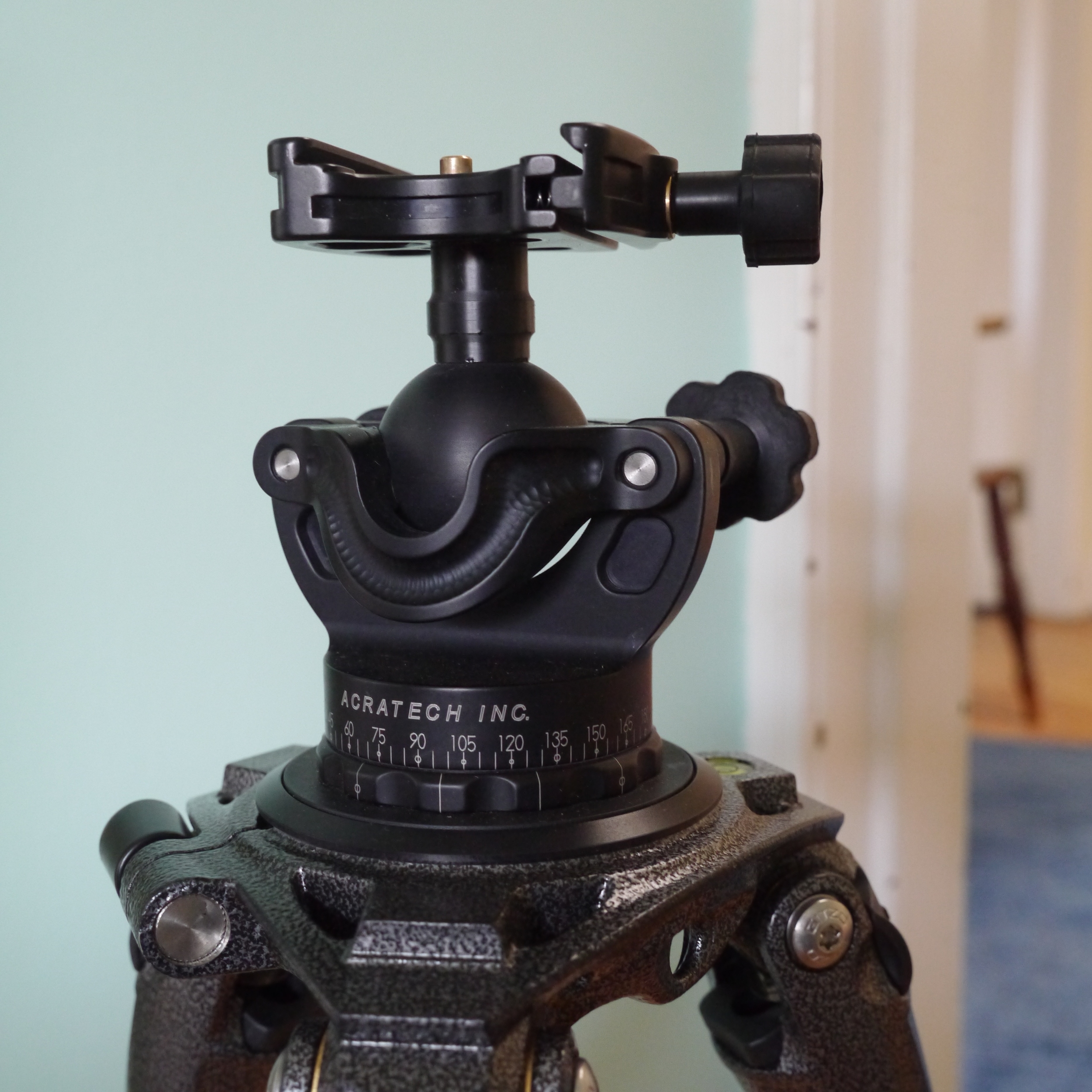
Acratech GV2 Ball-Head Review

Every now and then, someone turns up on a workshop and shows me a great piece of camera equipment. I'm in the fortunate position to have access to a wide variety of camera lenses, bodies and also things like tripods and ball-heads.

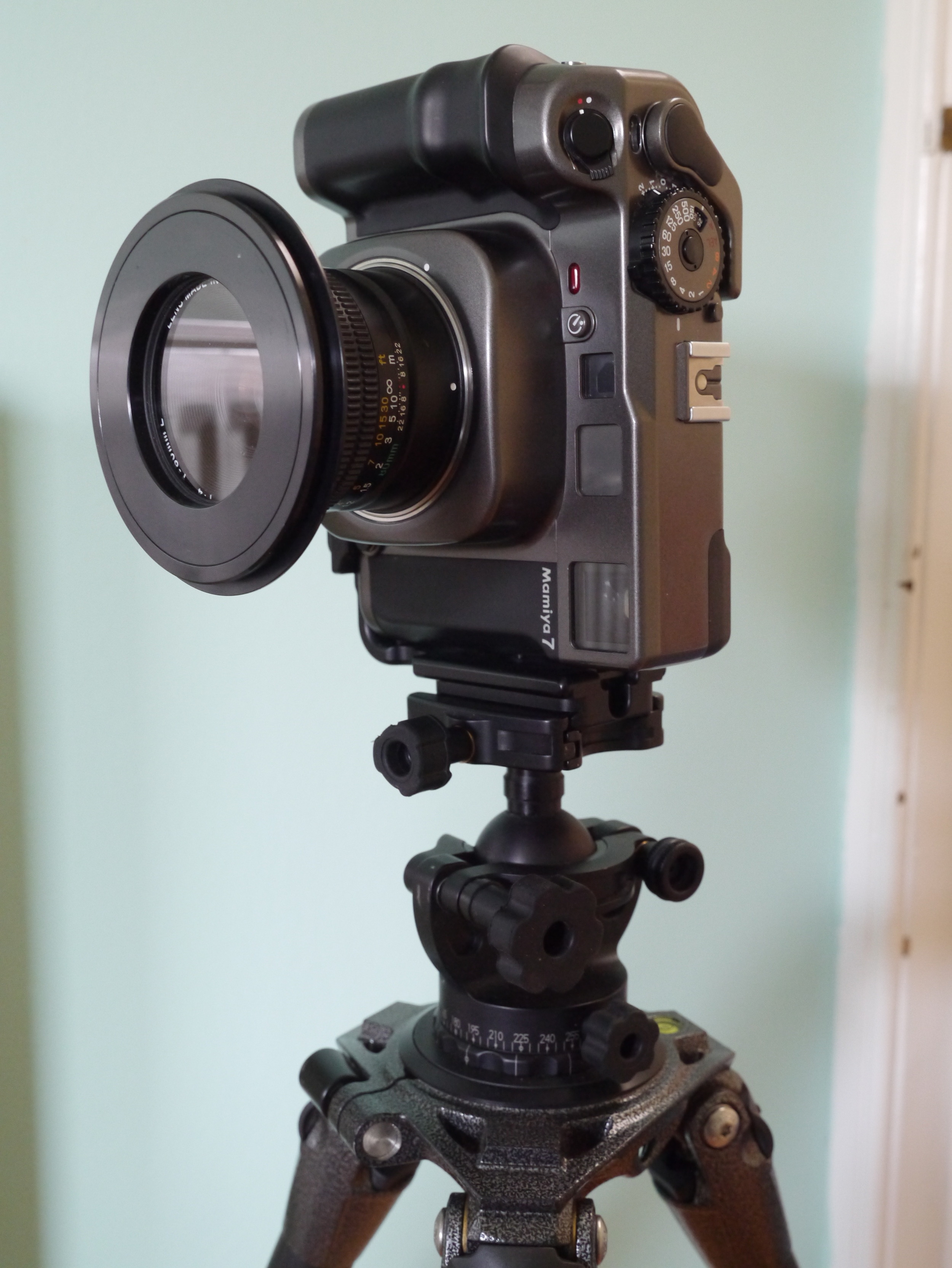
Acratech GV2 with my replacement Mamiya 7 body clamped onto it via the (now very rare) Kirk L-plate

Acratech GV2 with my replacement Mamiya 7 body clamped onto it via the (now very rare) Kirk L-plate

The Acratech ball-head is one such piece of equipment that I was keen to try out. I was shown the original ball-head by my friend Raynor Czerwinski whom I got to know on one of my workshops here in Scotland in 2013. 

About a month ago I bought the most recent version of this ball-head - the GV2, which they claim acts as a Gimbal as well as a standard ball-head. 

You might be asking why I decided to buy yet another ball-head when I already own a few. My reasons were that this is the lightest ball-head I've come across - it weighs almost nothing ( 0.43kg to be specific).

But weight is only one aspect of a good Ball-head. The main criteria I always check when using one are:

1. Does it creep? When I lock down the ball-head, does the camera sag? 

Some ball-heads do that, and it's incredibly annoying. When you buy something to do a specific job, it should do it well. It shouldn't put the camera in a position where you didn't want it to be (otherwise known as fighting with your equipment). Equipment with a mind-of-its-own are items that I quickly get rid of because they begin to act as a barrier to what I'm doing. So making sure that a ball-head does not 'creep' or do anything unexpected is vital.

In this regard, the Acratech ball-head is fine. There is no 'creep' when you lock down the ball.

2. Does it support the arca-swiss style plate mechanism adopted by companies such as Kirk Enterprises and Really Right Stuff?

I only use ball-heads that accommodate 'arca-swiss' plates. In the above picture you can see that my camera has a black metal plate attached to it. The design I prefer is an 'L-bracket' as it allows me to quickly mount the camera on its side. I've never liked having to turn the camera sideways on a ball-head for a few reasons. One, the camera is now off-centre gravity, and two, you can't always get the camera level with the ground when it's tilted on its side, so I often find myself having to adjust the tripod leg length. In short - not using an L-plate makes things more complicated, time-consuming and just plain gets in the way of the images I'm wishing to make.

3. Are there any annoying things that will get in the way?

I think when using new products, they need time to get familiar with. I'm acutely aware that anything I buy to use in my photography may have a possible detrimental impact as well as a positive one. Sometimes I find that I need a prolonged period of use before I can determine whether anything I found frustrating or annoying with the product was simply a case of me getting familiar, or that it really is a bad design choice.

With that in mind, I took the Acratech ball-head to Iceland with me this July. I used it for about three weeks and during that time, found that sometimes when I thought I'd locked down the ball-head, it was still free enough. It seems I always need to give the friction knob a little extra tightening than I normally would with most of the other ball heads I used. This is a minor gripe because it was only a problem when I chose to sling the tripod and camera across my shoulder while walking around. I sometimes found the camera would flop to one side when I did this. Otherwise, with standard use, it was perfectly fine. So I guess this is a case of me getting familiar with this aspect of the ball-head.


Perhaps the biggest problem for me in using this ball-head is with the clamp design. Sure, it clamps to the base of the camera and keeps the camera there, but the knob for tightening the clamp has a very short travel and sometimes I found myself thinking 'I don't think the camera is clamped properly'. To my dismay, even though I was convinced the clamp wasn't holding my camera, I double-checked it, and let go, only to find my camera fall off the ball-head and into the nearest river.

This is something that I was bound to do at some stage with any ball-head and it's certainly something to be wary of when using a new clamp for the first week or so. It takes a lot of time to get that muscle-memory working so you 'just know' when something is seated correctly, or in my case - incorrectly.

If I could ask Acratech to do a design change, it would be to lengthen the travel of the clamp. It never feels right to me, and I'm curious to see if I will still feel that way in years time. For now, I will be double-checking the camera body out of paranoia as I ruined a Mamiya 7II body and 150mm lens through this design quirk.

And what did I like about the Acratech?

For the strength of the ball-head, it's one of the lightest designs (if not the lightest) out there. It's also very cost competitive with the alternatives from Really-Right Stuff). It doesn't 'creep', and I like the tactile knobs - when I reach for them in any kinds of weather (dry or wet hands), they grip to my skin and I'm able to take control of the ball head. 

Summary

In summary, I'm going to keep on using this ball-head for the foreseeable future. It's much lighter than anything I've used to date, is strong enough to hold any of the equipment I own, but I think it just needs a bit more time to get used to.

If only I'd followed my own advice on not taking new pieces of equipment on my trip, I might not have had issues with the clamp if I had been more familiar with the design. I can't say for sure if it was my unfamiliarity with the clamp that caused the demise of my camera, or whether it's a design flaw, but my hunch  would be to go for the former rather than the latter.

If you want a very cost-effective tripod ball-head, that is much lighter than most of the competitors out there, this is it. Just be wary of the short-travel in the clamp design.


Beginnings

You might have noticed a formatting change to my blog. Well my entire site is now mobile and tablet friendly. I had been thinking for a while now that desktop computers are on the wane, and tablets and mobile devices are taking of. So I felt it was time that my entire website had a bit of a make-over for the new way we all tend to enjoy the web.

One of the things that has come out of reviewing my old website and putting together this new one, is deciding which images I should perhaps leave out, and which should be included. During that phase a few months ago, I came across this image of mine:

My very first 'ooh, that' looks interesting' image, 1989.

My very first 'ooh, that' looks interesting' image, 1989.

It is the very first image that I ever made with a camera where I felt I had stumbled upon something.

I was around 22 years old, and I had owned my first camera (an EOS 650 with 50mm lens) for about a year or so. The image is of nowhere specific - just a corn field in the new-town of Livingston in West Lothian Scotland. 

One of my friends (the same one who had introduced me to photography) showed me a filter he'd bought for his camera. At the time (late 80's), the idea of using filters was still pretty new.

I bought one of the same filters and tried it out. One of the images in the slides I picked up from my local photo shop really stood out. The sky was completely overdone to the point that the blue was now black but the image was more interesting than I had anticipated.

For years, I had a few ciba-chromes of this made up for friends, and one of them always referred to it as 'a film-maker's dream'. Highly complimentary, but also I feel, alluded to where I might go with my photography in the decades to come.

I think we all have a photograph in our collection that has a special place in our hearts because it was perhaps a pivotal change in our early development. That's certainly how I see this photograph.

Back in the 80's, Photography had a way of making things look like 'another reality'. There was often a great disconnect between what we saw with our eyes and what was returned from the lab. It's something I loved about photography at the time (and to this day I still do as I continue to shoot film). The difference for me nowadays is that where I once pressed the shutter and hoped for the best, these days I have a slightly clearer view of how things might turn out.

Reviewing the new website has given me another chance to review my earlier work and through this process, I've discovered at least one thing: what I loved about photography back in the late 80's is still relevant to my photography today.